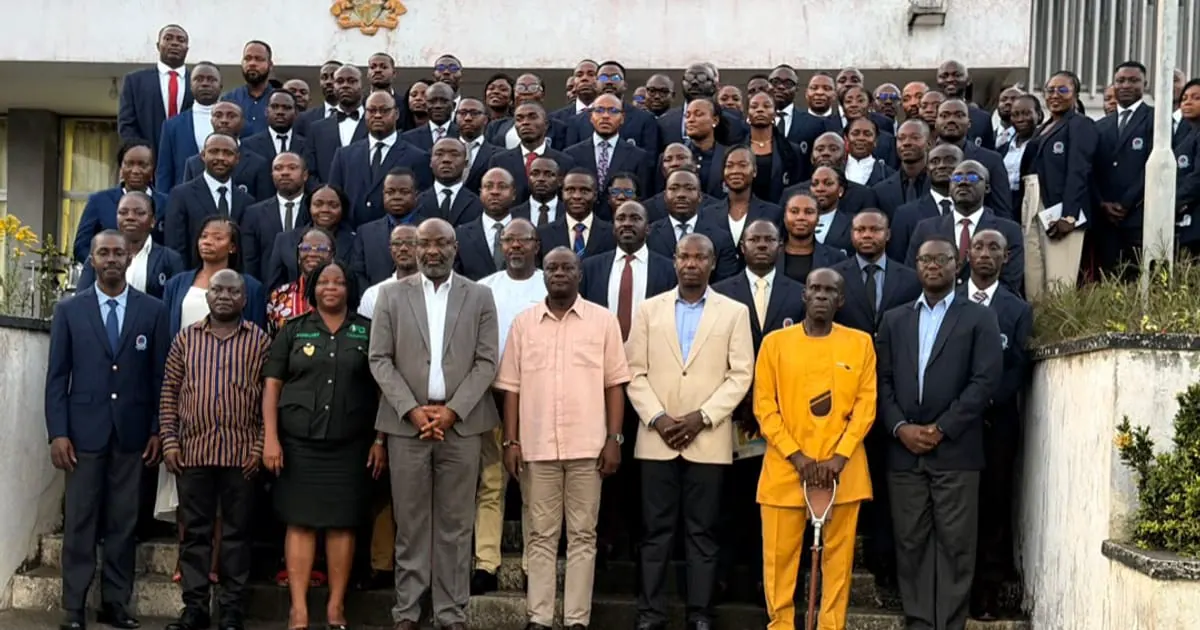
A 70-member delegation from the Ghana Armed Forces Command and Staff College (GAFCSC) Junior Division has urged for stronger coordination among state institutions, traditional authorities, and local communities to combat illegal mining in the Western Region. The delegation, consisting of 61 Ghanaians and nine foreign nationals, made this call after conducting an environmental study tour of the region. The study focused on the impact of illegal mining on the environment and human security.
The study tour, themed "Safeguarding the Environment for National Development: Challenges and Prospects in the Western Region," examined three key areas: illegal mining and human security, illegal mining and cash-crop production, and sustainable mining and land reclamation. Lieutenant Commander Sheba Fiadzomor led the team's debriefing and presented findings and recommendations to Western Regional Minister Joseph Nelson. The exercise aimed to assess the environmental damage caused by illegal mining.
According to the study, as of August 2026, illegal mining activities have destroyed 270 hectares of forest land and 219 mature trees in the Western Region. The environmental damage extends beyond forest loss to include soil degradation, water pollution, and disrupted drainage systems. The study also highlighted health and social concerns associated with illegal mining, including a two percent increase in tuberculosis and HIV cases in the Ellembelle District between 2025 and 2026.
The delegation attributed the increase in tuberculosis and HIV cases partly to the influx of foreign nationals linked to illegal mining activities. They also identified the absence of a dedicated health surveillance system to track illnesses and birth defects associated with illegal mining. Furthermore, the study found a sharp increase in school dropouts, prostitution, and child trafficking in certain mining communities.
The study revealed that mining activities are encroaching on agricultural lands, reducing the acreage available for sustained cash-crop production. Significant losses of cocoa and rubber farmlands were reported in parts of the region. The destruction and degradation of farmlands are affecting crop productivity and farmers' incomes. Illegal mining has reduced crop productivity and farmers' income due to soil degradation, polluted water, and disrupted drainage.
The study tour provided an opportunity for the Western Regional Coordinating Council and other stakeholders to assess existing interventions and identify areas requiring stronger coordination. The delegation called for greater collaboration among state institutions, traditional authorities, and local communities to address the environmental, agricultural, and human-security challenges associated with illegal mining.
Responding to the findings, Western Regional Minister Joseph Nelson assured the delegation that the Regional Coordinating Council would give due attention to the observations and recommendations from the exercise. The findings are expected to contribute to ongoing efforts to protect the Western Region's forests and agricultural lands while promoting responsible and sustainable mining.
Key points
- The Ghana Armed Forces Command and Staff College delegation calls for stronger coordination to tackle illegal mining in the Western Region.
- Illegal mining has caused significant environmental damage, including the destruction of 270 hectares of forest land and 219 mature trees.
- The study highlights health and social concerns, including a two percent increase in tuberculosis and HIV cases in the Ellembelle District.