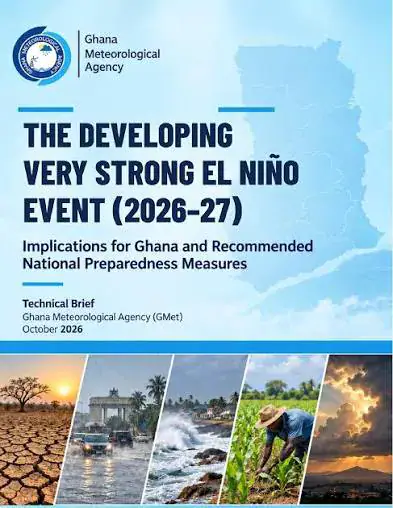
The Ghana Meteorological Agency (GMet) has issued an advisory warning of a strong El Niño event developing in the Pacific, expected to influence Ghana's weather until 2027. This event is likely to bring hotter days, prolonged dry spells, and below-normal rainfall to many parts of the country. As a result, the Harmattan season may feel even drier than usual, with increased dust and heat stress projected to peak between February and April 2027, particularly in the North.
GMet notes that these projections are based on past strong El Niño episodes and current observations of warmer, drier conditions. While the advisory focuses on potential risks rather than exact predictions, it emphasizes the need for preparedness. The agency's warning is not limited to agriculture, water, and power; it also highlights the impact on human health, particularly skin health. The combination of heat, dust, and sun exposure can have significant effects on the skin, especially for those who live or work outdoors.
Ghanaian skin, rich in melanin, offers natural protection against ultraviolet radiation. However, this protection is not absolute, and melanin does not fully shield against the drying effects of intense heat, low humidity, and dust-laden Harmattan winds. Under these conditions, the skin's barrier function can weaken, leading to moisture loss, tightness, flakiness, or itchiness. Fine lines and rough patches may become more noticeable, especially for people who spend long hours outdoors.
The dry, hot air increases the risk of heat-related skin problems, such as heat rash, which can develop where sweat is trapped, especially in skin folds. Fungal infections may also become more common in areas that remain warm and moist despite the overall dryness of the season. Dust can settle on the skin and, if not well cleaned, can clog pores or irritate existing conditions. Those who use skin-lightening products that thin or disrupt the barrier face added vulnerability.
GMet's practical advice for the coming months includes staying hydrated, limiting prolonged outdoor exposure during the hottest hours, and protecting against dust, especially for those with respiratory issues. Drinking enough water supports the skin from within, while gentle cleansing and regular moisturizing with simple, non-irritating creams or butters can help restore the barrier. Seeking shade and using physical barriers such as hats and light, long clothing remain useful even for melanin-rich skin.
For those who spend many hours in the sun, a broad-spectrum sunscreen suited to darker skin tones can provide additional protection against cumulative damage. The coming dry season will not only test agriculture and energy systems but also how well Ghanaians care for their skin. Understanding how Ghanaian skin responds to these conditions and taking simple, consistent steps can help mitigate the negative effects.
The impact of El Niño on skin health is a critical concern, especially for vulnerable populations such as children, the elderly, and those with pre-existing skin conditions. By taking proactive measures to protect their skin, Ghanaians can reduce the risk of heat-related skin problems and maintain their overall health and well-being.
Key points
- The Ghana Meteorological Agency warns of a strong El Niño event that is expected to bring hotter days, dry spells, and below-normal rainfall to Ghana until 2027.
- The El Niño event is likely to have significant effects on skin health, particularly for those who live or work outdoors.
- GMet advises Ghanaians to stay hydrated, limit outdoor exposure, and protect against dust to mitigate the negative effects on skin health.