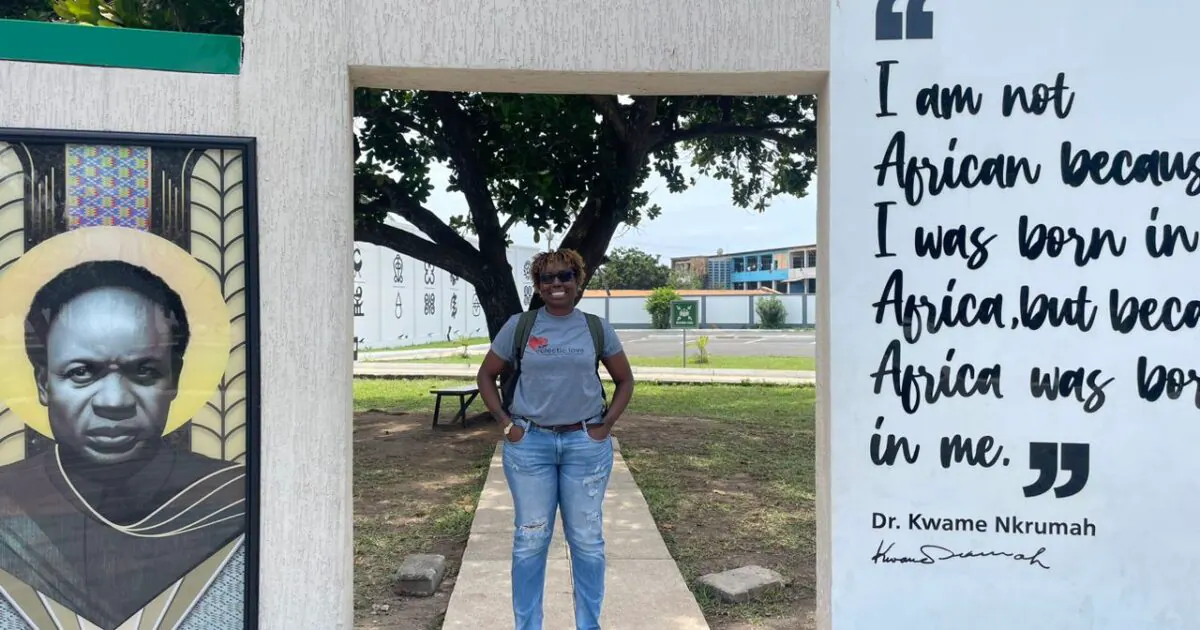
Today, Ghana observes Founder's Day, a public holiday that commemorates the country's founding father, Osagyefo Dr. Kwame Nkrumah. As Ghanaians celebrate, many are taking the opportunity to reflect on the nation's progress since gaining independence. While the country has made significant strides, many questions remain about what this day truly means and what it asks of its citizens.
The founder's message of moving forward, "We face neither East nor West; we face forward," still resonates today, over six decades after it was first uttered. This phrase emphasizes the need for Ghana and Africa to chart their own course, without relying on external influences to dictate their development. However, the challenge lies in balancing international partnerships with local knowledge and ownership.
The article by Miss Patrice Robertson on Joy FM highlights that true independence requires more than just political freedom. It demands that Ghanaians take responsibility for their development, innovation, and governance. This includes investing in education, skills development, and entrepreneurship, particularly among the youth. With one of the youngest populations in the world, Ghana's future depends on providing opportunities for its young people to contribute meaningfully.
In recent years, the government has initiated programs aimed at addressing some of these challenges. Under President John Dramani Mahama's administration, initiatives such as the National Coders Programme, National Apprenticeship Programme, and Adwumawura have been launched to support skills development and innovation. The 2026 Budget has also allocated resources to coding, digital skills, apprenticeship training, and entrepreneurship.
However, government efforts alone are insufficient to drive national development. The article emphasizes that families, educators, businesses, and civil society organizations also have critical roles to play. For instance, a coding program can provide technical knowledge, but it is up to society to foster discipline and create an environment that supports skilled work and dignified livelihoods.
Another area that requires attention is agriculture, which is often cited as the backbone of Ghana's economy. However, the treatment of farmers and the state of the agricultural sector do not always reflect its claimed importance. To modernize agriculture, the sector must incorporate technology, research, irrigation, and climate-smart practices, making it an attractive and innovative industry for young Ghanaians.
As Ghana continues to pursue its development agenda, the Feed Ghana Programme and broader agricultural transformation agenda aim to boost domestic production, improve food security, and strengthen value addition. Ultimately, Ghanaians must work together to build a nation that lives up to its potential, where young people can see opportunities for growth, innovation, and entrepreneurship.
Key points
- The government has initiated programs to support skills development and innovation among the youth.
- True independence requires Ghanaians to take responsibility for their development, innovation, and governance.
- Agriculture must be modernized to incorporate technology, research, and climate-smart practices.