The Institute for Fiscal Studies (IFS) has revealed that Ghana lost $6.5 billion in mining revenue in 2025. According to the IFS, the country could have generated an additional $6.56 billion in mining revenue if the government had adopted a more direct role in the sector. The institute argues that Ghana is not maximising the financial benefits of its mineral resources due to limited government participation in mining operations.
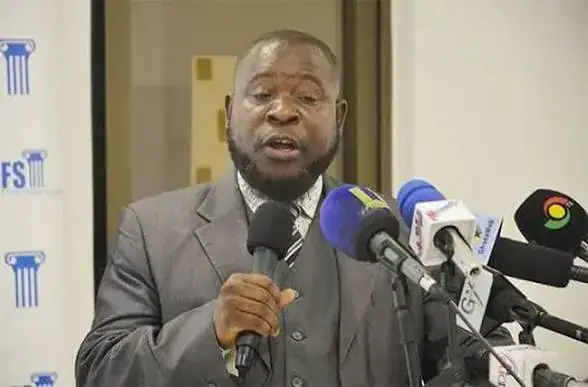
The Executive Director of the IFS, Dr Said Boakye, presented the findings at a policy briefing in Accra on revenue mobilisation. He urged the government to address the shortfall in the 2027 Budget. Dr Boakye used Botswana as a benchmark, noting that the country's mining sector generated $13.4 billion in value added in 2025, compared with Ghana's $1.6 billion in revenue from the sector.
Ghana's mining revenue represented just 11.9 per cent of the sector's value, while Botswana captured an average of 60.9 per cent. According to the IFS analysis, Ghana would have earned approximately $8.16 billion in 2025 if it had secured the same proportion as Botswana, leaving a potential revenue gap of $6.56 billion.
Dr Boakye attributed the difference partly to the level of government involvement in mining activities. He explained that Botswana partners with private companies and benefits directly from the profits generated by mining operations. In contrast, Ghana largely allows private companies to undertake mineral extraction under concession arrangements, with limited access to information about their operations and profitability.
The IFS said the challenges in the mining sector reflect a broader weakness in Ghana's revenue mobilisation efforts. Its report showed that Ghana's total revenue and grants as a percentage of GDP stood at 15.7 per cent in 2022, below the 20.1 per cent average recorded by 25 sub-Saharan African countries assessed in the study.
Dr Boakye identified tax evasion, underreporting, tax avoidance and collusion involving revenue officials as factors contributing to the country's revenue losses. He cited revelations by Ghana Revenue Authority Commissioner-General Anthony Sarpong in April 2026 that more than GH¢11 billion had been lost at the ports through incorrect declarations.
To address the problem, Dr Boakye proposed a shift towards greater state participation in the extractive sector through direct investment and partnerships with private mining companies. He also recommended the adoption of production-sharing agreements as an alternative to the existing concession arrangements.
Key points
- The Institute for Fiscal Studies (IFS) says Ghana could have generated an additional $6.56 billion in mining revenue in 2025 if the government had adopted a more direct role in the sector.
- Ghana's mining revenue represented just 11.9 per cent of the sector's value, while Botswana captured an average of 60.9 per cent.
- The challenges in the mining sector reflect a broader weakness in Ghana's revenue mobilisation efforts, with total revenue and grants as a percentage of GDP standing at 15.7 per cent in 2022.
Reporting sources
- Ghana lost $6.5bn in mini... · ModernGhana