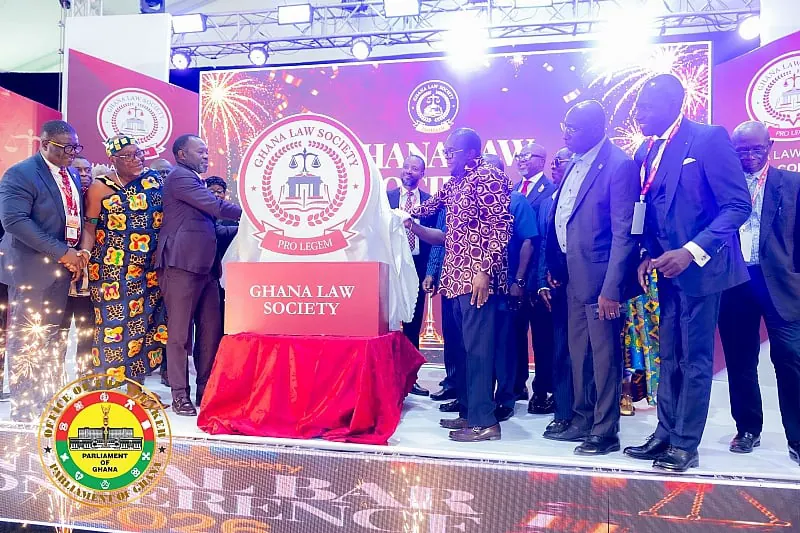
The Ghana Law Society (GLS) has proposed a 12-month structured national service programme for newly qualified lawyers. This initiative aims to take legal services to underserved parts of the country. The programme would be implemented in partnership with the National Service Secretariat. Fresh lawyers would be posted to various institutions, including district assemblies, Legal Aid offices, and Judicial Service.
The President of the GLS, Rockson-Nelson Etse Kwami Dafeamekpor, announced the plan at the Society's maiden Annual Bar Conference in Accra. He stated that the programme is a response to the uneven distribution of lawyers across Ghana. Currently, the country has fewer than 8,000 lawyers with active practising certificates. More than 72 per cent of these lawyers work in Accra, Kumasi, and Tema.
The GLS's proposal seeks to address the shortage of lawyers in many districts. Over 190 districts have no law firm, forcing citizens to travel long distances for basic legal services. These services include land searches, tenancy agreements, bail applications, and legal representation for juveniles. Dafeamekpor emphasized the need for a rethink in how lawyers are trained, posted, and made available to citizens.
The Speaker of Parliament, Alban Sumana Kingsford Bagbin, formally launched the GLS at the event. He noted that legal reform should focus on citizens' access to justice, timely case resolution, and the ability of legal institutions to keep pace with technology. Bagbin cautioned that passing laws alone does not deliver justice, and that effective implementation is crucial.
The Annual Bar Conference, themed "Legal reforms — the place of the Ghanaian lawyer," brought together members of the legal profession and other stakeholders. The conference provided a platform for discussions on legal reforms and the role of lawyers in Ghana's development. Dr Julius Debrah, Chief of Staff, highlighted that legal reform is also an economic issue.
Debrah cited recent reforms, including the Legal Education Act, 2026, and the constitutional review process. He called on lawyers to help translate these reforms into practical improvements in people's lives. The Attorney-General and Minister of Justice, Dr Dominic Ayine, urged lawyers to contribute to legislative drafting, reform of state contracts, and access to justice.
Ayine stressed the need for lawyers' associations to remain independent of political parties and the state. He emphasized that the role of the Ghanaian lawyer in this season of reform is to be independent and engaged. The GLS intends to pursue further reforms in legal education, mandatory pro bono work, digitisation, specialisation, professional welfare, and legal scholarship.
Key points
- The Ghana Law Society proposes a 12-month national service programme for new lawyers to address the uneven distribution of legal services.
- The programme aims to post fresh lawyers to underserved areas, including district assemblies and Legal Aid offices.
- The initiative seeks to address the shortage of lawyers in over 190 districts without a law firm.