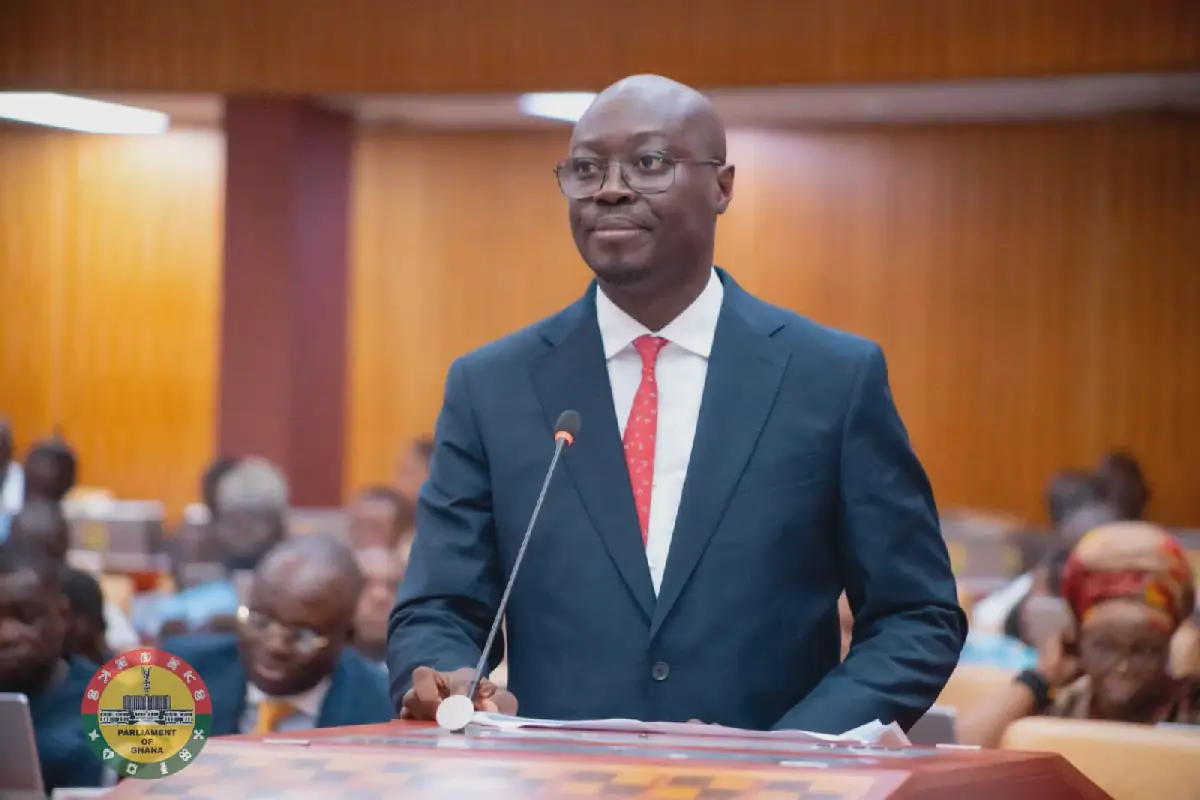
The Ghanaian government has announced plans to launch a US$10 billion economic transformation programme in 2027, aimed at driving production and creating jobs. The programme, which will run from 2027 to 2030, will focus on expanding domestic production, processing more of the country's natural resources locally, and creating opportunities for higher incomes and employment. The initiative was announced by Dr Cassiel Ato Forson, Minister of Finance, when he presented the 2027 Budget Statement and Economic Policy to Parliament.
The programme will receive an initial GHS30 billion allocation in 2027, equivalent to 1.5 per cent of GDP. The funds will support eight priority areas, including macroeconomic stability and affordable finance, commercial agriculture, energy infrastructure, and value addition to critical minerals. Other areas of focus include tourism, culture and creative arts, textiles and garments, pharmaceuticals and biomanufacturing, and the technology economy. The Minister said the programme would help Ghana achieve a job-rich transformation economy.
According to Dr Forson, Ghana has emerged from a difficult economic crisis and must use the fiscal space created through economic stabilisation to support productive investment. The economy faced several shocks in 2026, including the conflict in the Middle East, which almost doubled oil prices, and a sharp decline in cocoa prices early in the year. Despite these challenges, inflation remained at 5.5 per cent in October 2026, while real Gross Domestic Product (GDP) grew by 6.2 per cent in the first half of the year.
The Minister said borrowing costs had declined, with the monetary policy rate falling from 21.5 to 14 per cent and the Ghana Reference Rate dropping from 29.72 to 10.01 per cent. Average lending rates declined from 22.2 to 15.94 per cent in 2026. On fiscal performance between January and October 2026, the Government recorded a primary surplus of 1.4 per cent of GDP on a commitment basis, close to the full-year target of 1.5 per cent.
The 2027 budget projects total revenue and grants at GHS323.4 billion, equivalent to 17.9 per cent of GDP. Domestic revenue is expected to contribute GHS320.2 billion, comprising GHS256.1 billion in non-oil tax revenue, GHS33.5 billion in non-oil non-tax revenue, GHS15.5 billion in oil revenue, and GHS15.1 billion in other revenue. Total expenditure on a cash basis is projected at GHS389.2 billion, representing 21.6 per cent of GDP.
The education sector has been allocated GHS48 billion, including GHS11.2 billion for the Ghana Education Trust Fund (GETFund), GHS1.37 billion to transform secondary education and eliminate the double-track system, and GHS537 million for the No Fees Stress Policy for first-year tertiary students. The health sector is expected to receive GHS40.3 billion, including GHS10.2 billion for the National Health Insurance Scheme and GHS2.6 billion for the Ghana Medical Trust Fund.
The Minister announced the early redemption of GHS29 billion in Domestic Debt Exchange Programme bonds due in February 2027, effective November 12, 2026. The Government intends to settle both the January Eurobond and the February domestic bond by December 31, 2026, bringing forward more than GHS36 billion in debt repayments. The Big Push infrastructure programme will receive GHS29.8 billion in 2027 to accelerate road construction and improve transport corridors.
Key points
- The programme will focus on expanding domestic production, processing more of the country's natural resources locally, and creating opportunities for higher incomes and employment.
- The education sector has been allocated GHS48 billion, while the health sector is expected to receive GHS40.3 billion.
- The Minister announced the early redemption of GHS29 billion in Domestic Debt Exchange Programme bonds due in February 2027.
Reporting sources
- 2027-Budget: Ghana eyes job-rich transformation economy · Ghana News Agency