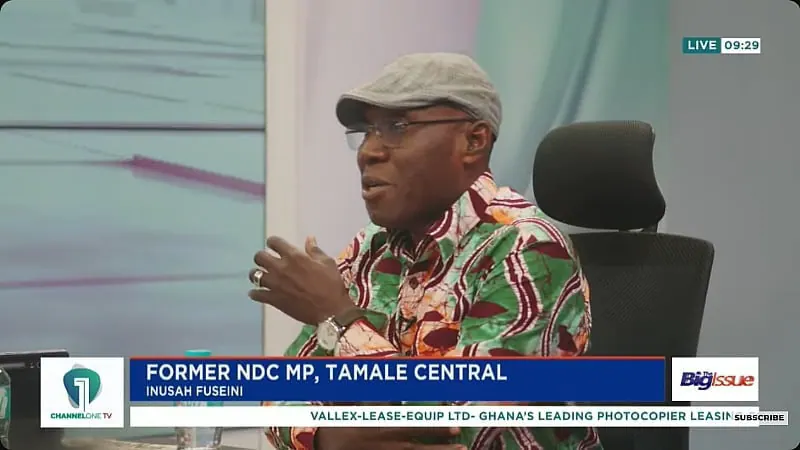
Former Tamale Central Member of Parliament, Inusah Fuseini, has commented on the ongoing investigation into the alleged circulation of false news by persons linked to the “Ghana Jollof” TikTok account. He emphasized that the right to free expression does not protect conduct that violates Ghanaian law. Mr. Fuseini's remarks come after the arrest and remand of senior nursing officer Salomey Awity Baffoe, who is alleged to have been involved in disseminating content produced by UK-based TikTok operator Barbara Asantewaa Kodua.
Mr. Fuseini stated that the key issue for investigators is whether the content in question amounts to conduct prohibited by law. He argued that false news is not, in itself, a criminal offense in every circumstance. However, publications capable of causing fear or panic could be subject to investigation. According to him, the police should focus on investigating publications that are likely to cause panic, fear, and chaos in society.
The Police have charged Ms. Baffoe with abetment of crime, specifically publication of false news, and she has pleaded not guilty. They allege that she assisted in recruiting people to redistribute videos produced by Ms. Kodua and that financial transactions linked to the activities were uncovered during investigations. The police investigation concerns alleged publication of false news, inciting comments, and offensive conduct involving the “Ghana Jollof” account.
Mr. Fuseini criticized what he described as irresponsible conduct on social media, warning that political disagreements should not be used to justify conduct that could have wider consequences. He expressed concern that such actions could set a bad precedent and be used against others in the future. Mr. Fuseini emphasized that he has never watched the videos in question, as he believes they could corrupt his morals.
The investigation into the “Ghana Jollof” TikTok account is ongoing, with the police working to identify other persons allegedly involved in distributing the content and its alleged financial sponsors. Ms. Baffoe is expected to reappear before the Adenta Circuit Court on September 30, 2026. The case has sparked a wider conversation about the limits of free speech and the regulation of social media content.
Mr. Fuseini's comments highlight the complexities of balancing free speech with the need to regulate harmful content. He argued that the right to free expression should not be used to justify conduct that violates the law or causes harm to others. The case has significant implications for the regulation of social media content in Ghana and the protection of citizens from potentially harmful or false information.
The Ghana Jollof saga has raised important questions about the role of social media in shaping public discourse and the need for effective regulation. As the investigation continues, it remains to be seen how the courts will interpret the law and balance the competing interests of free speech and public safety. The case will likely have far-reaching consequences for the country's social media landscape.
Key points
- The investigation into the Ghana Jollof TikTok account raises questions about the limits of free speech.
- Former MP Inusah Fuseini emphasizes that the right to free expression does not protect conduct that violates Ghanaian law.
- The case has significant implications for the regulation of social media content in Ghana.