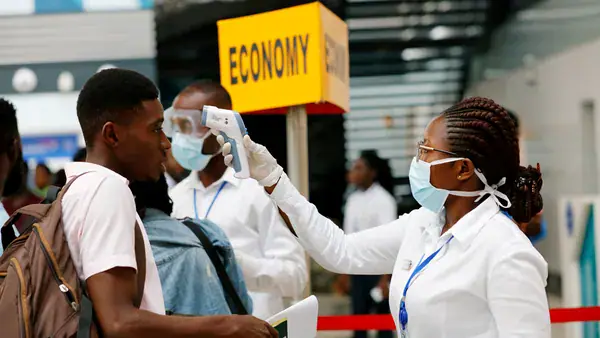
The Ministry of Health in Ghana has implemented enhanced Ebola screening measures at all international airports in the country. This move aims to prevent the importation and spread of the disease following an ongoing outbreak of the Bundibugyo virus in some African countries. As of November 3, 2026, travellers arriving from countries experiencing active transmission will undergo health monitoring for up to 21 days. The Ministry of Health, led by Minister Kwabena Mintah Akandoh, issued a statement outlining these new measures.
Ghana has not recorded any confirmed cases of Ebola, and the Ministry describes these interventions as precautionary. The new arrangements require all passengers arriving at Ghana's international airports to be screened by Port Health officers. The screening process includes non-contact temperature checks and reviews of health declaration forms and travel histories. This step is crucial in identifying potential cases early and preventing the spread of the disease.
Travellers will be required to disclose any visits to or transit through Ebola-affected countries within the preceding 21 days, as well as any possible contact with suspected or confirmed cases. The Ministry has advised passengers experiencing symptoms such as fever, severe weakness, headache, vomiting, diarrhoea, or unexplained bleeding and bruising to postpone their journeys and seek medical attention. This advice aims to prevent the transportation of potential cases and ensure that those who may be infected receive timely medical care.
Passengers presenting symptoms suggestive of Ebola or identified as having possible exposure will undergo further assessment. They may also be temporarily isolated for evaluation before being referred to a health facility, where necessary. The Ghana Health Service will monitor passengers arriving from countries with ongoing transmission for up to 21 days and contact them for follow-up. This monitoring is essential for early detection and response to potential cases.
The directive also requires hotels, conference venues, and similar hospitality establishments to report guests arriving from affected countries to the nearest district health directorate of the Ghana Health Service and maintain their contact details. This measure ensures that travellers arriving from high-risk areas are tracked and monitored for any signs of illness. By doing so, the Ministry aims to prevent potential outbreaks in the country.
The Ministry has urged passengers to cooperate with Port Health officers, provide accurate health and travel information, practise frequent hand hygiene, and immediately report any symptoms that develop during their journey or upon arrival. Passengers who knowingly provide false information, conceal symptoms, or refuse to comply with screening requirements will be subject to public health measures under Ghanaian law. This emphasizes the importance of cooperation and transparency in preventing the spread of Ebola.
The enhanced Ebola screening measures follow commitments made at a recent ministerial meeting of the Africa Centres for Disease Control and Prevention (Africa CDC). By taking proactive steps, Ghana aims to protect its population and prevent the spread of Ebola. The Ministry's efforts are geared towards ensuring public health and safety, and the country remains vigilant in its response to the ongoing outbreak in some African countries.
Key points
- Travellers arriving from countries with active Ebola transmission will undergo health monitoring for up to 21 days.
- The screening process includes non-contact temperature checks and reviews of health declaration forms and travel histories.
- Passengers with symptoms suggestive of Ebola will undergo further assessment and may be temporarily isolated for evaluation.