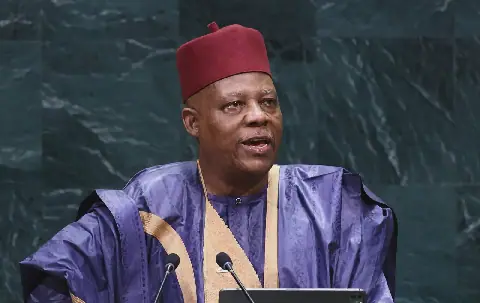
Ghana's Minister of Finance, Dr. Cassiel Ato Forson, has announced that the government has introduced approximately 22 laws over the past 18 months to ensure the sustainability of its economic reforms. The aim is to protect the economic stability achieved by Ghanaians and prevent future governments from reversing the progress made. This move is part of a broader effort to provide a lasting foundation for the government's reforms in law.
Dr. Forson made these remarks during a New Economy engagement at the University of Ghana, where he outlined efforts to institutionalize the government's reforms. He was responding to Prof. Fred Dzanku, Head of the Economics Division at the university's Institute of Statistical, Social and Economic Research (ISSER), who asked how some of the government's policies and agenda could be sustained. Dr. Forson emphasized that introducing legislation, repealing existing laws, and making amendments are crucial to protecting the reforms against reversal.
The Minister of Finance explained that the government is also pursuing amendments to require a two-thirds majority in Parliament to change some of the laws, making it harder for future administrations to undo the reforms. This move is aimed at "locking in the progress" made so far. Dr. Forson cited his experience in Parliament and policymaking as shaping his understanding of how to sustain reforms beyond the tenure of a particular government.
Dr. Forson observed that policies are easier for a government to change when they are not backed by law, underscoring the need to turn reform commitments into legal requirements. He emphasized that his experience has taught him the importance of institutionalizing policies to ensure their sustainability. The Minister of Finance is confident that the government's efforts will provide a solid foundation for Ghana's economic stability.
One of the key areas where the government is working to institutionalize its reforms is in the area of public financial management. Dr. Forson cited ongoing amendments to the Public Financial Management (PFM) Act as part of that effort. The amendments aim to provide a more robust framework for managing Ghana's finances and preventing a return to the economic crisis of 2022-2024.
The government's efforts to introduce new laws and amend existing ones are part of a broader strategy to ensure that Ghana's economic reforms are sustainable in the long term. Dr. Forson emphasized that the government is committed to protecting the economic stability achieved by Ghanaians and ensuring that the progress made is not reversed. The Minister of Finance is confident that the government's efforts will pay off in the long run.
The introduction of the 22 laws is a significant step towards ensuring the sustainability of Ghana's economic reforms. The government's efforts to institutionalize its policies and provide a lasting foundation for its reforms in law are expected to have a positive impact on Ghana's economy. The Minister of Finance's announcement has been seen as a positive development by many Ghanaians who are eager to see the country's economy continue to grow and stabilize.
Key points
- The Ghanaian government has introduced 22 laws in 18 months to safeguard economic stability and prevent future reversals of reforms.
- The laws aim to provide a lasting foundation for the government's reforms and prevent a return to the economic crisis of 2022-2024.
- The government is also pursuing amendments to require a two-thirds majority in Parliament to change some of the laws, making it harder for future administrations to undo the reforms.