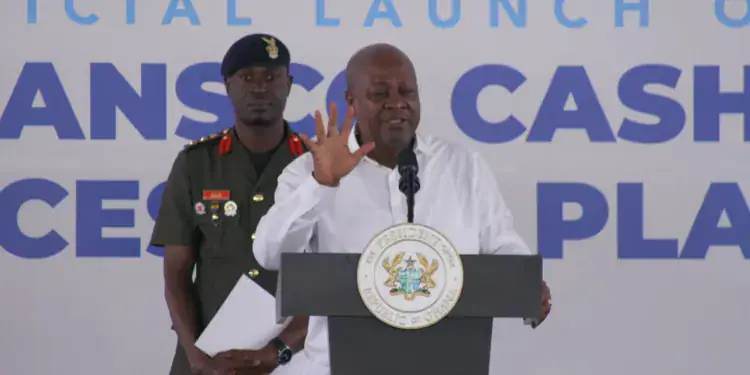
On November 16, President John Dramani Mahama announced a three-month ban on the export of raw cashew nuts during the harvesting season to ensure local processing companies have sufficient supplies. The ban aims to support domestic processors and increase local processing capacity. Ghana produces approximately 262,000 tonnes of cashew annually, but its current processing capacity is insufficient to handle the entire output. The President made the announcement during the commissioning of the Ghana EXIM Bank-funded Nadkansco Processing Limited factory in Techiman.
The government also plans to introduce a levy on cashew exports, with revenue channelled into a fund to support domestic processors. This approach is similar to that used by neighbouring Côte d'Ivoire. The levy will help local processors purchase raw materials and maintain production. President Mahama stated that the measures are intended to move Ghana away from exporting large quantities of raw cashew nuts without fully benefiting from the jobs and economic opportunities that come with processing the crop locally.
The newly commissioned Nadkansco factory can process between 30,000 and 31,000 tonnes of cashew annually. To process Ghana's entire cashew production, the country would require an additional four or five factories of similar capacity. The President emphasized that the government would support farmers and local processing companies to expand the cashew industry, create employment, and boost agro-processing. This initiative is expected to have a positive impact on Ghana's economy and job market.
The Minister of Government Communications, Felix Kwakye Fosu, stated that the Nadkansco factory has a capacity to process 100 metric tonnes of raw cashew nuts daily. Once fully operational, the factory is expected to provide 1,500 direct jobs, with 600 workers currently undergoing training. The company has a network of 6,000 cashew farmers who are expected to supply raw cashew nuts to the factory, with 1,200 farmers having received training under GEXIM funding.
Under the proposed arrangement, exporters will have to wait until local processors have purchased sufficient quantities of raw cashew nuts before the remaining produce can be shipped abroad. President Mahama explained that the ban will be in place for the first three months of the harvesting season, after which the gates will be opened for the excess produce to be exported. This measure aims to ensure that local processors have a stable supply of raw materials.
The government is considering measures to increase local processing and ensure Ghana benefits more from its cashew production. The President emphasized that the country needs to move beyond exporting raw cashew nuts and instead focus on processing the crop locally to create jobs and stimulate economic growth. The introduction of the levy and the ban on raw cashew exports are part of the government's efforts to achieve this goal.
The implementation of these measures is expected to have a positive impact on Ghana's cashew industry. With the Nadkansco factory now operational, and plans for additional factories, the country is poised to increase its local processing capacity. The government's support for farmers and local processing companies will also help to expand the industry, create employment, and boost agro-processing. Key points include a three-month ban on raw cashew exports, an export levy to support local processors, and plans for additional processing factories.
Key points
- The ban on raw cashew exports will be in place for the first three months of the harvesting season.
- The government plans to introduce a levy on cashew exports to support local processors.
- The Nadkansco factory can process between 30,000 and 31,000 tonnes of cashew annually.