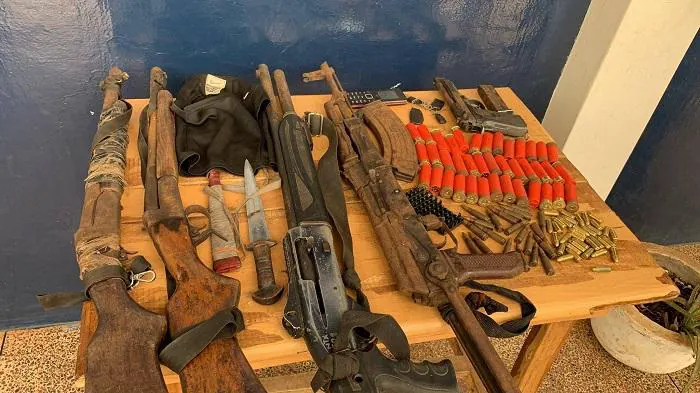
Ghana has been identified as a significant source of commercial explosives finding their way into conflicts in Mali and Burkina Faso. The 2025 Global Organised Crime Index describes arms trafficking as a notable and growing challenge in Ghana. Accra and Kumasi are identified as important centres for the distribution and acquisition of illegally traded firearms. The Index assigns Ghana an arms trafficking score of 6.50.
The report places particular emphasis on Kumasi, where established centres for locally manufactured firearms have developed a pool of skilled craftsmen capable of producing weapons. The accessibility of relatively inexpensive raw materials and profitable prices of locally produced firearms have made illicit firearm production an attractive commercial activity. Demand for unauthorised weapons has expanded beyond communities traditionally associated with hunting and poaching.
Illegal firearms are now sought in both urban and rural communities, where concerns surrounding criminal activity and personal security have contributed to demand for illicit weapons. Criminal networks participate in the movement and exchange of firearms within Ghana and across international borders. These networks provide connections between foreign arms traders and purchasers operating within local markets.
Beyond firearms, the report identifies Ghana as a principal source of commercial explosives used in conflicts in Mali and Burkina Faso. This finding highlights the transnational character of Ghana’s illicit arms and explosives market. The problem extends beyond domestic circulation of unauthorised weapons and includes the movement of controlled materials across national boundaries.
The assessment also draws attention to Ghana’s trade in counterfeit merchandise. A substantial proportion of electrical products marketed in Accra are counterfeit and may fail to comply with required safety standards. The Index gives Ghana a counterfeit goods score of 5.50. Counterfeit pharmaceutical products are likewise identified as a longstanding concern.
Specific commercial centres are associated with different categories of counterfeit merchandise. Makola is identified in relation to counterfeit textiles, and Abossey Okai is associated with the trade in imitation vehicle spare parts. A significant portion of counterfeit merchandise entering the West African market is manufactured in China before being transported into the region through Ghana’s maritime gateway at the Port of Tema.
The report places Ghana’s overall criminality score at 5.77, with criminal markets receiving a score of 6.03 and criminal actors receiving 5.50. The findings present Ghana as a country confronting several interconnected forms of organised criminal activity. Ghana’s identification as a source of commercial explosives adds a cross-border dimension to concerns surrounding the control, distribution, and movement of explosive materials in West Africa.
Key points
- Ghana identified as significant source of commercial explosives in Mali and Burkina Faso conflicts
- Illicit arms production an attractive commercial activity due to accessibility of raw materials and profitable prices
- Ghana’s overall criminality score is 5.77, with high scores in criminal markets and arms trafficking