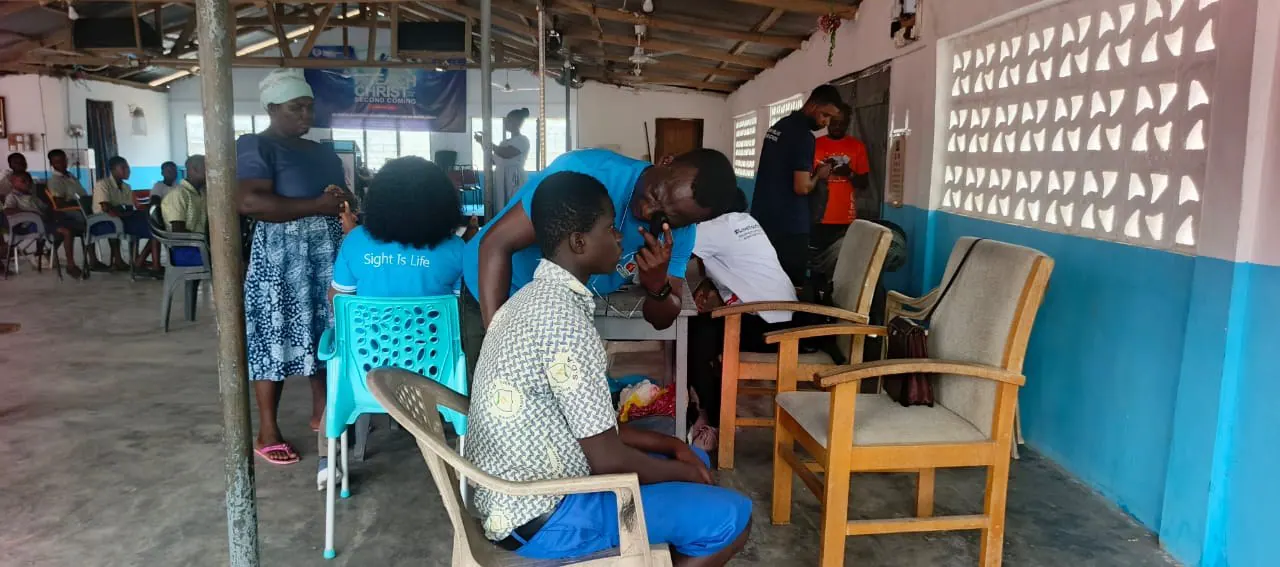
The Ghana Health Service (GHS) has marked World Sight Day, October 8, with a call to action for the public to undergo regular eye examinations and seek care promptly at the first sign of trouble. According to the GHS, uncorrected refractive errors and cataracts remain the leading causes of vision impairment and blindness in Ghana, despite being addressable through low-cost interventions. The Service emphasized that many Ghanaians only visit an eye specialist after their sight has already begun to fail.
The GHS's appeal is framed around this year's global theme, "Eye care for all: Integrating vision into primary health care." The Service encourages anyone noticing blurred or reduced vision, eye pain, or any other change in their eyesight to visit the nearest health facility rather than wait. Primary healthcare centres are expected to play a critical role in catching vision problems early, educating families, and referring patients onward for specialist treatment when needed.
Dr. Gladys Fordjour, a Consultant Ophthalmologist and Cornea Surgeon, representing the Ophthalmological Society of Ghana, launched a separate World Sight Day programme at Maamobi General Hospital in Accra. She emphasized that eye care is not a luxury, but rather a core part of public health, education, workplace safety, and national development. Dr. Fordjour called for eye health to be integrated into Ghana's drive toward universal health coverage and extended beyond hospital wards into schools, workplaces, markets, churches, and homes.
Dr. Fordjour also highlighted the importance of children's vision as an education issue, noting that uncorrected refractive errors can quietly undermine a child's performance in class. She urged closer cooperation between the health and education sectors on school-based vision screening and spectacle provision. This would help identify and address vision problems early, ensuring that children can reach their full potential.
Dr. Abdul Razak Quao, Medical Superintendent of Maamobi General Hospital, pointed to Ghana's large informal workforce as a group whose livelihoods depend directly on good eyesight but often have little access to routine screening or workplace health programmes. He urged workers exposed to eye injury risks to use protective goggles and warned against self-medicating with unprescribed eye drops.
Officials speaking at the Maamobi event acknowledged that cost remains a barrier for many Ghanaians, citing the price of spectacles, medicines, surgery, and follow-up care, particularly for vulnerable communities. They called for a collective response involving government, employers, traditional and religious leaders, and development partners to cut down avoidable vision loss.
While no specific timeline or policy document was cited for how eye care will be formally integrated into primary healthcare services nationwide, the GHS and ophthalmologists framed their appeals as calls to action rather than announcements of new programmes. The goal is to make eye care more accessible and affordable for all Ghanaians, ultimately reducing the incidence of avoidable blindness.
Key points
- Uncorrected refractive errors and cataracts remain the leading causes of vision impairment and blindness in Ghana.
- The Ghana Health Service is pushing for eye care to reach schools, markets, and workplaces, not just hospitals.
- Cost remains a barrier for many Ghanaians in accessing eye care services.