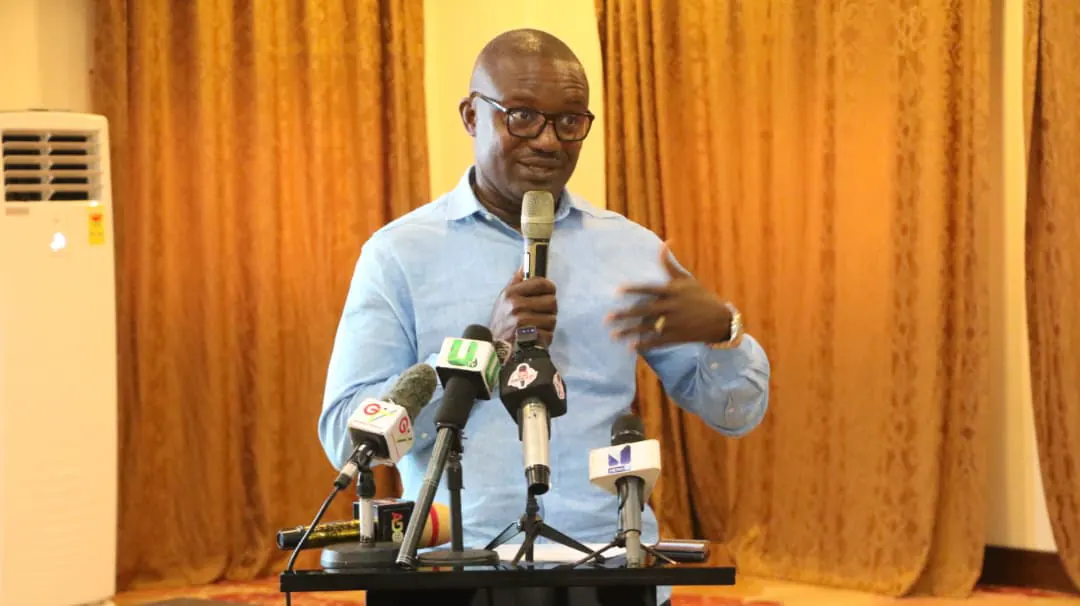
The government of Ghana has taken a significant step towards enhancing the country's power distribution system by procuring more than 2,000 transformers. This move is part of a broader effort to improve electricity reliability and meet the rising demand for power across the nation. The announcement was made by Dr. John Abdulai Jinapor, the Minister for Energy and Green Transition, during the 2026 Energy Sector Performance Review Retreat.
According to Dr. Jinapor, the procurement of transformers is one of several interventions aimed at strengthening the country's power system across generation, transmission, and distribution segments. He highlighted that Ghana's electricity access has reached 89.13 percent, with an installed generation capacity of 5,854 megawatts (MW). Additionally, the country's renewable energy capacity has increased to 345MW, reflecting ongoing efforts to diversify the energy mix.
Despite these achievements, the power sector faced significant challenges in 2026, particularly after a fire at the Akosombo Switchyard in April. The incident resulted in the loss of over 1,000MW of generation capacity, putting pressure on the national electricity system. Dr. Jinapor commended the Volta River Authority (VRA) and the Ghana Grid Company Limited (GRIDCo) for their swift response and efforts to minimize the impact on the national system.
The government is also pursuing several transmission projects to improve the capacity and reliability of the national grid. One of these projects is the construction of the Ho–Asiekpe transmission line, which is expected to strengthen the transmission network. Dr. Jinapor emphasized that generation alone is not enough; there must be adequate transmission and distribution infrastructure to deliver reliable power to homes, businesses, and industries.
On the generation front, eight out of ten units at the Anwomaso Thermal Plant have been commissioned, with six currently in operation. The project is expected to generate 250MW by the end of 2026. Furthermore, Cabinet and Parliament have approved the renegotiation of agreements with Independent Power Producers (IPPs), aimed at improving the financial sustainability of the power sector.
The Minister also provided an update on the proposed Accra–Kumasi 330kV transmission line, stating that the consultant tender has been evaluated, and the scoping report and Environmental and Social Impact Assessment (ESIA) have been completed. However, he acknowledged that challenges persist in transmission infrastructure, distribution efficiency, project financing, and the implementation of key energy programs.
Looking ahead to 2027, Dr. Jinapor emphasized the government's commitment to translating plans into measurable results, expanding electricity access, and ensuring that new generation capacity keeps pace with demand. The government aims to build an energy sector capable of providing reliable, affordable, sustainable, and resilient power to support Ghana's economic transformation.
Key points
- The government of Ghana has procured over 2,000 transformers to enhance power distribution and reliability nationwide.
- Ghana's electricity access has reached 89.13 percent, with an installed generation capacity of 5,854 megawatts (MW).
- The government is pursuing several transmission projects, including the construction of the Ho–Asiekpe transmission line, to strengthen the national grid.