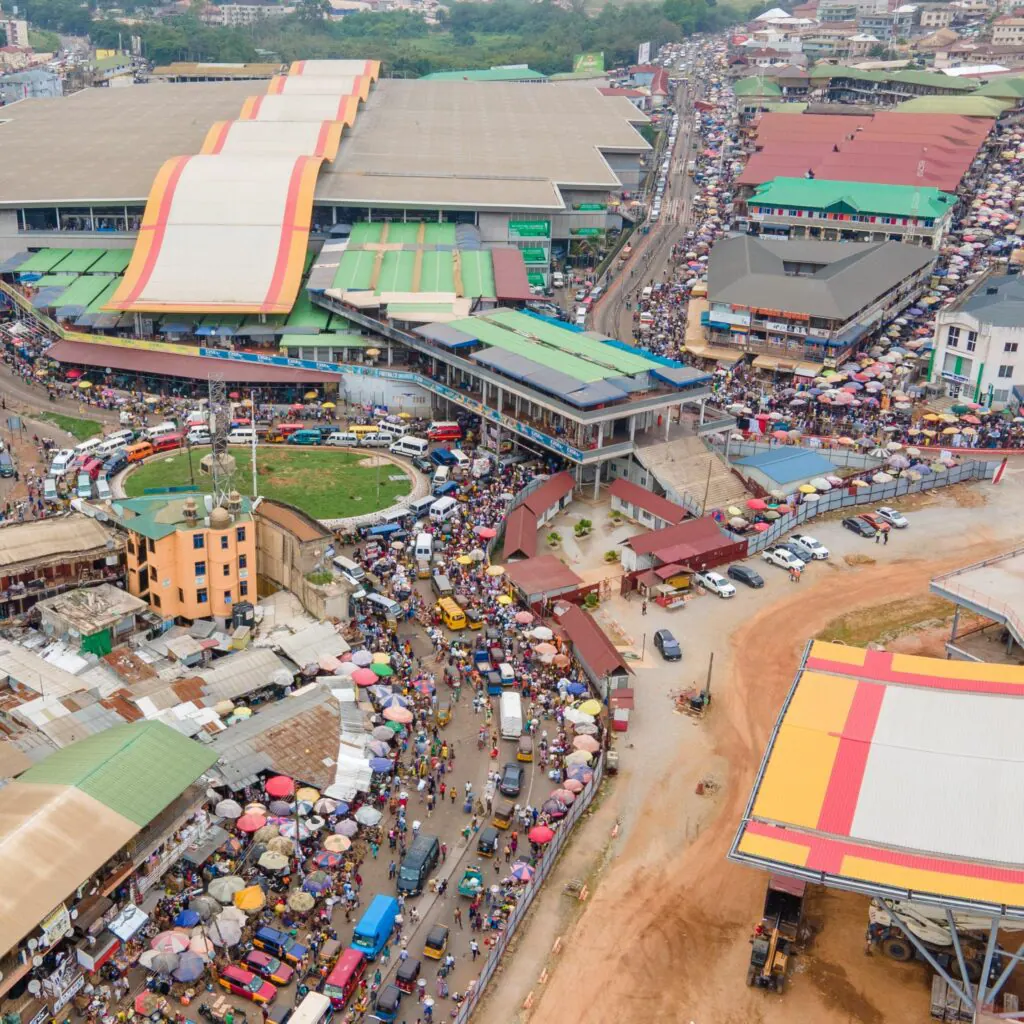
The Ministry of Local Government, Chieftaincy and Religious Affairs in Ghana has expressed concerns over the alleged resale and subletting of shops at the Kumasi Central Market Redevelopment Project. A preliminary assessment found that occupants who obtained shops for a five-year premium of GH¢25,000 were reselling or subletting them for between GH¢100,000 and GH¢120,000. This has raised concerns that significant potential revenue is accruing to individuals rather than the public authority responsible for the redevelopment project.
Local Government Minister Mahama Ayariga disclosed the findings at a stakeholder engagement in Kumasi on September 21, 2026. He stated that some individuals had distributed the shops among themselves and sublet them to others at the actual market rate. The minister argued that if the prevailing market value of a shop is around GH¢100,000, the government should consider capturing that value directly through the premium structure.
The concerns extend beyond the alleged resale of shops, with the ministry and the Kumasi Metropolitan Assembly noting that many occupants have failed to settle the full premiums due under their five-year tenancy arrangements. When the first phase was commissioned, authorities expected to generate GH¢165.3 million in premiums over five years, but only GH¢89 million has been collected so far, representing roughly 54 percent of the expected revenue.
Kumasi Mayor Richard Agyeman Boadi said the shops in the first phase were offered to traders at an affordable premium, but some individuals allegedly obtained multiple shops and transferred them to others at substantially higher prices. He cited the case of an individual who controls 20 shops and allegedly sold them for GH¢100,000 each after acquiring them at the official GH¢25,000 premium.
The authorities are seeking a different approach to premium collection as preparations continue for subsequent stages of the project. Under the proposed arrangement for phase two, premiums will be determined based on the prevailing value of market spaces. The objective is to generate sufficient internal revenue from the market itself to support the continuation of the redevelopment.
The second phase of the Kumasi Central Market redevelopment is currently 68 percent complete, with procurement 84 percent complete and construction works at 49 percent. The project contract, valued at €248 million, was signed in December 2018, but implementation was delayed, with construction works expected to resume in October 2026.
The assembly is giving occupants of the first phase until the end of December 2026 to settle their outstanding premium obligations, warning that those who fail to clear their debts could risk losing their shops. The renewed attention on premium collection aims to establish a sustainable financial model for the entire redevelopment programme, with revenues from the market expected to play a central role in supporting completion and future management.
Key points
- The Ghanaian government is seeking to recover revenue from the Kejetia market redevelopment project after discovering that shops were being resold at huge profits.
- The government is considering a new approach to premium collection, based on the prevailing value of market spaces, to generate sufficient internal revenue to support the project's completion.
- The second phase of the Kumasi Central Market redevelopment is 68 percent complete, with construction works expected to resume in October 2026.