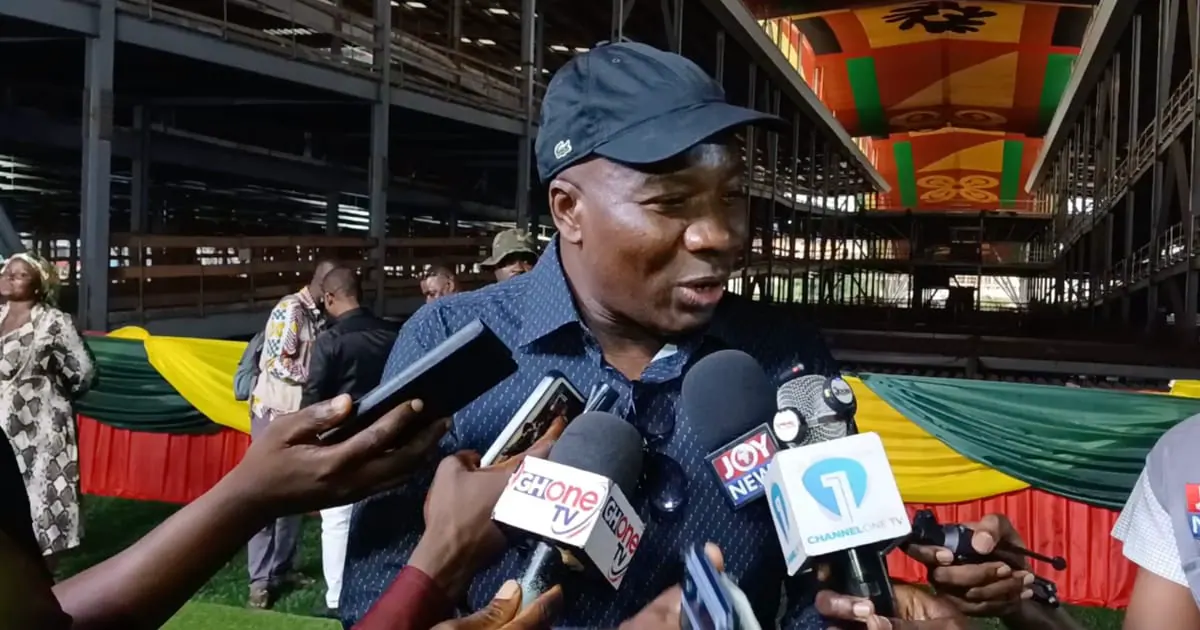
The Ghanaian government is exploring a direct financing arrangement with traders to complete and occupy Phase Two of the Kejetia Redevelopment Market in Kumasi. This approach comes as funding constraints and rising construction costs have stalled the project. Minister for Local Government, Chieftaincy and Religious Affairs Mahama Ayariga proposed that the Kumasi Metropolitan Assembly collect payments directly from traders at market value. The revenue generated would support the completion of the next phase.
The project, initially signed in December 2018 with a €248 million contract, aimed to add 3,760 counter shops, over 6,000 lockable shops, and a transport terminal for 600 vehicles to the existing Kejetia complex. The original completion period was 48 months. However, the project has faced significant delays. According to the project consultant, Tony Yeboah of Avangarde Design Services, the development is currently 68 per cent complete overall.
Procurement for the project stands at 84 per cent and engineering at 99 per cent, but construction is at 49 per cent. So far, €171 million has been paid towards the project. The government is now working with the Finance Ministry, the Kumasi Mayor, and the Ashanti Regional Minister to mobilise funds and support the contractor's return to site. This effort follows the impact of the Debt Exchange Programme and the suspension of international loans.
Ghana launched its Domestic Debt Exchange Programme on 5 December 2022 and later that month suspended payments on most of its external commercial and bilateral debt. These financial challenges have affected various projects, including the Kejetia market development. Minister Ayariga indicated that the available funding may not be sufficient to complete every component of the project as originally designed.
The proposed direct financing arrangement aims to expand trading space, reduce pressure on the streets, and generate resources for further development within the metropolis. By collecting payments at market value from traders, the government hopes to secure the necessary funds to complete Phase Two. This approach may also serve as a model for other stalled projects facing similar financial challenges.
The Kejetia Redevelopment Market project is significant for Kumasi, as it seeks to improve trading conditions and infrastructure. Once completed, the market will provide a modern and organised trading environment for thousands of traders. The project's success will depend on effective collaboration between the government, local authorities, and traders.
Minister Ayariga's proposal for direct trader payments highlights the government's efforts to find innovative solutions to project funding challenges. The outcome of this approach will be closely watched, as it may have implications for other development projects in Ghana. The government's ability to balance funding constraints with project goals will be crucial in determining the project's success.
Key points
- The Ghanaian government is exploring direct payments from traders at market value to complete Kejetia Phase Two due to funding constraints.
- The €248 million project, signed in December 2018, is currently 68 per cent complete but faces significant delays.
- The available funding for the project may not be enough to complete every component as originally designed.