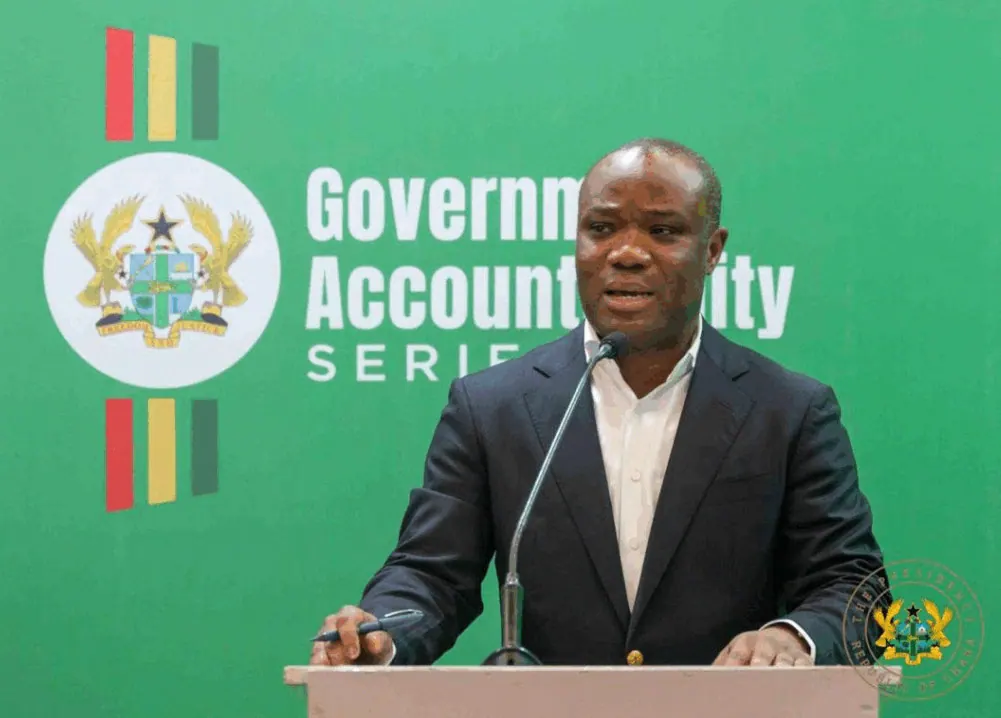
The Ghanaian government has acknowledged that a rivalry among security agencies responsible for protecting the country's ports is undermining its fight against drug trafficking. According to Felix Kwakye Ofosu, the government spokesperson, this infighting has become a significant challenge. He revealed that President John Mahama recently convened a meeting where the extent of the rivalry became clear. The meeting was attended by various security agencies, and it was evident that each agency is trying to assert its supremacy over the ports.
The rivalry among the security agencies has resulted in a lack of information sharing, which is crucial in the fight against drug trafficking. Mr. Kwakye Ofosu stated that President Mahama has directed the agencies to end the turf war and submit a roadmap showing how they will collaborate and share information. The deadline for the roadmap was due to expire within days of Mr. Kwakye Ofosu's interview. The President emphasized that Ghana's borders would not be tolerated as a transit point for drug trafficking.
The admission of institutional rivalry comes against the backdrop of a major seizure reported by French customs. Nearly 3.9 tonnes of cocaine hidden in a container that had departed from Ghana were intercepted. This bust is the latest in a string of drug-related incidents that have fueled concern in Parliament. The incidents include the seizure of an assault rifle, pistols, and 610 bullets at Tema Port.
The Minority in Parliament had pushed to recall the House and investigate claims that Ghana is becoming a drug transit hub. However, Speaker Alban Bagbin subsequently ruled the Minority's proposed inquiry inadmissible. Despite admitting to the agency rivalry, Mr. Kwakye Ofosu firmly rejected characterizing Ghana as a "cocaine coast." He argued that cases where Ghanaian law enforcement intercepts drugs or arrests suspects should not be conflated with trafficking that slips through undetected.
Mr. Kwakye Ofosu pointed to the work of the Narcotics Control Commission (NACOC) as evidence that the system is functioning rather than failing. NACOC is the state agency mandated to detect, prevent, and prosecute drug trafficking and illegal drug use in Ghana. However, he conceded that consignments escaping Ghanaian scrutiny and surfacing abroad, such as the France seizure, remain a worrying trend.
The controversy also follows earlier remarks by the Interior Minister to Parliament about "involvement of some people within the system." Government later clarified that these comments referred specifically to security officials currently under investigation rather than broader complicity across the security services. The drug debate has also touched religious and political circles, with Pastor Kofi Oduro previously warning the NDC against meddling in the Hartog drug case.
The government has not announced any new parliamentary inquiry following the Speaker's rejection of the Minority's recall request. Officials have not specified what further steps, if any, will follow the France seizure. Mr. Kwakye Ofosu said the roadmap requested by President Mahama from the rival agencies was due within days of his interview, though no public details on its contents have been released.
Key points
- The Ghanaian government has acknowledged a turf war among security agencies responsible for protecting the country's ports, which is undermining its fight against drug trafficking.
- A 3.9-tonne cocaine seizure in France, traced to Ghana, has fueled concerns that the country is becoming a drug transit hub.
- The government has directed the rival agencies to end the turf war and submit a roadmap showing how they will collaborate and share information to combat drug trafficking.