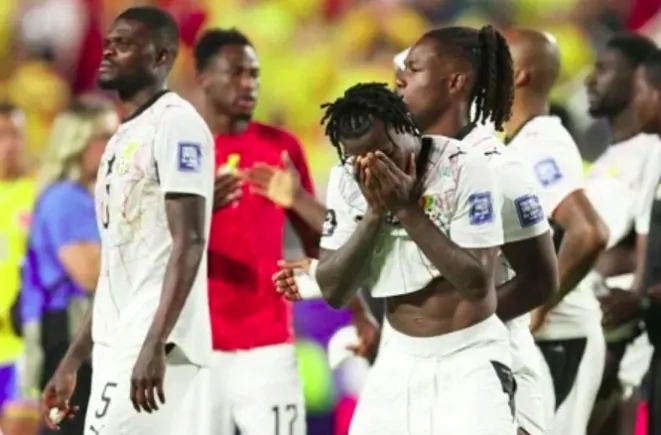
Ghana's national football team, the Black Stars, has made a disappointing start to the 2027 Africa Cup of Nations qualifiers, losing two matches and failing to secure a single point. The team's 2-0 loss to Côte d'Ivoire in Bouaké was followed by a 4-2 home defeat to The Gambia, a result that has raised concerns about the team's ability to compete at the highest level. These results have sparked a national conversation about the state of football in Ghana and the need for urgent reform.
The two defeats have highlighted the team's struggles, with many questioning the leadership and structure of the Ghana Football Association (GFA). The team's performance has been marred by a lack of cohesion and leadership on the pitch, with the defense repeatedly exposed and the midfield failing to control the game. The Gambia match, in particular, was marked by a collapse in the second half, with the team conceding four unanswered goals.
The Black Stars' recent performances are not an isolated incident, but rather a continuation of a downward trend. Ghana failed to qualify for the 2025 Africa Cup of Nations and has not won a match at the tournament since 2019. The team's last victory in an AFCON qualifier came against the Central African Republic in September 2023. These results have raised questions about the team's ability to compete with top African teams.
Injuries and withdrawals have contributed to the team's struggles, with key players such as Mohammed Kudus, Antoine Semenyo, Thomas Partey, and Jordan Ayew missing from the squad. However, strong football nations typically build depth to mitigate the impact of absences, and Ghana's failure to do so has exposed deeper problems of structure, planning, and culture.
The leadership of the GFA has come under scrutiny, with many questioning the decision-making process and the concentration of power. GFA President Kurt Okraku has been in office since 2019 and was re-elected in 2023, but his tenure has been marked by frequent coaching changes, short-term appointments, and controversy over player selection and squad harmony.
The GFA President has been urged to engage in honest self-introspection and to acknowledge the decline of Ghana football. The association should convene a national football dialogue, bringing together stakeholders to discuss the way forward. This should involve giving the technical side real authority, investing in youth structures, and rebuilding the dressing-room culture.
A real rescue of Ghana football will require broad, honest engagement and disciplined action. The GFA should accept the truth publicly, convene a national football dialogue, and give the technical side real authority. The association should also invest in the foundation, revive youth structures, and improve the domestic league. By taking these steps, Ghana can begin to rebuild its football team and restore its proud legacy.
Key points
- The Black Stars' disappointing start to the 2027 AFCON qualifiers has sparked concerns about the state of football in Ghana.
- The team's struggles have highlighted deeper problems of structure, planning, and culture within the Ghana Football Association.
- A real rescue of Ghana football will require honest self-introspection, broad engagement, and disciplined action from the GFA.