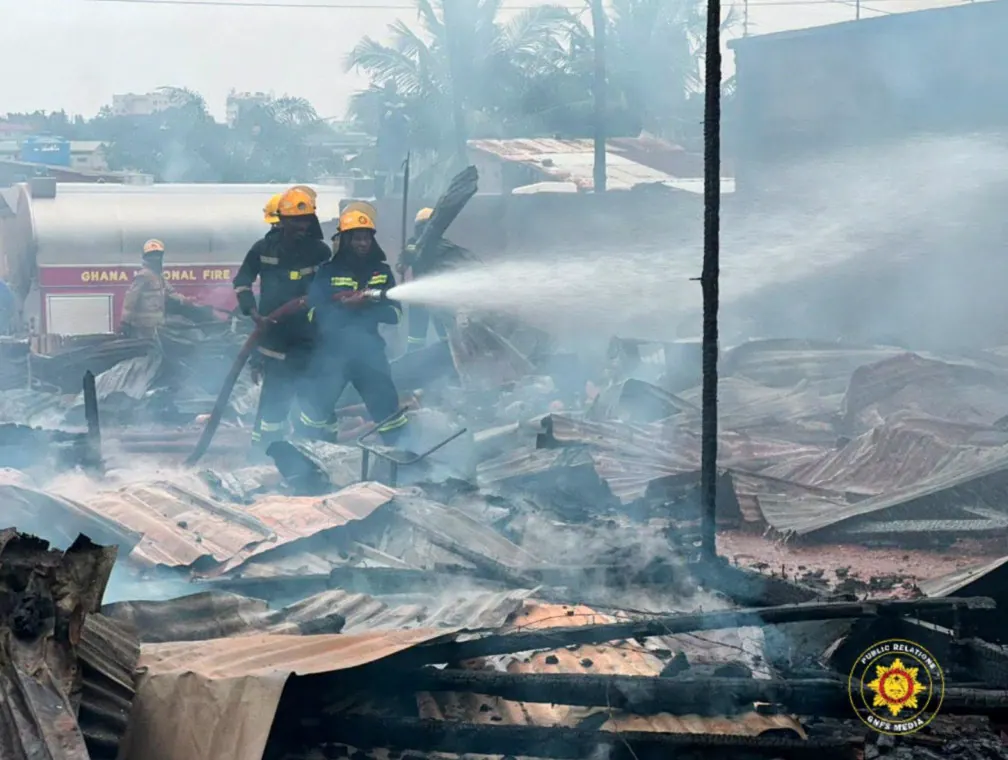
The Ghana National Fire Service has taken a significant step towards enhancing fire safety in the country by commissioning a World Bank-backed committee to draft a comprehensive national fire code. This move comes after years of devastating fires in markets, homes, and factories, which have resulted in loss of life and property. The committee was formally inaugurated on September 21, 2026, with the aim of producing a modern, practical, and risk-informed framework tailored to Ghana's fire safety challenges.
The initiative is backed by the World Bank and has been deemed crucial by stakeholders, who argue that Ghana's rapid urbanization and modernization have led to increased fire risks. Interior Minister Alhaji Muntaka Mohammed-Mubarak emphasized that fire safety is a fundamental pillar of public safety, economic resilience, and national development. He noted that the country's fire safety framework needs to evolve at the same pace as the nation's growth, taking into account international standards and global best practices.
Minister Muntaka Mohammed-Mubarak stressed the importance of wide consultation in the drafting process, involving various stakeholders, including government agencies, local authorities, regulators, professional bodies, industry players, academics, developers, property owners, and the general public. This, he believes, will ensure that the eventual code enjoys broad buy-in and compliance. The minister also called for the code to be firmly rooted in Ghana's circumstances and capable of being enforced on the ground.
The absence of a unified fire code has resulted in patchy fire prevention and building safety standards across Ghana, with devastating consequences. Ghanaians have repeatedly borne the human and financial cost of this gap, as seen in incidents such as the Kasoa fire. A comprehensive code, once adopted, would set clear and enforceable rules for designing, constructing, and managing buildings, industrial facilities, and energy installations to reduce fire risk.
Chief Fire Officer Danielle Mawusi Ntow-Sapong emphasized the need for a review of Ghana's fire safety framework to keep it responsive to contemporary risks. She noted that the process provides professionals and stakeholders with the opportunity to apply their expertise and field experience to producing a code that can work across the country. The committee is expected to continue consultations and technical reviews as it works towards producing the comprehensive national fire code.
While no specific completion date or timeline for adoption has been given, Minister Muntaka Mohammed-Mubarak stressed that finalizing the code will not be the end point. Its success will depend on implementation, enforcement, continuous training, public education, and periodic review. He urged citizens, community leaders, businesses, faith groups, and the media to support fire prevention efforts nationwide.
The drafting of a national fire code is a significant step towards enhancing fire safety in Ghana. The committee's work will be crucial in reducing the risk of fires and protecting lives and property. Key stakeholders will need to work together to ensure the code's successful implementation and enforcement.
Key points
- Ghana commissions World Bank-backed committee to draft national fire code.
- Committee aims to produce modern, practical, and risk-informed framework tailored to Ghana's fire safety challenges.
- Code's success will depend on implementation, enforcement, and public education.