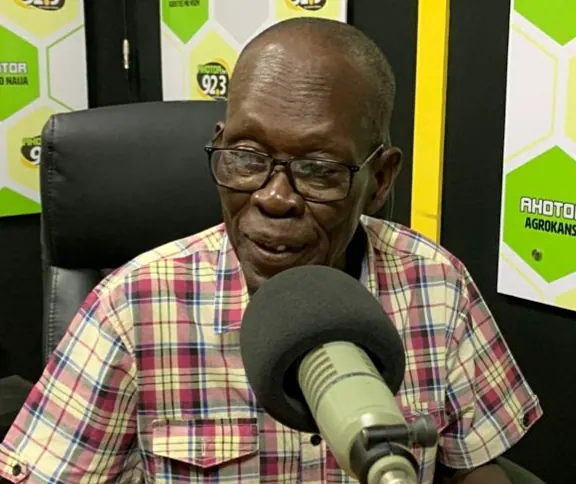
The Secretary-General of the Ghana Federation of Labour (GFL), Abraham Koomson, has urged the government to ensure that agreements reached with organised labour are implemented within agreed timelines. This call aims to prevent outstanding issues from developing into industrial disputes. Mr Koomson made these remarks during an interview on Ahotor FM's Morning Show in Accra-Tema on October 1, 2026.
Mr Koomson's comments come amid an ongoing teachers' strike that began on September 25, 2026. The strike, led by the Ghana National Association of Teachers (GNAT), National Association of Graduate Teachers (NAGRAT), and Pre-Tertiary Teachers Association of Ghana (PRETAG), has disrupted teaching and learning in public pre-tertiary schools nationwide. The teachers' unions have listed several demands, including the implementation of a 20% deprived-area allowance for teachers working in deprived and hard-to-reach communities.
According to Mr Koomson, some of the concerns behind the strike relate to unimplemented commitments involving promotion, salary placement, and allowances. He emphasised that verbal assurances to workers without necessary administrative action can deepen frustration and undermine confidence in negotiations between the government and organised labour. The GFL Secretary-General stressed the importance of treating collective agreements as flexible frameworks for further discussions rather than rigid barriers.
Mr Koomson highlighted the need for sustained engagement between the government and affected unions regarding the proposed 20% deprived-area allowance. He warned that a lack of transparency and communication about the implementation of government commitments can lead to mistrust among union members. This mistrust may cause members to believe their representatives are failing to protect their interests.
The GFL Secretary-General called for regular meetings involving the government, organised labour, and relevant state institutions. These meetings aim to identify problems early and agree on practical solutions to prevent industrial disputes. Mr Koomson emphasised that timely implementation of agreements, transparent communication, and continuous engagement can help strengthen trust between the government and workers, promoting industrial peace.
The Education Ministry has indicated that discussions involving the Fair Wages and Salaries Commission and other relevant agencies are being pursued to address the teachers' concerns. The government has appealed for the strike to be suspended as negotiations continue. However, the teachers' unions have maintained pressure for concrete action on their demands.
Mr Koomson concluded that the government must treat organised labour as a partner in governance and use dialogue to resolve outstanding commitments before they escalate into major industrial disputes. By doing so, the government can foster a collaborative relationship with workers and promote a more stable industrial environment in Ghana.
Key points
- The Ghana Federation of Labour is pushing for the implementation of a 20% deprived-area allowance for teachers working in deprived and hard-to-reach communities.
- The ongoing teachers' strike has disrupted teaching and learning in public pre-tertiary schools across Ghana.
- The GFL Secretary-General, Abraham Koomson, emphasised the importance of timely implementation of agreements and transparent communication to prevent industrial disputes.