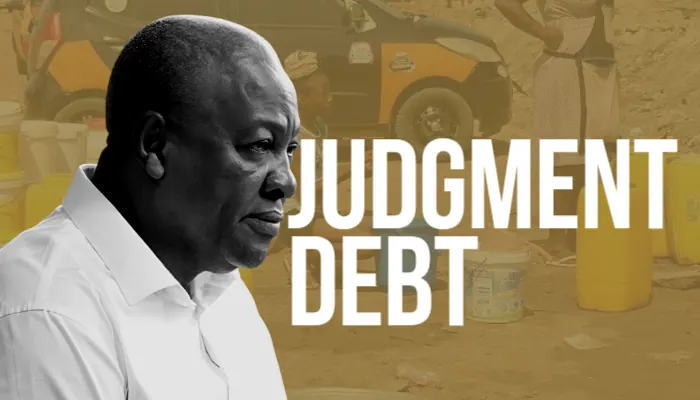
The Teshie-Nungua desalination plant, built to address chronic water shortages in the area, has been shut since October 2025. Ghana Water Company Limited (GWCL) has been ordered to pay $235 million to the Spanish owners of the plant, Cox Infrastructure Group, which owns 95 percent of the plant's project company. The Republic of Ghana is liable for the money under a sovereign guarantee approved by Parliament in 2012.
The $235 million judgment debt, net of taxes, covers termination payments under the Water Purchase Agreement, with interest accruing from 1 April 2026 until the money is actually paid. The utility must also partially reimburse the company's legal costs, and its own counterclaims, including one for $144.5 million, were substantially dismissed. The award is nearly twice what the plant cost to build, with the government's 2024 report on public private partnerships putting the project at $125 million.
The plant was shut in October 2025 over unresolved contractual obligations and what GWCL called a culture of missing maintenance. Teshie, Nungua, Baatsona, Spintex, Sakumono, and parts of La have been experiencing water shortages or rationing ever since. By January, residents were agitating, and the utility published a rationing schedule, which did not produce water. By the end of July, the plant had been silent for more than eight months, and the cost had shifted onto households.
Residents have been bearing the brunt of the water crisis, with Naa Adjeley, a trader and mother of three, telling the media she had not seen a drop in her house for nearly a month and was spending more than GH¢300 every week on tankers. Assemblies have resorted to drilling mechanized boreholes at schools and health facilities, while National Security has trucked water to Tsuibleoo. The emergency measures have become the water system.
The Teshie-Nungua water crisis has a long history, with the area experiencing shortages for 25 years. An earlier contract with Aqualyng Ghana Limited was abrogated by GWCL for non-performance. In 2010, GWCL received an unsolicited proposal from Befesa Ghana Limited for a 60,000 cubic meter per day desalination plant. The deal was amended and signed in 2012, with Parliament approving a $110 million Water Purchase Agreement and a Government of Ghana guarantee.
The project's cost has varied over the years, with the 2024 Public Private Partnership Project report putting it at $125 million. A JoyNews Research analysis shows that pricing was a major issue, with Befesa asking the Public Utilities Regulatory Commission to approve a bulk tariff of $1.716 per cubic meter. The regulator found it uncompetitive and told the company to review it, settling on an indicative $1.37.
The government has been supporting GWCL on this project, with the Ministry of Finance paying $16.12 million of the $16.92 million settled in 2024. GWCL itself paid $800,000, covering under five percent of its own water bill. The taxpayer covered the rest. The judgment debt has significant implications for Ghana's water sector and economy.
Key points
- The Teshie-Nungua desalination plant was shut in October 2025 over unresolved contractual obligations.
- The $235 million judgment debt is nearly twice what the plant cost to build.
- The water crisis has had a significant impact on residents, with many resorting to buying water from tankers or using seawater for bathing.