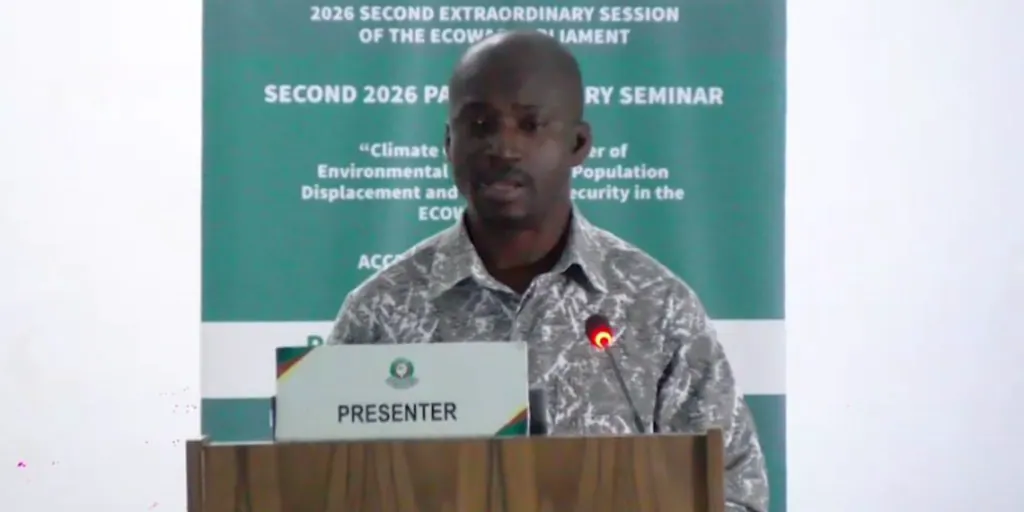
Ghana's Environmental Protection Authority (EPA) has disclosed that the country requires $22.6 billion by 2030 to fully deliver on its climate action plans. This significant funding gap was revealed by Dr. Derek Sarfo-Yiadom, Senior Programme Officer at the EPA's Climate Change and Ozone Directorate, during a presentation at the 2026 Second Extraordinary Session of the ECOWAS Parliament in Accra. The amount needed far exceeds Ghana's entire annual budget, raising concerns about how this financial gap will be bridged.
According to Dr. Sarfo-Yiadom, the EPA's climate reports indicate that $22.6 billion is necessary to accomplish the country's climate actions by 2030. However, the breakdown of this figure into specific sectors such as adaptation projects, mitigation efforts, agriculture, water, and infrastructure was not provided. He emphasized the importance of climate vulnerability assessments to identify communities at greatest risk and pinpoint gaps in Ghana's response efforts. These assessments will help in understanding the obstacles faced by communities in recovering from climate-related shocks.
Dr. Sarfo-Yiadom also stressed the need for climate responses to be tied to responsible institutions, clearly identified budgets, and measurable outcomes. He highlighted several necessary interventions, including stronger early warning systems, improved drainage networks, and more resilient infrastructure. Additionally, protecting rural livelihoods through better climate services, greater crop diversity, and improved soil and water management practices was identified as crucial. These measures aim to enhance Ghana's resilience to climate change impacts.
The scale of the funding gap has significant implications for ordinary Ghanaians, particularly those in flood-prone urban areas, coastal communities facing erosion, and farming households dependent on unpredictable rainfall patterns. Without the necessary resources, communities already exposed to flooding, drought, and food insecurity risk remaining vulnerable as climate shocks intensify. The EPA's disclosure underscores the urgent need for climate action and the mobilization of substantial funding to support resilience efforts.
The issue was discussed at a parliamentary seminar focused on climate change, environmental degradation, population displacement, and food security across the ECOWAS region. This seminar highlighted that Ghana's financing challenge is part of a broader West African concern about the human and economic toll of a changing climate. The seminar brought together stakeholders to explore solutions and strategies for addressing climate-related challenges in the region.
Despite the pressing need for funding, the available sources do not provide a breakdown of how much funding has already been secured toward the $22.6 billion target. It is also unclear which government agencies, development partners, or private investors might be expected to contribute. The sources do not specify whether the figure covers only government-led interventions or includes private sector and donor contributions expected under Ghana's broader climate commitments.
The EPA, as Ghana's state agency responsible for protecting and improving the environment, plays a critical role in overseeing the country's response to climate change, environmental degradation, and pollution. The agency works alongside other government bodies to develop and implement Ghana's climate policies and reporting obligations. The EPA's efforts are crucial in ensuring that Ghana meets its climate commitments and builds resilience to climate change impacts.
Key points
- Ghana needs $22.6 billion by 2030 to fund climate resilience plans.
- The funding gap poses significant challenges for ordinary Ghanaians, particularly those in vulnerable communities.
- The EPA is working to develop and implement Ghana's climate policies and reporting obligations.