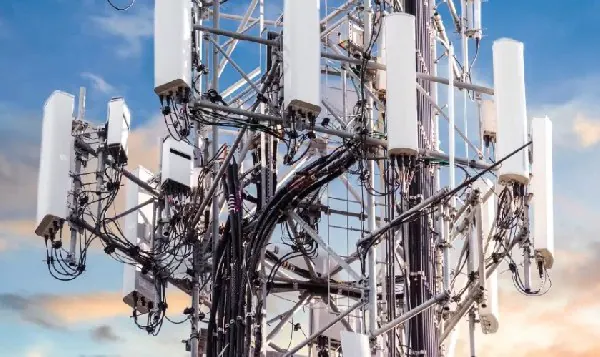
The Ghanaian government has terminated an agreement that granted Next Gen Infraco (NGIC) exclusive control over the country's 5G wholesale infrastructure until 2034. This move allows mobile network operators such as MTN, Telecel, and Goal Telecommunications to build or acquire their own 5G infrastructure. The National Communications Authority (NCA) made this decision to promote competition, attract fresh investment, and accelerate the rollout of high-speed mobile connectivity nationwide.
Under the original arrangement, NGIC had partnered with Radisys, a subsidiary of Indian billionaire Mukesh Ambani's Reliance Industries, to build out Ghana's 5G network. NGIC had sole rights to supply wholesale 5G infrastructure to Ghana's telecom operators. However, the government has now opened up spectrum in the 700 MHz, 2.3 GHz, and 3 GHz bands for competitive applications. This change enables multiple operators to participate in the licensing process, rather than relying on a single wholesale provider.
Several operators, including MTN Ghana, Telecel Ghana, and Goal Telecommunications, have qualified to take part in the licensing process. MTN Ghana has already secured two lots in the 700 MHz band for a combined US$100.9 million. This deal is part of MTN's broader US$202 million spectrum push to pave the way for its own 5G rollout. The licensing process for the 2.3 GHz and 3 GHz bands is still ongoing, with the NCA expected to complete the remaining allocation stages.
The policy change is expected to give consumers more choice while pushing operators to invest in coverage, capacity, and new digital services. Telecel Ghana has already announced plans to launch commercial 5G on its own network in December 2026. Telecel Group CEO Moh Damush indicated that the company plans to move ahead independently rather than wait for a shared wholesale system.
The changes come at a sensitive moment for Ghana's telecom sector, with Telecel and MTN customers recently affected by separate fibre-cut outages that disrupted service in parts of the country. The opening of the 5G market may help operators respond faster to such disruptions. The NCA has stated that the new spectrum allocation process is designed to support faster data speeds, lower latency, and better connectivity for consumers and businesses.
The shift in policy means that the race to deliver 5G is no longer confined to one infrastructure provider. This change may lead to improved services and more competitive pricing for consumers. As the 5G rollout progresses, Ghanaian consumers can expect to benefit from enhanced mobile connectivity and a wider range of services.
The NCA's decision to end NGIC's exclusivity and open up the 5G market is a significant development in Ghana's telecom sector. With multiple operators now able to build their own 5G infrastructure, the country can expect to see increased investment, improved services, and enhanced connectivity. The rollout of 5G is expected to have a positive impact on Ghana's economy and society, driving growth and development in the years to come.
Key points
- The Ghanaian government has terminated NGIC's exclusive 5G wholesale infrastructure deal, allowing other operators to build their own networks.
- The policy change aims to promote competition, attract fresh investment, and accelerate the rollout of high-speed mobile connectivity nationwide.
- Telecel Ghana plans to launch commercial 5G on its own network in December 2026.