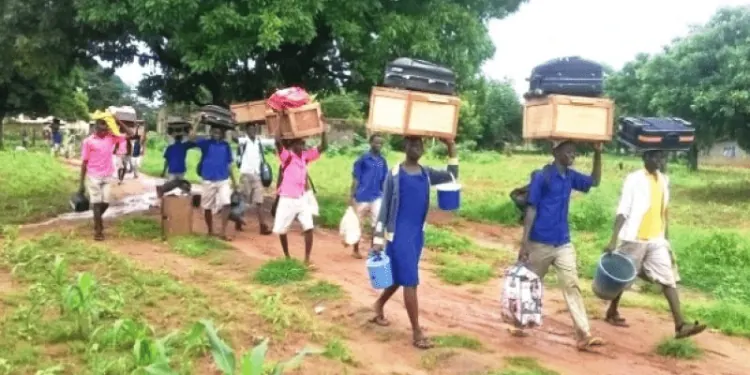
The Ghana Education Service (GES) has issued a statement urging heads of schools not to turn away newly admitted students or refuse to accommodate them due to the type of metal trunk or wooden chop box they bring to school. This directive aims to prevent unnecessary financial burdens on parents and guardians who may struggle to afford alternative storage containers. According to the GES, all admitted students should be treated fairly and accommodated without discrimination based on their economic circumstances.
The warning comes after reports emerged that some senior high schools and senior high technical schools (SHS/SHTS) were denying admission to students who brought metal trunks, wooden chop boxes, or other personal storage containers to school. The GES has asked regional directors to inform all heads to desist from turning away or refusing admissions to duly admitted students solely based on the type of trunk, chop box, or personal storage container they brought to school.
The GES emphasized that provided the item is reasonably sized, safe, and does not pose a risk to the health, safety, or welfare of other students, those students must not be refused accommodation. The statement, signed by Professor Mrs Smile Dzisi, the Deputy GES Director-General, also mentioned that any reported case of a duly admitted student being denied accommodation or turned away solely because of the type of trunk, chop box, or personal storage container brought to school should be investigated and reported to management.
The GES has further warned that any head of SHS/SHTS who flouts this directive shall be dealt with in accordance with the applicable standards, regulations, and laws of the Service. This move aims to ensure that all students have equal access to education, regardless of their economic background. The GES is committed to providing a fair and inclusive learning environment for all students.
The issue has sparked concerns among stakeholders, with many calling for a review of the school's policies on personal effects. Some have argued that the policies may be unfair and discriminatory, particularly for students from low-income backgrounds. The GES's directive is seen as a step towards addressing these concerns and promoting inclusivity in the education sector.
The Free Senior High School (SHS) program, introduced by the Ghanaian government, aims to provide free education to all students. However, the program has faced challenges, including infrastructure and logistical issues. The GES's directive is expected to help alleviate some of these challenges and ensure that all students have access to education.
The GES's move has been welcomed by many, who see it as a positive step towards promoting equality and inclusivity in the education sector. The Service has reiterated its commitment to providing quality education to all students, regardless of their background. With this directive, the GES aims to create a more inclusive and supportive learning environment for all students.
Key points
- The GES has warned schools against turning away students with metal trunks or wooden chop boxes.
- The directive aims to prevent financial burdens on parents and guardians.
- The GES has emphasized the importance of treating all students fairly and without discrimination.