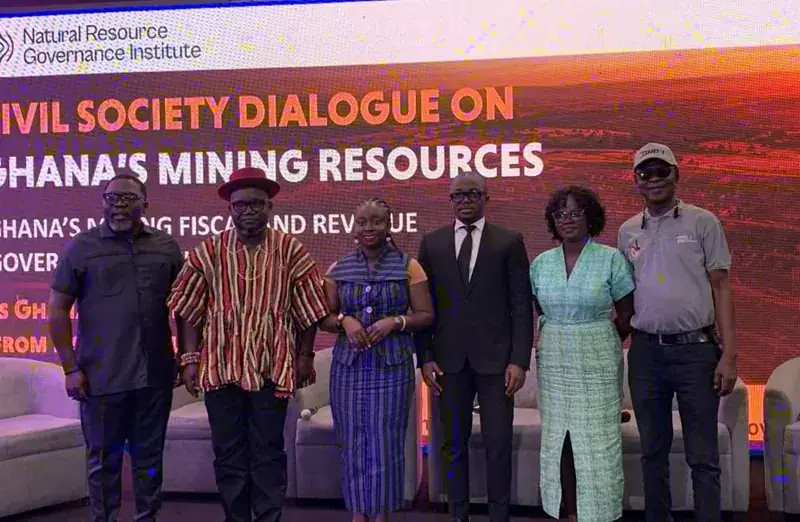
The Ghana Chamber of Mines is advocating for a Minerals Revenue Management Act to ensure that gold and other mineral proceeds are set aside for future generations. This move aims to close a gap that has existed since mining began in Ghana over a century ago. According to the Chamber's Chief Executive Officer, Dr. Ken Ashigbey, the proposed law will provide a transparent and sustainable framework for managing mineral revenues.
Ghana's mining sector has been in operation for over 100 years, yet the country still lacks a law that sets aside part of its mineral wealth for the future. In contrast, the oil sector has had a similar law, the Petroleum Revenue Management Act, since 2011, which established the Public Interest and Accountability Committee (PIAC) to track oil money spending. The Ghana Chamber of Mines wants to replicate this structure for the mining sector.
Dr. Ashigbey emphasized that taxes and royalties are not enough, and Ghana needs to focus on the value it retains across the entire mining value chain. He noted that over 60 percent of mining revenue goes into procurement, making it essential to strengthen local companies' participation in supplying goods and services to the industry. The Chamber is exploring partnerships between international suppliers and local firms to promote manufacturing within Ghana.
Large-scale mining companies in Ghana paid over GH¢24 billion in taxes to the government in 2025 alone. Dr. Ashigbey stressed that a transparent and sustainable framework for managing these proceeds is necessary. The proposed Minerals Revenue Management Act should include a heritage fund to preserve part of mineral proceeds for future generations and a stabilisation fund to cushion the economy against swings in commodity prices.
The Natural Resource Governance Institute (NRGI) has expressed concerns that Ghana risks severe fiscal pressure and heavier borrowing if global gold prices were to collapse. The country's lack of a dedicated stabilisation framework for mineral revenue leaves the economy exposed to sudden revenue shortfalls. NRGI's Country Manager, Patrick Stephenson, warned that a sharp fall in gold prices could undermine government revenue projections and squeeze funding for social services and public investments.
The push for the new law comes amid concerns about weak public financial management across institutions linked to Ghana's mining sector. The World Bank and civil society groups have raised concerns about the need for tighter tracking and spending of mineral revenues. The dialogue on the proposed law did not set out a timeline for when a draft Minerals Revenue Management Act might be presented to Parliament.
The Ghanaian Times reported that the Civil Society Dialogue on Ghana's Mining Resources was held in Accra on Tuesday, 4 November 2026, under the theme 'Ghana's Mining Fiscal and Revenue Governance Architecture: Is Ghana Maximising Value from its Mineral Wealth?'. The dialogue was organised by the Natural Resource Governance Institute (NRGI) in partnership with the Chamber of Mines.
Key points
- The Ghana Chamber of Mines is seeking a Minerals Revenue Management Act to safeguard the country's mineral wealth for future generations.
- The proposed law aims to provide a transparent and sustainable framework for managing mineral revenues.
- Ghana's mining sector lacks a law setting aside part of its mineral wealth for the future, unlike the oil sector which has had a similar law since 2011.