Ghana is grappling with a critical national security threat as transnational drug cartels increasingly exploit its air and sea infrastructure. The recent interception of 3.9 tonnes of cocaine concealed inside plastic waste at the Port of Dunkirk in France has highlighted the severity of the issue. This incident, coupled with previous domestic seizures of over 3.3 tonnes of cocaine in Cape Coast, has raised concerns about the country's ability to safeguard its borders. According to the Narcotics Control Commission (NACOC), Ghana has transitioned into what it terms "The Industrial Phase" of trafficking, representing an organized, high-volume logistics network.
The country's vulnerability to narcotics trafficking was further underscored by a massive bust in March 2025, where security agencies intercepted a truck on the Takoradi–Accra highway carrying 3.3 tonnes of cocaine hidden beneath a layer of sand. Additionally, 120 slabs of cocaine valued at roughly $150 million were seized. These incidents have earned Ghana a ranking as the second-largest transit point for cocaine trafficking in Africa and 14th globally for high-volume transit trends, according to the United Nations Office on Drugs and Crime (UNODC).
The methods employed by cartels to smuggle narcotics into Ghana have become increasingly sophisticated. They no longer rely solely on simple airport mules but are heavily contaminating legitimate Ghanaian exports, hiding industrial quantities of illicit narcotics inside bulk goods like charcoal, scrap plastics, and agricultural products. This has raised questions about the effectiveness of port security measures, particularly in terms of technological limitations, internal systemic gaps, and compromised physical defenses.
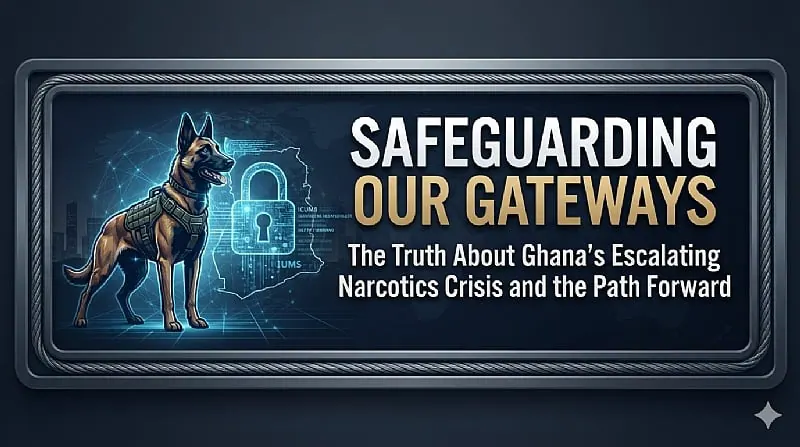
A critical gap in Ghana's border security has been identified in the vulnerability of K9 sniffer dog units at major borders. While these dogs provide an unbeatable biological defense, the system is entirely dependent on the integrity of their human handlers. Cartels heavily exploit this tactical loophole through bribery, compromised training schedules, or deliberate oversight—keeping the dogs away from high-risk cargo during critical loading windows. Securing ports means looking beyond the animals and enforcing strict, independent audits on the personnel holding the leashes.
The Ghana Revenue Authority (GRA) is actively rushing the implementation of Artificial Intelligence (AI)-powered digital inspection systems alongside the existing Integrated Customs Management System (ICUMS) platform. These systems aim to automate valuation and risk profiling, stripping away human discretion to ensure that every flagged cargo is physically inspected before a ship leaves the dock. This move is part of a broader effort to address the systemic gaps in port security and prevent the recurrence of incidents like the one at Dunkirk.
In a bid to restore international confidence, the state is demonstrating that no one is above the law. Ten individuals were arrested in connection with the Dunkirk port security breach, including four active officers from the Customs Division of the GRA, who are currently remanded in custody without bail. The trial highlights a firm push to root out insider threats within Ghana’s border enforcement agencies. Justice Prince Osei Owusu denied the suspects bail on the grounds that their release posed a risk to the integrity of the ongoing, sensitive international investigation.
To fix Ghana's narcotic vulnerabilities, structural reforms are necessary. Recommendations include insulating and auditing the K9 sniffer units, introducing independent, unannounced "blind tests" to audit the performance of dogs and handlers, and establishing stricter compliance checks and continuous monitoring of legitimate export supply chains. Additionally, there is a need to dismantle financial ecosystems that support couriers and to return NACOC and National Security to a mandatory, permanent, and unified physical screening front at both the Tema and Takoradi ports.
Key points
- Ghana has been ranked as the second-largest transit point for cocaine trafficking in Africa and 14th globally.
- The country's K9 sniffer dog units have been identified as vulnerable to exploitation by cartels.
- The state has arrested and charged several individuals, including GRA customs officers, in connection with the Dunkirk port security breach.