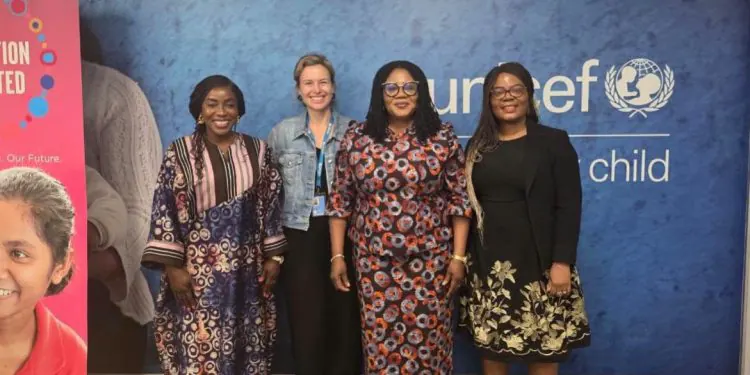
The Government of Ghana and the United Nations Children’s Fund, UNICEF, have held discussions on measures to reinforce child protection systems and expand support for children and adolescent girls exposed to social and economic vulnerabilities. The engagement took place in New York on the sidelines of the 81st United Nations General Assembly.
The Minister for Gender, Children and Social Protection, Dr Agnes Naa Momo Lartey, met with senior representatives of UNICEF to examine challenges confronting vulnerable children and families. According to the Ministry, the discussions centred on a range of child protection concerns, including child marriage, adolescent pregnancy, birth registration and the protection of girls who face heightened social and economic risks.
The two sides also considered ways of improving interventions designed to reach vulnerable children, adolescent girls and their families, with particular attention given to strengthening systems capable of identifying those at risk and connecting them with appropriate support services. Birth registration emerged as an important component of the discussions, with Dr Lartey and UNICEF officials examining how broader access to registration could contribute to more effective child protection.
Improved birth registration can assist authorities in establishing the identity and age of children, identifying those who may be exposed to vulnerability and linking them to relevant social protection and child welfare services. The discussions also considered its potential contribution to efforts aimed at preventing child marriage.
Another significant component of the engagement was the Livelihood Empowerment and Productive Inclusion Programme, known as LEPIP, a joint initiative of the Government of Ghana and UNICEF designed to support out of school, vulnerable and at risk adolescent girls as well as young mothers between the ages of 16 and 21. The programme brings together social protection, financial inclusion, life skills, livelihood training, access to essential services and economic assistance.
Dr Lartey and the UNICEF delegation also examined opportunities to reinforce Ghana’s social protection architecture, particularly mechanisms for identifying households facing heightened vulnerability, including families with pregnant women who may require additional assistance. The Minister called for increased and more sustainable financing for social protection programmes.
UNICEF acknowledged Ghana’s efforts to confront child marriage and other challenges affecting children and adolescent girls and expressed its continued willingness to support initiatives aimed at strengthening protection systems and promoting the rights, welfare and overall well being of vulnerable children.
Key points
- The Government of Ghana and UNICEF have discussed measures to reinforce child protection systems.
- The discussions centred on a range of child protection concerns, including child marriage and adolescent pregnancy.
- The two sides examined ways of improving interventions designed to reach vulnerable children and adolescent girls.