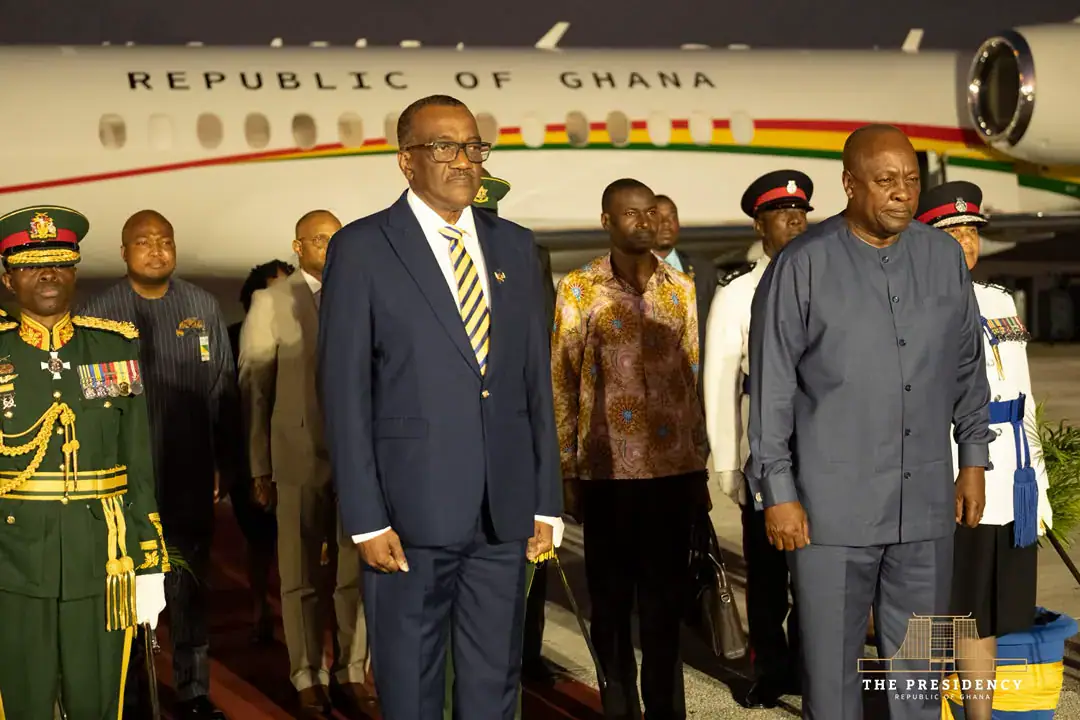
On November 27, Ghanaian President John Dramani Mahama attended a ceremony in Speightstown, Barbados, where he called for stronger educational, cultural, and historical exchanges between Ghana and Barbados. The event marked the twinning of Cape Coast, Ghana, and Speightstown, Barbados, a partnership aimed at reconnecting communities on both sides of the Atlantic whose histories were shaped by the transatlantic slave trade.
President Mahama described the twinning agreement as a symbolic transformation of the “door of no return” into the “door of eternal return”. He proposed an educational exchange programme that would allow children from Cape Coast to study alongside their counterparts in Speightstown, with students from the Barbadian town also travelling to Ghana for similar experiences. This initiative aims to promote cultural understanding and historical awareness between the two communities.
Cape Coast, also known as Oguaa, was one of the major centres of the transatlantic slave trade, through which tens of thousands of Africans were forcibly taken across the Atlantic. Speightstown, formerly known as Little Bristol, served as an early arrival port for enslaved Africans brought to Barbados, making the two towns significant landmarks in the history of slavery. While Cape Coast represented forced departures from Africa, Speightstown symbolised forced arrivals in the Caribbean.
President Mahama noted that although slavery sought to sever the connections between Africans and their descendants across the Atlantic, it had failed to erase their shared cultural identity and historical memory. He cited Ghana’s Year of Return, Beyond the Return, and the Black Star Experience initiatives as part of efforts to strengthen the country’s relationship with the global African diaspora and encourage people of African descent to reconnect with their ancestral homeland.
The twinning arrangement provides an opportunity to translate broader commitments into practical cooperation at the community level. President Mahama identified culture, heritage preservation, education, tourism, and community development as key areas for collaboration and urged local authorities in both towns to ensure the agreement produces tangible benefits. He also called for sustained engagement, practical initiatives, and regular exchanges to ensure that the partnership serves residents, particularly young people and women, as well as future generations.
During the ceremony, a bust of King Cuffee was unveiled, and President Mahama reflected on the legacy of the historical figure. He said that historical monuments alone were insufficient to preserve the ideals and contributions of important figures, adding that “bronze may preserve King Cuffee’s image, but our actions must sustain his ideals”. He commended Barbados Prime Minister Mia Amor Mottley and the people of Barbados for their commitment to strengthening relations with Ghana.
The twinning agreement was subsequently signed by representatives of the two communities, marking a significant step towards fostering cooperation between Ghana and Barbados. President Mahama described the partnership as a potential model for broader cooperation between African and Caribbean communities. The agreement is expected to promote people-to-people diplomacy and strengthen historical ties between the two nations.
Key points
- The twinning of Cape Coast and Speightstown aims to promote educational, cultural, and historical exchanges between Ghana and Barbados.
- President Mahama proposed an educational exchange programme to foster cultural understanding and historical awareness between the two communities.
- The partnership is expected to promote people-to-people diplomacy and strengthen historical ties between Ghana and Barbados.