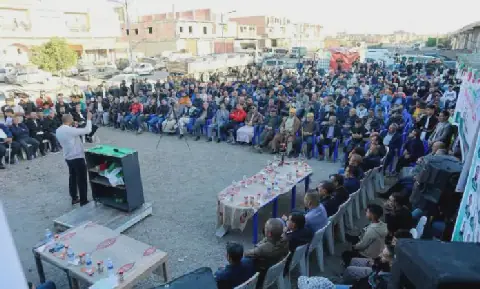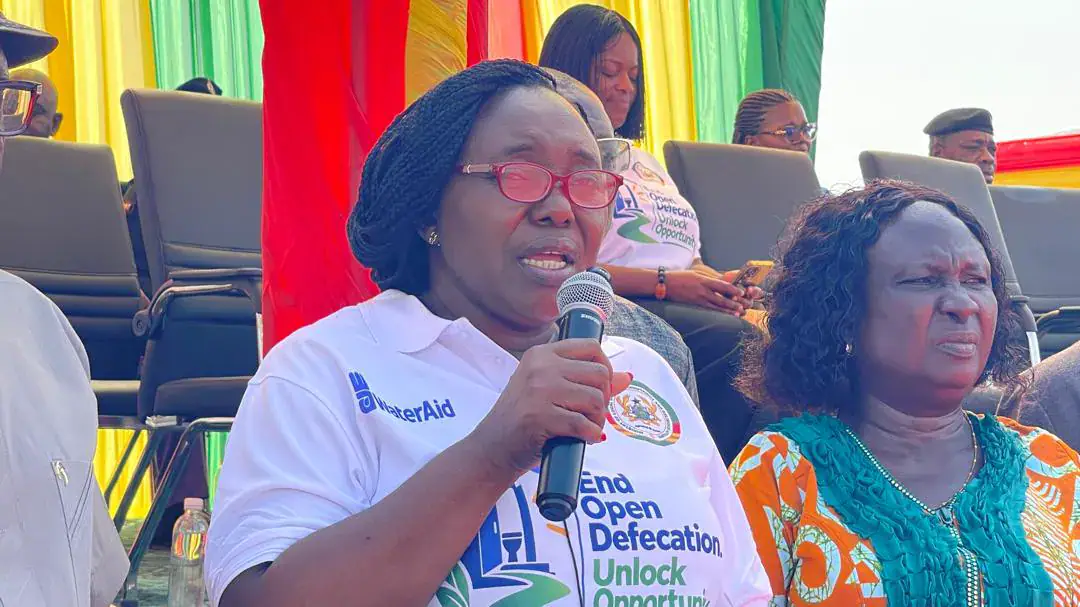
The Ghanaian government has allocated 10% of the District Assemblies Common Fund (DACF) to sanitation, aiming to end open defecation in the country. Deputy Minister for Local Government, Chieftaincy and Religious Affairs, Rita Naa Odoley Sowah, announced this during the 2026 World Toilet Day commemoration in the Bongo District of the Upper East Region. The allocation will support sanitation infrastructure, waste treatment facilities, and public education.
According to Madam Sowah, the investment is intended to address Ghana's sanitation challenges and accelerate efforts towards ending open defecation. She called on traditional authorities, district assemblies, and households to support the campaign. About 5.4 million Ghanaians still practice open defecation, while over 80% of people in Bongo District lack access to toilet facilities. Madam Sowah urged chiefs to make household toilets a mark of honor in their communities.
WaterAid Ghana Country Director, Ewurabena Yanyi-Akofur, emphasized that access to safe sanitation is a fundamental human need and should not be treated as a privilege. She stressed that providing toilet facilities alone is not enough; they must be safe, accessible, functional, and properly maintained. Madam Yanyi-Akofur commended the Paramount Chief of the Bongo Traditional Area for his leadership in improving sanitation.
The Paramount Chief of the Bongo Traditional Area, Naba Baba Salifu Atamale Lemyaarum, reported that the Bongo Sanitation Challenge has resulted in the construction of 690 new household toilets, representing an estimated investment of GH¢2 million. This has extended sanitation access to approximately 3,700 people. The Traditional Council has also established a WASH Fund to support poor and vulnerable households.
Chairperson of the Coalition of NGOs in Water and Sanitation (CONIWAS), Dr. Beata Awinpoka Akanyani, welcomed the government's allocation, describing it as an important step towards addressing Ghana's sanitation financing challenges. She called for the timely release and proper utilization of the funds to ensure they serve their intended purpose at the district level.
Upper East Regional Minister, Donatus Akamugri Atanga, urged all 15 Municipal and District Assemblies in the region to prioritize sanitation in their development plans and budgets. He emphasized that sanitation must go beyond occasional clean-up exercises and become a sustained public responsibility. The commemoration, organized by WaterAid Ghana, brought together government officials, traditional authorities, and stakeholders.
The 2026 World Toilet Day commemoration was held under the theme, "From Open Defecation to Open Opportunity Through the Gender Lens." Stakeholders are working together to advance universal access to clean water, decent toilets, and good hygiene. Key stakeholders include government officials, traditional authorities, development partners, and students.
Key points
- The Ghanaian government has allocated 10% of the District Assemblies Common Fund to sanitation to address open defecation.
- About 5.4 million Ghanaians still practice open defecation.
- The Bongo Sanitation Challenge has resulted in the construction of 690 new household toilets.