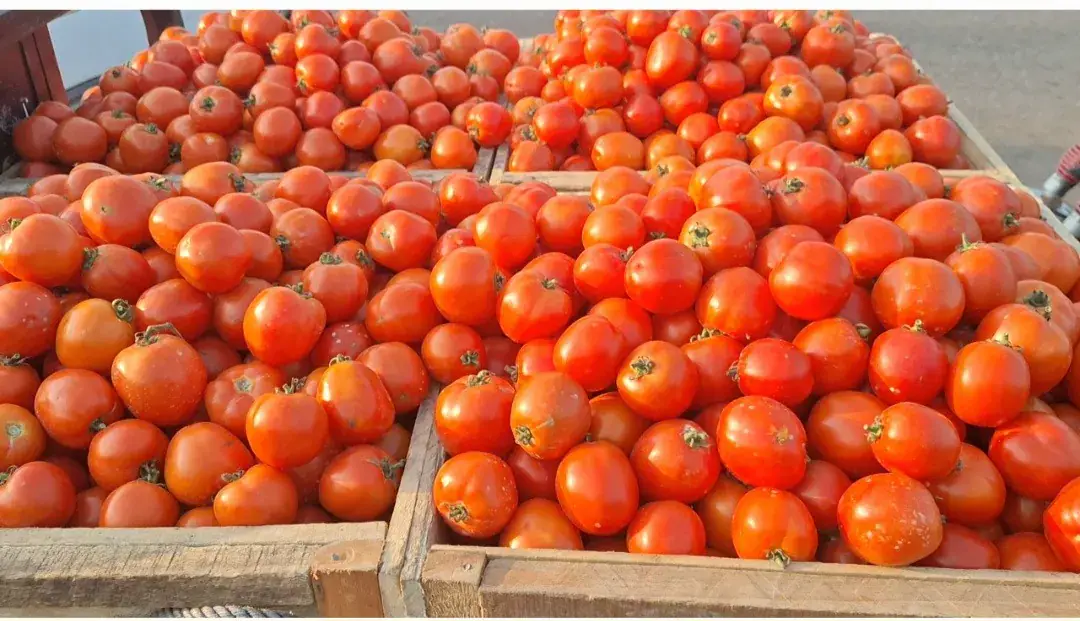
The Ghanaian government is implementing a strategy to increase tomato production in the country by rehabilitating irrigation facilities, including solar-powered boreholes, and transforming the Pwalugu enclave into a major tomato-producing hub. This initiative aims to reduce Ghana's reliance on imports, particularly from neighboring Burkina Faso. According to Bright Demordzi, Feed Ghana Programme Coordinator, the plan is part of efforts to promote climate-smart agriculture and support smallholder farmers.
The Pwalugu Dam rehabilitation project is expected to make the area a significant tomato-producing zone, leveraging irrigation to support smallholder farmers who comprise the majority of Ghana's agricultural workforce. Mr. Demordzi noted that the weather in Pwalugu is similar to Burkina Faso's, allowing Ghana to grow tomatoes competitively. He recalled that Ghana was once a major tomato producer, with tomatoes coming from Navrongo, but now relies heavily on imports from Burkina Faso.
Climate-smart agriculture is a key component of the government's strategy, with a focus on irrigation and wealth creation. The Feed Ghana programme includes solar-powered borehole systems with distribution lines across farms, enabling production to be less dependent on rainfall. The government is also renovating irrigation facilities and partnering with private companies to engage youth and women in irrigated tomato farming in various regions.
To support smallholder farmers, who make up 80-90% of Ghana's farmers, the government has introduced the Farmer Service Centre concept. These comprehensive centers provide mechanization, seeds, agrochemicals, tractor services, and pre- and post-harvest services. The centers will offer combine harvesters for rice and soya beans, processing, bagging, and distribution services.
The government is also working to make farming more attractive to young people by promoting agricultural insurance, with water and irrigation as a major component. A revolving fund has been established to finance young people entering agriculture, and institutional farming is being promoted, with government support for churches to engage in farming.
In celebration of the 2026 National Farmers Day, regional best farmers will receive pick-up trucks, and the National Best Farmer will also be rewarded. Mr. Demordzi emphasized that agribusiness is a promising sector, and the government is committed to encouraging young people to enter agriculture.
The Feed Ghana Programme Coordinator highlighted the potential for Ghana to become self-sufficient in food production, given its fertile land, youthful population, natural resources, and favorable climate. He stressed that with the right strategies and support, Ghana should not struggle to feed itself, and the Pwalugu irrigation project is a significant step towards achieving this goal.
Key points
- The Pwalugu irrigation project aims to reduce Ghana's reliance on tomato imports from Burkina Faso.
- The government is promoting climate-smart agriculture and supporting smallholder farmers through irrigation and wealth creation initiatives.
- The Farmer Service Centre concept provides comprehensive services to farmers, including mechanization, seeds, and agrochemicals.