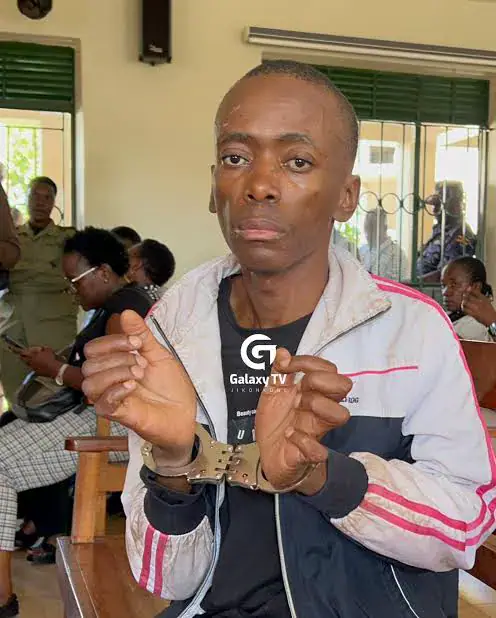
The Court of Appeal has appointed three justices to hear the appeal by Christopher Okello Onyum, who was sentenced to death on four counts of murder following the killing of four children at Ggaba Early Childhood Development Centre in Kampala. The justices are Christopher Gashirabake, Eva K. Luswata and John Mike Musisi. The case is registered as Criminal Appeal No. COA-00-CR-CN-0288-2026.
Onyum's appeal will examine whether the trial judge properly evaluated the evidence, whether the medical evidence relating to his mental condition was adequately considered and whether the death sentence was justified. The case dates back to April 2, 2026, when four toddlers were killed in a knife attack at Ggaba Early Childhood Development Centre in Makindye Division, Kampala. The victims were identified as Gideon Eteku, Keisha Agenorwoth Otim, Ignatius Sseruyange and Ryan Odeke.
Prosecution evidence presented during the trial showed that Onyum went to the daycare centre pretending to be a parent seeking admission for a child. He reportedly interacted with the centre's administrators and paid admission fees before launching the attack. He fatally stabbed the four children within approximately seven minutes. Three were pronounced dead upon arrival at a nearby medical facility, while the fourth died at the scene.
The attack sparked nationwide outrage, with parents, residents and members of the public demanding justice for the children. Onyum was subsequently arrested and charged with four counts of murder contrary to Sections 171 and 172 of the Penal Code Act. He denied the charges, with his defence raising concerns about his mental condition and arguing that he had suffered mental health problems.
On April 30, 2026, High Court judge Justice Alice Komuhangi Khaukha convicted Onyum on all four counts of murder. The judgment was delivered through a mobile court sitting at Ggaba Community Church, close to the daycare centre where the killings occurred. The trial had been conducted within less than a month, attracting considerable public attention because of the decision to bring court proceedings closer to the community affected by the crime.
One of the major issues during the trial was Onyum's defence of insanity. His defence sought to challenge his criminal responsibility by raising questions about his mental condition at the time of the attack. However, Justice Komuhangi rejected the argument, ruling that the evidence did not establish that he suffered from a disease of the mind that deprived him of the ability to understand the nature and consequences of his actions.
Onyum filed a notice of appeal on May 6, 2026, six days after being sentenced, and subsequently lodged his memorandum of appeal at the Court of Appeal registry through the Uganda Law Society's Legal Aid Project on June 12, 2026. The memorandum outlined three grounds on which he wants the appellate court to overturn the High Court decision.
Key points
- The Court of Appeal will examine whether the trial judge properly evaluated the evidence and handled the insanity defence.
- Onyum's appeal challenges the death sentence imposed on him, arguing it was harsh and excessive.
- The case has attracted enormous public attention, particularly following President Yoweri Museveni's public questioning of why the appeal had taken so long to come before the appellate court.