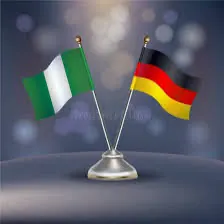
Germany is seeking a deeper economic partnership with Nigeria, driven by the country's growing population, expanding market, and position as one of its leading trading partners in Africa. This presents fresh opportunities for stronger bilateral cooperation between the two nations. With Nigeria's projected emergence as the world's third-most populous country by 2050, Germany sees significant potential for collaboration.
The German Federal Foreign Office emphasized that Nigeria's growing population and the presence of over 80 German companies in the country underscore the need to expand economic engagement. Currently, Nigeria is Germany's second-largest trading partner in Africa. Both countries aim to strengthen cooperation around shared interests and values amid growing geopolitical uncertainty and changes in the global economy.
Isabel Henin, Head of Division at the German Federal Foreign Office, represented Federal Foreign Minister Johann Wadephul at Nigeria's 66th Independence Anniversary celebration in Berlin on October 1. Henin highlighted that Germany remains committed to expanding its cooperation with Nigeria in trade, energy, the economy, and culture, while also deepening engagement with Nigeria's youthful population.
The next Nigeria-Germany Bi-National Commission, expected to take place in Nigeria next year, will provide an opportunity to translate the renewed political commitment into concrete areas of cooperation. The commission will address economic relations, energy, migration, education, and skills development, among other areas of mutual interest. This follows Wadephul's visit to Abuja and Lagos in July, which demonstrated the considerable potential for closer cooperation between the two countries.
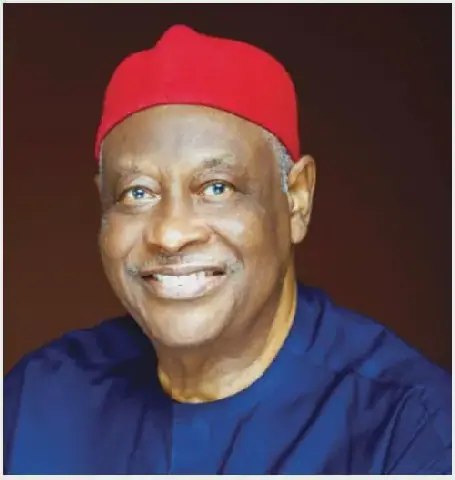
Nigeria's Ambassador to Germany, Senator Ita Enang, stated that Nigeria is prepared to broaden its economic engagement with Germany, identifying green energy, technology, infrastructure, education, vocational training, creative industries, and skilled migration as areas with significant potential. He noted that Germany's industrial base, skilled workforce, and labor-market requirements could provide opportunities for qualified Nigerians, particularly through regulated migration pathways.
Enang also highlighted Nigeria's expanding capabilities in technology, energy, agriculture, entrepreneurship, creative industries, and the arts, describing the country as one characterized by dynamism. He reaffirmed Nigeria's commitment to multilateralism and African integration through the United Nations, African Union, World Trade Organisation, and the African Continental Free Trade Area.
The 66th independence anniversary celebration served as an opportunity to reaffirm the strength and prospects of the Nigeria-Germany relationship, with both sides marking 66 years of diplomatic relations. Henin expressed confidence in the prospects for closer cooperation, and the celebration concluded with a toast to the friendship between Nigeria and Germany, as both sides renewed their commitment to expanding economic, energy, skills, education, and people-to-people ties.
Key points
- Germany and Nigeria are set to strengthen economic ties through the next Nigeria-Germany Bi-National Commission.