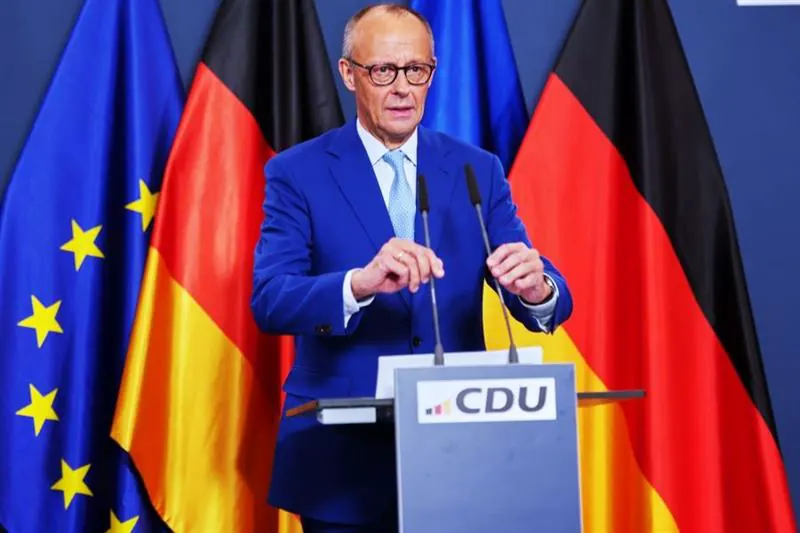
German Chancellor Friedrich Merz is facing increased pressure to stabilize his position and keep his agenda on track after suffering two more regional election defeats. The losses, which saw his center-right Christian Democratic Union (CDU) party ejected from a state legislature for the first time in its eight-decade history, have raised questions about Merz's leadership and the party's future. Merz has vowed to stay on and push through reforms to Germany's economy.
The CDU's defeat in Mecklenburg-Western Pomerania was particularly significant, with the party falling just below the 5% of the vote needed to keep seats in the regional parliament. This marks the first time the CDU has failed to meet this threshold in 77 years of modern Germany's federal republic. The party also dropped to second place in Berlin behind the hard-left Left Party, which is in pole position to lead the next city government.
The Alternative for Germany (AfD) party emerged as the strongest party in Mecklenburg-Western Pomerania, while the center-left Social Democrats – the junior party in Merz's national governing coalition – were close behind. The Social Democrats' national leaders have stated that they stand by the coalition but will seek changes to the government's reform agenda. Vice Chancellor Lars Klingbeil said that the party will not ignore the voters' message in the recent state elections.
The reform plans, which include a potentially painful overhaul of the pension system, a reduction of Germany's bureaucracy, and cuts to income tax for low- and middle-income families, have been met with skepticism by some. Social Democrats' co-leader Bärbel Bas said that the plans need a "reality check" and a "fairness check," but remains optimistic about finding solutions on pension system reform.
Merz faces meetings with his party's leadership to discuss the recent defeats and the way forward. The CDU's influential regional leaders have backed Merz, but questions remain about the extent of their support. There are no more electoral tests for the party this year, but five state elections are scheduled for next year, including one in North Rhine-Westphalia, Germany's most populous state.
Education Minister Karin Prien, a deputy CDU leader, has expressed doubts about the effectiveness of changing the party's leadership, saying that it would not necessarily bring about a change. Prien emphasized the need for the party to discuss how to win more acceptance and credibility among the population. The CDU's regional leaders will play a crucial role in determining the party's future.
The recent defeats have raised questions about Merz's authority and the potential for him to be replaced. However, with the CDU's regional leaders backing him, it remains to be seen whether Merz will face a challenge to his leadership. The party's performance in the upcoming state elections will be closely watched, as it will provide an indication of Merz's ability to turn the party's fortunes around.
Key points
- German Chancellor Friedrich Merz faces increased pressure to stabilize his position after a string of regional election defeats.
- The CDU's defeat in Mecklenburg-Western Pomerania was particularly significant, with the party falling just below the 5% of the vote needed to keep seats in the regional parliament.
- Merz's leadership and the party's future have been called into question following the recent defeats.