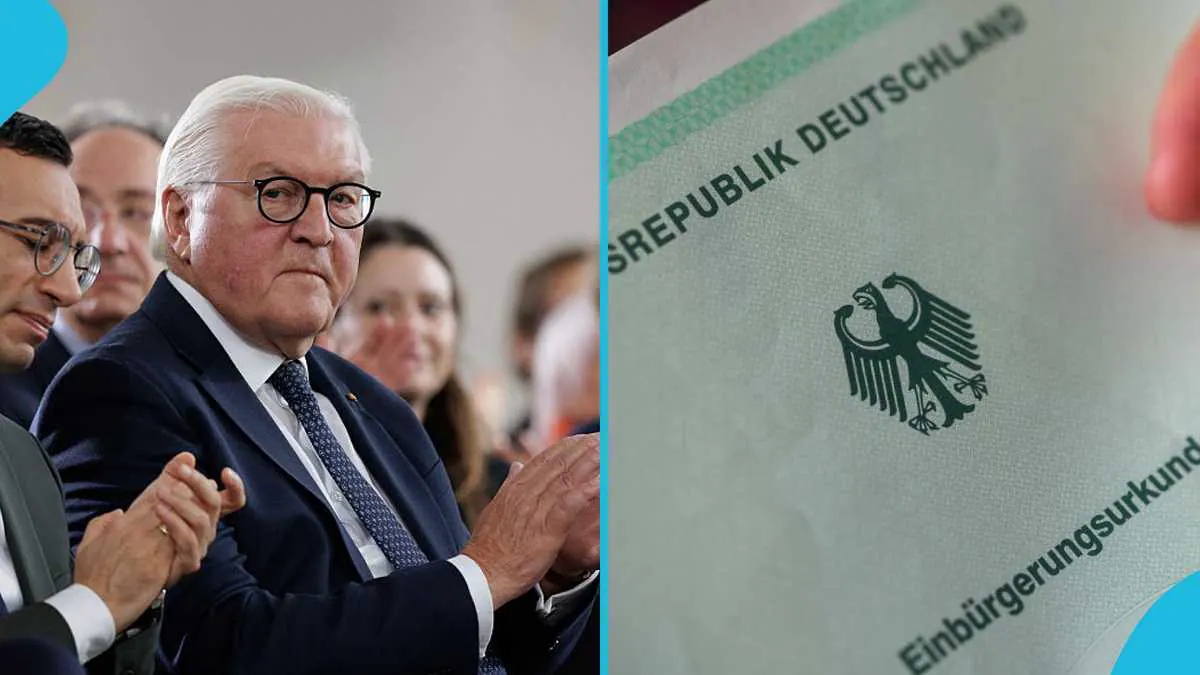
Germany has introduced a provision allowing certain individuals to obtain citizenship through a formal declaration, bypassing the standard naturalisation process. The Fourth Act Amending the Nationality Act, which came into force on 20 August 2021, targets individuals denied German citizenship at birth due to gender-discriminatory rules in older nationality legislation. This measure creates a ten-year window under Section 5 of the Nationality Act, covering individuals historically denied citizenship and their descendants.
The German Federal Foreign Office outlined four categories of eligible persons. The first category includes children born after 23 May 1949 to a German parent who did not pass on German nationality at birth. This includes children born in wedlock before 1 January 1975 to a German mother and a foreign father, or children born out of wedlock before 1 July 1993 to a German father and a foreign mother.
The second category covers children born after 23 May 1949 to a mother who lost her German citizenship by marrying a foreign national under Section 17(6) of the old Reich and Nationality Act. This marriage must have occurred before the child's birth and before 1 April 1953. The third group comprises children born after 23 May 1949 who lost German nationality acquired at birth through legitimisation by a foreigner valid under German law, under Section 17(5) of the old Reich and Nationality Act, before 1 April 1953.
The fourth category encompasses descendants of all persons falling under the first three groups. The reform acknowledges that earlier nationality legislation treated children differently depending on the gender of their German parent or the nature of their parents' relationship, outcomes that conflict with Germany's constitutional principles of equality.
Eligible individuals make a formal declaration to the competent citizenship authority, and once all required conditions are satisfied, the declaration takes effect upon receipt by that authority. Those living outside Germany have two options: submitting the declaration directly to the Federal Office of Administration or approaching the nearest German diplomatic mission in their country.
The provision is rooted in Germany's Basic Law, which came into force on 23 May 1949. The amendment aims to rectify past injustices and ensure equal treatment under the law. Individuals can now claim citizenship through declaration, providing they meet the specified criteria.
The German government encourages eligible individuals to take advantage of this provision, which offers a streamlined path to citizenship. By making a formal declaration, individuals can obtain German citizenship without undergoing the standard naturalisation process. Key groups eligible for this provision include children born to German parents, mothers who lost citizenship through marriage, and descendants of these individuals.
Key points
- Germany has identified four groups eligible for citizenship through declaration under the 2021 Nationality Law.
- Eligible individuals can submit their declaration to the Federal Office of Administration or a German diplomatic mission abroad.
- The provision aims to rectify past injustices and ensure equal treatment under the law for individuals denied German citizenship at birth.