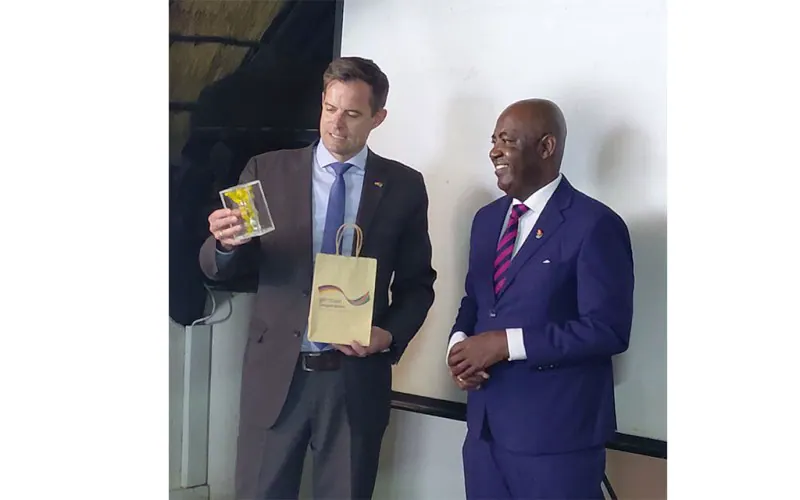
Germany has pledged €43.8 million, equivalent to approximately N$822 million, to support various development projects in Namibia next year. The funding will focus on sustainable urban development, vocational training, green and sustainable energy, and sustainable natural resource management. This commitment is part of a broader portfolio of over 50 projects implemented through Germany's KfW Development Bank, GIZ, and the Federal Institute for Geosciences and Natural Resources (BGR).
The funding comprises a combination of grants and concessional loans, reflecting the two countries' deepening development cooperation. During the Namibia-Germany Strategic Dialogue held in Opuwo in September, both governments expressed interest in exploring innovative development financing instruments. This dialogue aimed to strengthen cooperation in areas such as climate resilience, water security, biodiversity, a just green energy transition, and skills development.
The partnership between Germany and Namibia is designed to support green industrialisation, expand trade and investment opportunities, and create employment while addressing climate and livelihood concerns. With over 35 years of development cooperation, dating back to Namibia's independence in 1990, Germany has been Namibia's most important single development partner. Namibia, in turn, is the largest recipient of German development cooperation in Africa on a per-capita basis.
Past cooperation between the two countries has yielded significant results, including support that secured 283,000 livelihoods across communal conservancies. Additionally, the expansion and rehabilitation of the Ruacana Hydropower Plant, with a total capacity of 437 megawatts, have been notable achievements. The governments have also highlighted progress in six areas of cooperation: renewable energy, sustainable urban development, biodiversity, water, technical and vocational education and training, and private sector and financial sector development.
These areas of cooperation are aligned with Namibia's Sixth National Development Plan (NDP6), which focuses on economic growth, transformation and resilience, human development and community resilience, and environmental sustainability. Under the renewed cooperation, Namibia and Germany intend to strengthen climate-resilient access to safe water and the sustainable management and conservation of biodiversity. This will involve supporting climate change adaptation, particularly in rural communities, to protect livelihoods and ecosystems.
In the energy sector, the two governments have agreed to continue supporting Namibia's transition towards a green economy and to harness the country's potential for socio-economic and ecological transformation. Furthermore, Germany and Namibia will continue strengthening labour-market-oriented technical and vocational education and training. These skills programmes aim to enable more women and men, particularly young people, to access employment opportunities in Namibia's emerging green economy.
The cooperation between Germany and Namibia is expected to have a lasting impact on the country's development trajectory. By focusing on sustainable development and climate resilience, the two countries can work together to address some of Namibia's most pressing challenges. As the partnership continues to evolve, it is likely to yield even more significant benefits for the people of Namibia.
Key points
- Germany has committed €43.8 million to support development projects in Namibia in 2025.
- The partnership between Germany and Namibia aims to support green industrialisation and address climate and livelihood concerns.
- The two countries have a long-standing development cooperation relationship spanning over 35 years.