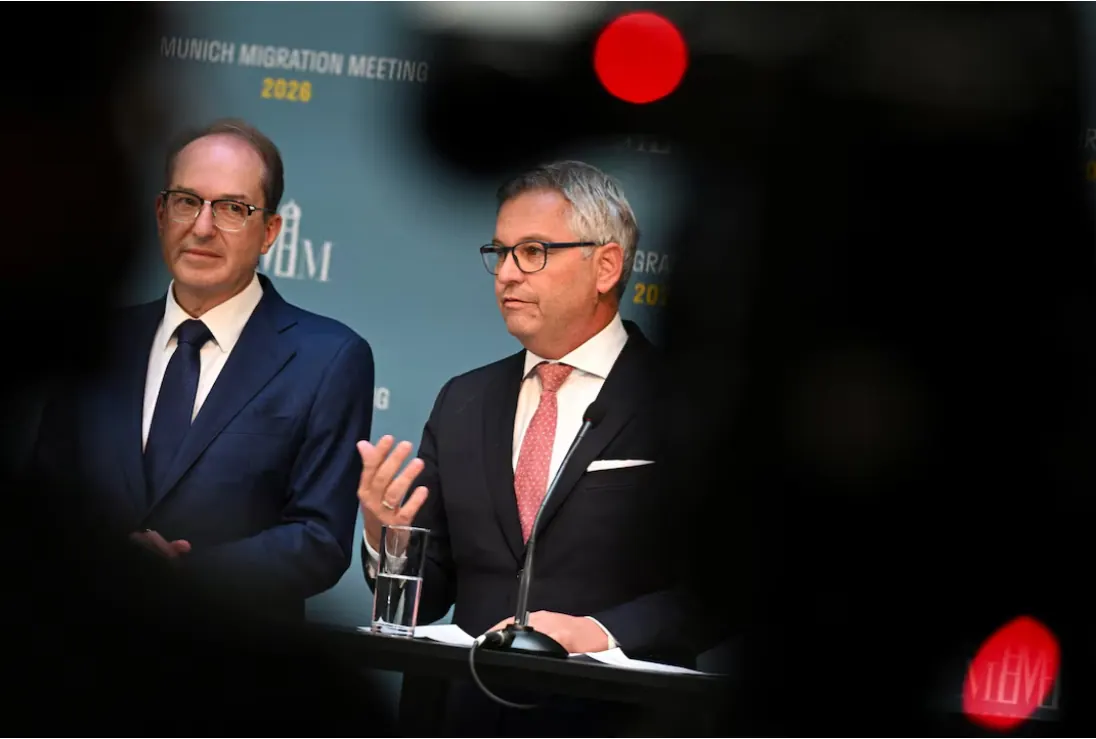
The recent mass influx of migrants into the Spanish city of Ceuta has brought the issue of irregular migration back to the forefront of European discussions. German Interior Minister Alexander Dobrindt has called for the adoption of a new European mechanism to deal with exceptional migration flows and to accelerate deportation procedures. This appeal was made during a meeting in Munich with his EU counterparts and the EU Commissioner for Migration.
Dobrindt emphasized the need for swift action, stating that the current situation is not a humanitarian emergency but rather fueled by misinformation. He stressed that such exceptional cases, like the one witnessed in Ceuta, have occurred repeatedly at the EU's external borders. The minister advocated for rapid return procedures when authorities determine that a situation does not relate to a humanitarian emergency.
The German minister also suggested that the European Border and Coast Guard Agency (Frontex) should support member states in such situations by deploying a rapid response force within 24 hours. This proposal aims to enhance the EU's capacity to manage migration crises effectively. The call for action comes as the EU seeks to address the challenges posed by irregular migration.
The mass migration into Ceuta occurred in late July, with over 72,000 individuals crossing from Morocco. Although most have since left, Spain estimates that around 12,000 migrants remain in the small Spanish enclave, including minors. The situation has highlighted the need for a coordinated European response to migration challenges.
Dobrindt's meeting in Munich brought together interior ministers from EU member states and the EU Commissioner for Migration to discuss the migration issue. The discussions focused on finding a collective approach to managing migration flows and addressing the root causes of such movements. The German minister's proposals are part of a broader effort to reform the EU's migration policies.
The issue of irregular migration has been a contentious topic within the EU, with member states holding different views on how to manage the situation. Germany's call for swift deportation procedures and a new European mechanism reflects the growing pressure on EU governments to find a solution to the migration challenge. The EU's response will likely have significant implications for migration policies across the continent.
As the EU continues to grapple with the complexities of migration, the situation in Ceuta serves as a reminder of the need for a coordinated and effective response. The outcome of the Munich meeting and the implementation of Dobrindt's proposals will be closely watched as the EU seeks to address the migration issue and develop a more cohesive policy framework.
Key points
- Germany's Interior Minister Alexander Dobrindt has called for the EU to adopt a new mechanism for dealing with exceptional migration flows and to accelerate deportation procedures.
- Over 72,000 migrants crossed from Morocco into Ceuta in late July, with around 12,000 remaining in the Spanish enclave.
- Dobrindt proposed that Frontex should deploy a rapid response force within 24 hours to support member states in managing migration crises.