Germany and Ukraine have agreed on a €1.3 billion aid package to support Ukraine's defense against Russian aggression. The deal, signed on Sunday, October 4, 2026, includes €1 billion for weapons, such as combat drones, and €350 million for Ukraine's energy sector, which has been targeted by Russian attacks. The agreement aims to help Ukraine counter the surge in Russian drone attacks and support its battered energy sector.
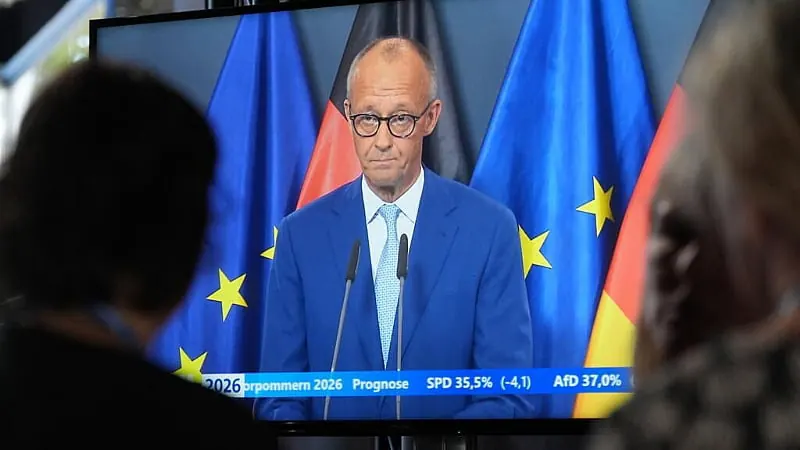
Chancellor Friedrich Merz arrived in Kyiv on a surprise visit to show European support for Ukraine amid increased Russian attacks. His visit was marked by air raid sirens and a tour of damaged areas, including the National Academy of Sciences, which was hit by a Russian drone attack on Monday, killing two. Merz described the attacks as "barbarous" and "war crimes" that must stop. He emphasized that support for Ukraine is vital for European security, warning that if Russia is not stopped, its war machine will eventually turn against Europe.
The conflict between Ukraine and Russia has been ongoing for over four years, with Kyiv largely spared from devastation near the front line. However, recent attacks have hit residential areas, petrol stations, schools, rail, and communications infrastructure, disrupting daily life and putting people on edge. Kyiv Mayor Vitali Klitschko has called for the city to be on a war footing, citing the need for round-the-clock defense against Russian attacks. The city's infrastructure, including several bridges over the Dnipro river, has been repeatedly struck in the last four days.
The aid package includes joint production of anti-jet drones, which Merz said would significantly strengthen Ukraine's air defense. He also mentioned that "significant technical breakthroughs" had been achieved in recent weeks, with production being ramped up. The deal also provides for standoff weapons, combat drones, and satellite technology to help Ukraine target Russian launch sites. This military support aims to help Ukraine counter Russia's new fast-moving, jet-powered drones and powerful ballistic missiles.
Ukrainian President Volodymyr Zelensky said that the United States had proposed fresh talks with both Ukraine and Russia by the end of the month. He described the talks as being on a "technical level" and possibly including UAE mediators. Zelensky responded positively to the negotiations, which aim to end Europe's worst conflict since World War II. However, talks have been stalled, and both sides have promised to ramp up long-range attacks on military and related targets.
Despite Moscow warning foreigners and diplomats to leave Kyiv, citing "massive" new airstrikes, leaders from countries allied to Ukraine have continued to make visits. The European Union ambassador, Katarina Mathernova, wrote on X that the EU Delegation was staying, saying that threatening them would not stop Europe's support for Ukraine. Merz said he was unfazed by the threat but did not know if it had been made to coincide with his visit.
The German government has also announced a winter support programme to help provide generators, transformer stations, and grid repairs. This programme aims to support Ukraine's energy sector, which has been severely impacted by Russian attacks. Merz's visit and the aid package demonstrate European solidarity with Ukraine amid the ongoing conflict. The conflict has raised concerns about European security, with fears that Russia could target other countries if not stopped.
Key points
- Germany and Ukraine have signed a €1.3 billion aid deal to support Ukraine's defense against Russian aggression.
- The aid package includes joint production of anti-jet drones and standoff weapons to help Ukraine counter Russian attacks.
- The conflict has raised concerns about European security, with fears that Russia could target other countries if not stopped.