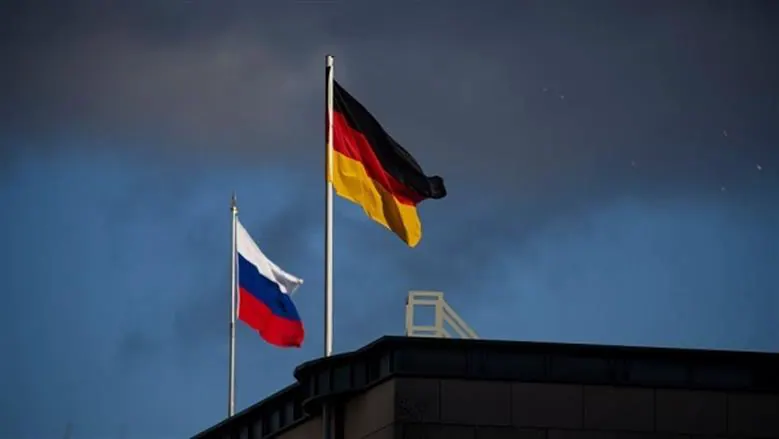
Relations between Germany and Russia have deteriorated significantly in recent years, shifting from a deep economic partnership, particularly in the energy sector, to one of the most tense relationships in Europe. Berlin has become a key supporter of Ukraine, and Moscow has been accused of espionage, sabotage, and cyberattacks. The situation escalated in September with allegations that Russia was behind a drone attack near Leipzig airport, which is used to transport aid to Ukraine.
The German government has stated that evidence points to Russian involvement in the drone attack, while Russia has denied the allegations, calling them an "provocation." Despite the tensions, German Foreign Minister Annalena Baerbock and Russian Foreign Minister Sergey Lavrov met on the sidelines of the UN General Assembly, marking the first direct meeting between the two since January 2022. The meeting was initiated by Germany and lasted for a short period, aiming to reestablish a direct diplomatic channel.
Prior to the Ukraine war, Germany relied heavily on Russia for energy, with Moscow being a primary supplier of German gas. However, the Russian invasion of Ukraine in 2022 ended this model, and Germany significantly reduced its dependence on Russian gas. Berlin has become one of the largest European supporters of Ukraine, both militarily and politically. As a result, Russia views Germany as one of the main countries supporting Western efforts against Moscow.
NATO has accused Russia of intensifying hybrid activities against member states, including sabotage, cyberattacks, espionage, disinformation, and political interference. A Russian hacking group, APT28, has been linked to attacks on Germany and other European countries. Germany has classified Russia as a primary security threat, rather than just a political opponent. The drone attack near Leipzig is part of this context, with authorities discovering a drone carrying explosives near Ukrainian cargo planes at the airport.
In response to the alleged Russian involvement, Germany closed the Russian consulate in Bonn and the Russian House in Berlin, among other measures. Russia retaliated by closing the German consulate in St. Petersburg and ordering its staff to leave by September 18. While diplomatic relations have not been completely severed, with both countries' embassies still operational, tensions remain high.
European countries are increasingly concerned about the potential for Russia to test NATO's cohesion in the coming months through various operations, including drone or missile attacks. Intelligence agencies have warned of a low but rising risk of a limited military attack on a NATO country. NATO's top commander in Europe has emphasized the importance of increased intelligence sharing and vigilance in the face of these threats.
The most significant risk is not a deliberate Russian decision to wage war on Germany but rather an unintended escalation due to a miscalculation or accident. If Russia continues to engage in sabotage, cyberattacks, and drone attacks, there is a risk of an incident that could lead to a larger conflict, particularly if a NATO country is targeted. Germany's role in supporting Ukraine and hosting US and NATO military personnel makes it a sensitive point of contention.
Key points
- Germany and Russia are experiencing strained relations due to alleged Russian involvement in a drone attack near Leipzig airport and other hybrid activities.
- NATO has accused Russia of intensifying hybrid activities against member states, including sabotage, cyberattacks, and espionage.
- The situation poses a risk of unintended escalation, particularly if Russia continues to engage in provocative actions or an incident occurs that leads to a larger conflict.