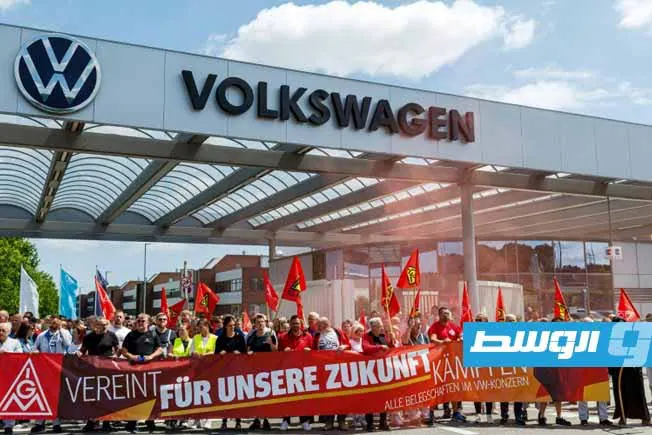
German unions have accused Volkswagen of "declaring war" on its employees and threatened strikes over the company's plans to scrap several labor agreements. The move comes as Volkswagen struggles with declining sales and increased competition from Chinese automakers. According to union leaders, Volkswagen's management announced plans to cancel agreements on working hours, vacation time, and other benefits, sparking concerns among employees.
The IG Metall union, which represents workers at Volkswagen, expressed outrage over the company's decision, calling it a "serious mistake" and a "blatant attempt" to cut costs at the expense of employees. Union negotiator Thorsten Gröger warned that the move could lead to a "major confrontation" and threatened strikes in January. Volkswagen's decision to scrap labor agreements has raised concerns about the company's commitment to its employees and the potential impact on worker morale.
Volkswagen cited a deteriorating market situation and increased competition as reasons for its decision to scrap labor agreements. The company has been struggling with declining sales and a transition to electric vehicles. Volkswagen's management said that the company needs to reduce costs to remain competitive, but union leaders argue that this should not come at the expense of employees.
The dispute between Volkswagen and its unions comes as the company faces significant challenges in the global automotive market. Volkswagen has announced plans to cut 100,000 jobs by 2030 as part of a major restructuring effort. The company has also warned that it may post a significant decline in profits this year due to a decline in sales and a write-down of its Porsche brand.
The IG Metall union has emphasized that an agreement to ban forced layoffs until the end of 2030 remains in place. However, Volkswagen has refused to increase worker salaries by 5%, citing the need to reduce costs. The company has offered to discuss alternative measures, but union leaders remain skeptical.
The conflict between Volkswagen and its unions has raised concerns about the potential impact on the company's operations and the broader German economy. Volkswagen is one of Germany's largest employers and a significant contributor to the country's GDP. Any disruption to production could have significant consequences for the company and the wider economy.
The dispute between Volkswagen and its unions is the latest challenge facing the German automotive sector. The industry has been hit by a decline in sales and increased competition from Chinese automakers. Volkswagen's decision to scrap labor agreements has sparked concerns about the company's commitment to its employees and the potential impact on worker morale.
Key points
- Volkswagen plans to cut 100,000 jobs by 2030 as part of a major restructuring effort.
- The company has refused to increase worker salaries by 5%, citing the need to reduce costs.
- The dispute between Volkswagen and its unions has raised concerns about the potential impact on the company's operations and the broader German economy.