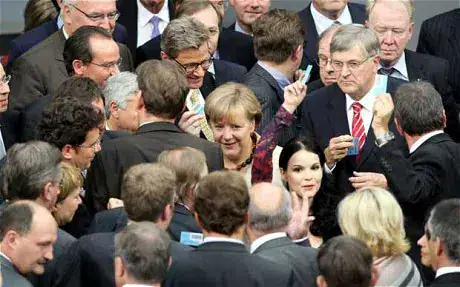
A delegation of German lawmakers, led by Dr. Wolfgang Stefinger, chairman of the Bundestag's Committee on Economic Cooperation and Development, recently visited Nigeria to strengthen economic and development ties between the two countries. The visit, which took place from October 25 to 31, aimed to connect development assistance more closely with private investment. The German parliament's published programme included engagements with public institutions, businesses, and development organisations.
During meetings in Lagos, members of the delegation and German officials outlined areas where they hoped to expand existing cooperation with Nigeria. Stefinger described Nigeria as a country with which Germany wanted closer economic and development relations. He emphasised that Nigeria is a very important partner for Germany. The discussions brought together questions about investment, the skills needed to support projects, and the relationships between institutions in both countries.
German Consul General in Lagos, Daniel Krull, said Germany had projects worth more than €700 million underway in Nigeria. He stated that officials wanted stronger connections between German companies' investments and the objectives of development assistance. Krull linked this approach to the impact they try to achieve with their development aid money. He cited electricity projects as an area where investment and training needed to work together.
Krull pointed to German support for training in Abeokuta, Ogun State, connected to Siemens Energy's work under Nigeria's Presidential Power Initiative and the needs of other companies. The SEED training programme provides one example of that cooperation. FGN Power Company says the initiative aims to train, certify, and place 6,000 energy professionals across Nigeria over five years. Siemens Energy, FGN Power Company, and Germany's development agency GIZ jointly implement the programme.
Academic exchanges formed another part of the discussions, with the German Academic Exchange Service (DAAD) highlighting its support for Nigerian scholars and partnerships between universities. Dr. Gerald Heusing, DAAD's lecturer at the University of Lagos, said the organisation awarded almost 3,000 scholarships for Nigerians in 2025. He also put the number of Nigerian-German university partnerships receiving its support at around a dozen.
The delegation's contacts extended to businesses, financial institutions, and young professionals developing enterprises in Nigeria. Christoph Naser, a member of the visiting group, said those meetings offered opportunities to establish relationships between people and institutions in the two countries. He identified economic cooperation, scientific exchange, and cultural contacts as areas of interest.
Beyond the Lagos engagements, the Bundestag's itinerary provided for talks with members of Nigeria's National Assembly, government representatives, political foundations, and civil society organisations. The parliamentary programme identified the Siemens SEED project in Abeokuta as a focus for examining partnerships between German and Nigerian businesses. The visit aimed to inform the Bundestag's work on German development policy.
Key points
- German lawmakers seek to connect development assistance with private investment in Nigeria.
- Germany has projects worth over €700 million underway in Nigeria.
- The SEED training programme aims to train 6,000 energy professionals in Nigeria over five years.