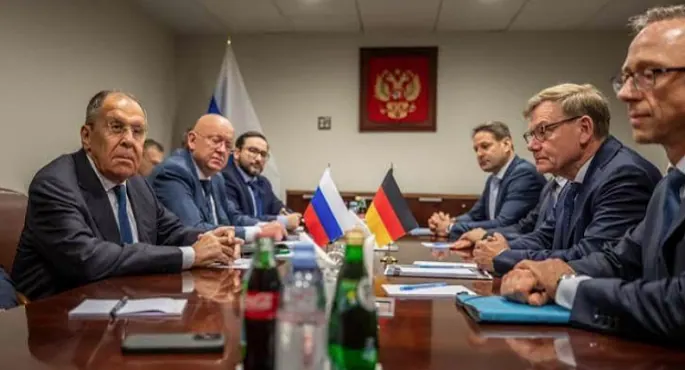
German Foreign Minister Annalena Baerbock's meeting with her Russian counterpart Sergey Lavrov on the sidelines of the United Nations General Assembly revealed profound disagreements between the two nations regarding the ongoing conflict in Ukraine. According to Baerbock, the discussions, which were their first since the war began in 2022, were intense but ultimately did not yield any common ground. The minister emphasized that Germany continues to advocate for de-escalation, particularly in light of the situation in Ukraine.
Baerbock expressed her concerns over incidents such as the drone attack in the German city of Leipzig, which Berlin attributes to Moscow. She described such actions as unacceptable escalation and warned Russia against pursuing this course. The German minister also underscored her country's determination to defend itself, stating, "We can defend ourselves, we can cope, and we will do so." This firm stance highlights the ongoing tensions between Germany and Russia.
In contrast, Lavrov characterized the meeting as unnecessary, stating that he did not hear anything new or different from Baerbock's public statements on the conflict. This reaction from the Russian side suggests that the two nations remain far apart in their positions on Ukraine. The lack of progress in their discussions underscores the challenges in finding a diplomatic resolution to the conflict.
The meeting between Baerbock and Lavrov took place against the backdrop of heightened tensions between Russia and the West over Ukraine. Germany has been a vocal supporter of Ukraine and has imposed significant economic sanctions on Russia in response to its actions. The German government has also provided substantial military aid to Ukraine, further straining relations with Russia.
Baerbock's comments on the meeting reflect the deep-seated disagreements between Germany and Russia on the Ukraine conflict. The two nations have fundamentally different perspectives on the crisis, with Russia viewing its actions in Ukraine as necessary to protect its interests and Germany seeing them as a threat to European security. This fundamental divide makes a diplomatic breakthrough challenging.
The Ukraine conflict has significant implications for European and global security. The international community has been closely watching developments in the region, with many countries calling for a peaceful resolution to the crisis. Germany's efforts to engage with Russia, despite their differences, demonstrate its commitment to finding a diplomatic solution.
The outcome of the meeting between Baerbock and Lavrov highlights the ongoing difficulties in resolving the Ukraine conflict through diplomacy. While both sides continue to engage in dialogue, their fundamental disagreements suggest that a lasting resolution will be difficult to achieve in the near term. The situation remains a pressing concern for the international community.
Key points
- Germany and Russia have significant disagreements over the Ukraine conflict.
- The two nations have fundamentally different perspectives on the crisis.
- A diplomatic breakthrough in the conflict remains challenging.