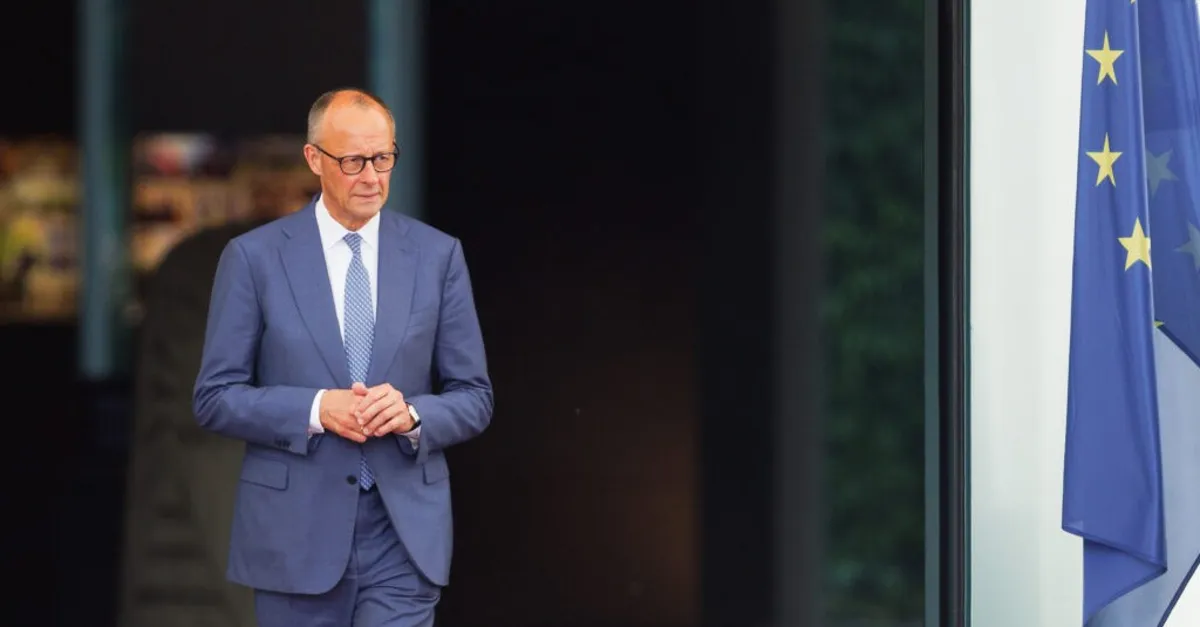
German Chancellor Friedrich Merz faced renewed political pressure following initial election results showing significant gains for the far-right Alternative for Germany party in the state of Mecklenburg-Vorpommern. The Christian Democratic Union, led by Merz, suffered a crushing defeat, securing only around 5.5% of the vote, narrowly avoiding the 5% threshold required to enter the state parliament.
In contrast, Alternative for Germany emerged as the leading party in Mecklenburg-Vorpommern with approximately 37% of the vote, surpassing the Social Democratic Party, which garnered around 35.5%. This outcome marked the first time Alternative for Germany had taken the top spot in a state election. The results dealt a blow to Merz, who had staked his reputation on reversing the party's fortunes.
The elections in Mecklenburg-Vorpommern and Berlin presented a challenging picture for Merz and his party. In Berlin, the Left Party secured around 24.5% of the vote, edging out the Christian Democratic Union, which managed 20%. Alternative for Germany came third in Berlin with around 16%. The campaign in Berlin focused heavily on the housing crisis, with the city expected to require an additional 211,000 dwellings by 2040.
Merz described the results in Mecklenburg-Vorpommern as a "catastrophe" and faced speculation about his future as party leader. Despite this, he insisted on continuing with his reform agenda, arguing that the answer to Germany's economic and social problems lay not in returning to the past but in pressing ahead with change.
The outcome of the elections highlighted the ongoing struggle for the Christian Democratic Union to counter the rise of Alternative for Germany. The far-right party's success in Mecklenburg-Vorpommern was attributed to its campaign criticizing the economic situation and government policies, as well as its stance on migration and relations with Russia.
The results also underscored the differing political landscapes in eastern and western Germany, with the Left Party performing strongly in Berlin and Alternative for Germany dominating in Mecklenburg-Vorpommern. This contrast poses a challenge for Merz and his party as they seek to develop a unified strategy to address the country's diverse regional concerns.
As Merz continues to navigate the complexities of German politics, his leadership and the future direction of the Christian Democratic Union remain under scrutiny. The party's performance in upcoming elections will be closely watched, as will its ability to adapt to the shifting political landscape and respond effectively to the concerns of voters across the country.
Key points
- Merz's leadership and the Christian Democratic Union's future direction are under scrutiny following disappointing election results.