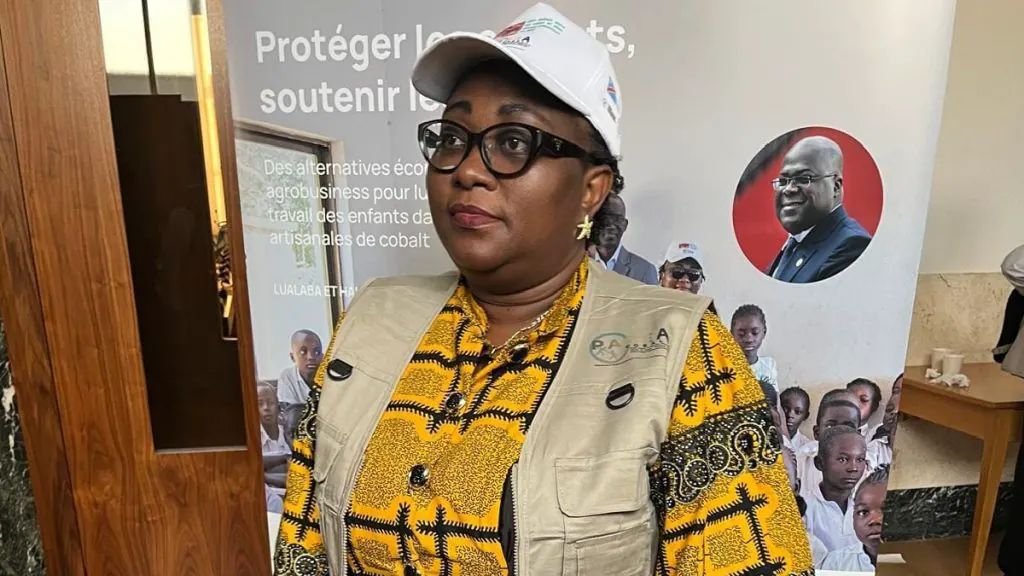
The Director General of the National Fund for Promotion and Social Service (FNPSS), Alice Mirimo Kabetsi, has highlighted significant progress in the fight against child labor in the cobalt supply chain in the Democratic Republic of Congo. Speaking at the 63rd session of the UN Human Rights Council in Geneva, Mirimo commended the success of the project to support the well-being of children and young people involved in the cobalt supply chain (PABEA-COBALT). The project has helped remove 13,587 children from cobalt mines in Haut-Katanga and Lualaba.
The FNPSS Director General emphasized that the project, initiated by President Félix Tshisekedi, goes beyond simply removing children from mines. It also provides them with access to education, healthcare, and psychosocial support. Mirimo stressed that protecting children is not just about removing them from mines, but also about providing their parents with dignified economic alternatives, enabling them to be self-sufficient. To achieve this, 52 agricultural infrastructure projects have been set up, with a goal of establishing 1,250 agricultural cooperatives.
Mirimo also discussed the draft law on fundamental principles for protecting vulnerable groups in the Democratic Republic of Congo, as well as national policy and strategy documents for social protection. She assured that once passed by Parliament, this law will be a significant lever for ensuring real social progress for the Congolese people. The law aims to provide a better framework for protecting vulnerable groups, including children.
The FNPSS Director General also highlighted the importance of economic empowerment for Congolese people. She stated that the institution is working to teach Congolese people to be self-sufficient through decent and sustainable employment. This approach aims to break the culture of dependency and promote economic autonomy.
Mirimo's speech at the UN Human Rights Council reflects the Democratic Republic of Congo's commitment to addressing child labor and promoting social protection. The country's efforts to tackle these issues have been recognized by the international community, and Mirimo's presentation showcased the progress made so far.
The PABEA-COBALT project has been instrumental in reducing child labor in cobalt mines. The project's success has been attributed to the collaboration between the Congolese government, international organizations, and local stakeholders. The project's impact is expected to continue growing, with more children being removed from mines and provided with alternative opportunities.
The fight against child labor in Congo's cobalt mines is an ongoing challenge. However, with the efforts of the FNPSS and other stakeholders, progress is being made. The government's commitment to protecting vulnerable groups and promoting social protection is crucial in addressing these issues.
Key points
- The Democratic Republic of Congo has made significant progress in reducing child labor in cobalt mines, with 13,587 children removed from mines in Haut-Katanga and Lualaba.
- The FNPSS is working to provide economic alternatives to parents of children removed from mines, with a goal of establishing 1,250 agricultural cooperatives.
- A draft law on fundamental principles for protecting vulnerable groups is expected to be passed by Parliament, providing a better framework for social protection in the country.