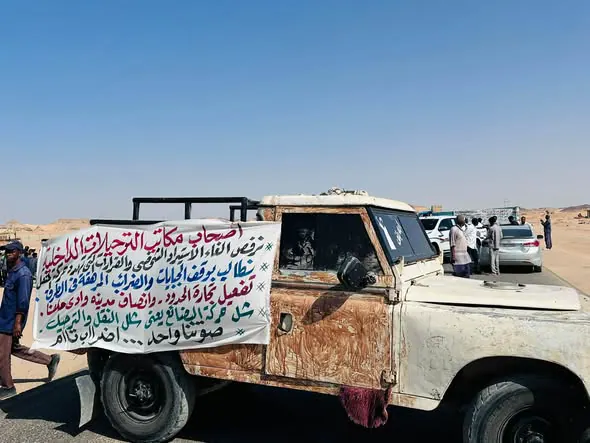
A comprehensive strike by the transportation sector, customs clearance agents, loading and unloading workers, and truck owners in Wadi Halfa has entered its first day, as reported on October 11, 2026, by Radio Dabanga. The strike has led to the complete shutdown of the local customs warehouse and the Ashkit border crossing. Protesters have taken to the streets, expressing their dissatisfaction with recent government decisions.
The strike was sparked by government decisions to ban the importation of certain goods and halt personal imports. Protesters are demanding the immediate cancellation of these import restrictions and the reversal of policies that impose heavy taxes and fees on transportation. They are also calling for the activation of border trade. The strike has brought all activities at the Ashkit border crossing to a standstill.
Visuals from the scene show a long line of trucks waiting to cross the border, unable to proceed due to the strike. The protest has garnered significant attention on social media, with many expressing solidarity with the strikers. The situation remains tense, with no clear indication of when the strike might end.
In the past, the Sudanese authorities had granted an exception to Wadi Halfa, allowing the importation of fruits and vegetables from Egypt. However, this exemption was later revoked, contributing to the current unrest. Local producers in other parts of Sudan had been concerned that the imports would negatively impact their businesses.
The strike in Wadi Halfa is part of a broader trend of protests against economic policies in Sudan. The country has been facing significant economic challenges, including high inflation and a large trade deficit. The government has been trying to implement reforms to stabilize the economy, but these efforts have been met with resistance from various groups.
The situation in Wadi Halfa remains uncertain, with ongoing negotiations between the government and the protesters. The strike has already had a significant impact on trade and commerce in the region. The government's response to the protesters' demands will likely determine the course of events in the coming days.
The strike has caused significant disruptions to the local economy, with many businesses and traders affected by the closure of the customs warehouse and border crossing. The protesters remain resolute in their demands, and it is unclear how long the strike will continue.
Key points
- The strike in Wadi Halfa was sparked by government decisions to ban the importation of certain goods and halt personal imports.
- The protesters are demanding the immediate cancellation of these import restrictions and the reversal of policies that impose heavy taxes and fees on transportation.
- The strike has brought all activities at the Ashkit border crossing to a standstill, with a significant impact on trade and commerce in the region.