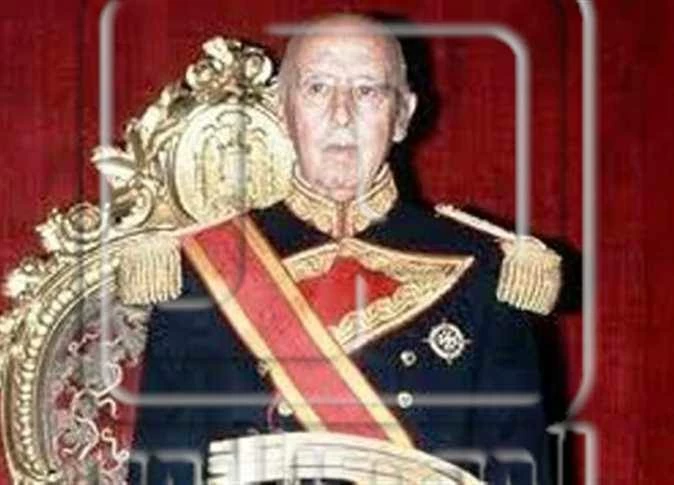
On October 1, 1936, General Francisco Franco emerged as the leader of Spain, marking the beginning of his authoritarian rule. After a prolonged illness that ended in liver failure, Franco passed away on November 20, 1975, leaving behind a complex legacy. Opinions about his historical role are divided, with some viewing him as a statesman who saved Spain from a brutal civil war and led it towards prosperity, while others portray him as a dictator who opposed democracy and supported fascism.
Franco led the Nationalist forces during the Spanish Civil War and achieved victory, subsequently taking control of the government. His regime was characterized as a dictatorship, with Franco referring to himself as "El Caudillo," or "The Leader." Despite Spain's official neutrality during World War II, Franco provided support to Nazi Germany. His rule was marked by the appointment of handpicked members to the Spanish parliament, known as the "Cortes," which served as a facade for democratic representation.
The Franco regime was notorious for its human rights abuses, with widespread arrests, imprisonment, and executions of perceived opponents. The judiciary system was heavily militarized, and martial law was frequently imposed. Estimates suggest that over a million citizens were exiled, and more than 200,000 received death sentences during his rule. Franco's government was also marked by a pervasive network of informants and spies, creating an atmosphere of fear and repression.
In an effort to address Spain's economic crisis, Franco pursued a rapprochement with the United States. On September 26, 1953, Spain and the US signed an agreement that allowed for the establishment of American military bases in exchange for economic and military aid. This move was seen as a strategic attempt to secure international support and legitimacy for his regime.
Franco's isolationism and perceived divine right to rule contributed to his increasingly authoritarian tendencies. His regime was characterized by a personality cult, with Franco presenting himself as a strong leader who could restore Spanish greatness. The cult of personality surrounding Franco was reflected in the numerous statues and public monuments erected in his honor.
Following Franco's death in 1975, Spain underwent a significant transformation. The country transitioned towards democracy, and many of Franco's symbols were dismantled or removed. Statues were toppled, and street names were changed, as the Spanish people sought to distance themselves from the authoritarian legacy of the Franco era.
The impact of Franco's rule on Spanish society and politics continues to be felt today. Historians and scholars remain divided on his legacy, with some arguing that he played a crucial role in stabilizing Spain after the civil war, while others emphasize the repressive nature of his regime. As Spain continues to grapple with its complex history, the figure of General Franco remains a contentious and multifaceted topic.
Key points
- General Franco's regime was marked by authoritarianism, repression, and human rights abuses.
- Franco's rule was characterized by a complex and multifaceted legacy that continues to be debated among historians and scholars.
- The Franco era had a lasting impact on Spanish society and politics, shaping the country's transition to democracy.