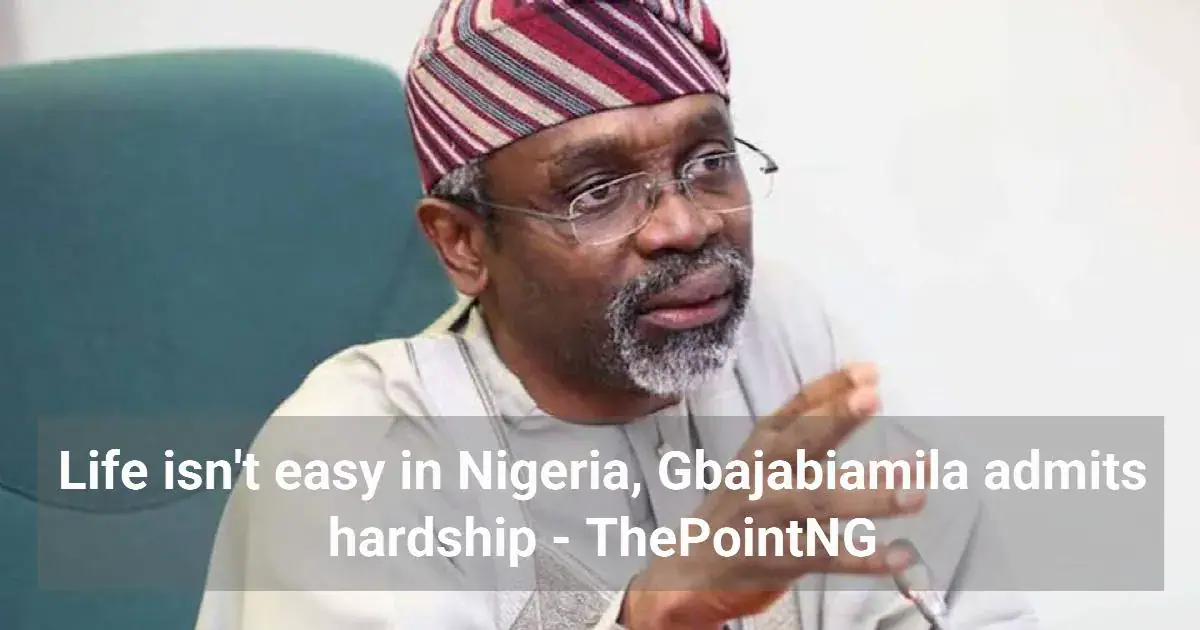
Chief of Staff to President Bola Tinubu, Femi Gbajabiamila, has acknowledged that Nigerians are facing significant economic hardship due to the impact of the Federal Government's economic reforms. He made this statement at the unveiling of the administration's 2027-2031 electoral roadmap in Abuja. Gbajabiamila admitted that the policies have placed considerable pressure on households, but insisted that avoiding difficult decisions would have further undermined Nigeria's economic prospects.
Gbajabiamila defended the policies of the Tinubu administration, arguing that the president deliberately chose to govern as a statesman rather than a politician by confronting longstanding economic challenges despite the immediate political consequences. The Chief of Staff acknowledged that the decision to remove the petrol subsidy and unify the foreign exchange market was informed by the need to address structural weaknesses in the economy and secure the country's long-term economic future.
Gbajabiamila drew a distinction between politicians concerned primarily with winning the next election and statesmen who make decisions based on the long-term interests of the country. He said Tinubu had the option of maintaining existing economic policies to avoid immediate public backlash but instead chose to confront the country's economic distortions. According to Gbajabiamila, the ultimate justification for the reforms would be their ability to translate structural economic improvements into better living conditions for ordinary Nigerians.
The former Speaker of the House of Representatives described the administration's new electoral roadmap as an ambitious document reflecting Tinubu's political philosophy and commitment to long-term national development. He said the overarching objective was to build an economy where hard work guarantees a decent livelihood and every Nigerian has a fair opportunity to succeed. The roadmap is titled "From Reforms to Prosperity Agenda".
Gbajabiamila listed some of the administration's interventions in human capital development, social protection, taxation, and electricity as evidence of its efforts to expand economic opportunities. Initiatives such as N-Power and the student loan scheme are designed to improve access to opportunities and ease the financial burden on young Nigerians. The government has also implemented tax reforms aimed at promoting fiscal fairness.
The Chief of Staff called on members and stakeholders of the All Progressives Congress to defend the administration's record and engage Nigerians directly on its policies. He said the ruling party must be prepared to account for its performance and convince voters through its achievements rather than relying on political rhetoric. Gbajabiamila emphasized that the party must earn support through the quality of work and seriousness of conduct.
Gbajabiamila said the 2027 general election would offer Nigerians an opportunity to decide whether to sustain the administration's reform agenda or return to short-term political approaches. He emphasized that the administration is committed to creating an environment where young Nigerians can pursue their ambitions without depending on political connections or patronage. The government aims to build an economy that provides opportunities for all Nigerians.
Key points
- The administration's economic reforms aim to address structural weaknesses in the economy and secure Nigeria's long-term economic future.
- The government has implemented initiatives such as N-Power and the student loan scheme to improve access to opportunities and ease the financial burden on young Nigerians.
- The 2027 general election will offer Nigerians a chance to decide whether to sustain the administration's reform agenda or return to short-term political approaches.