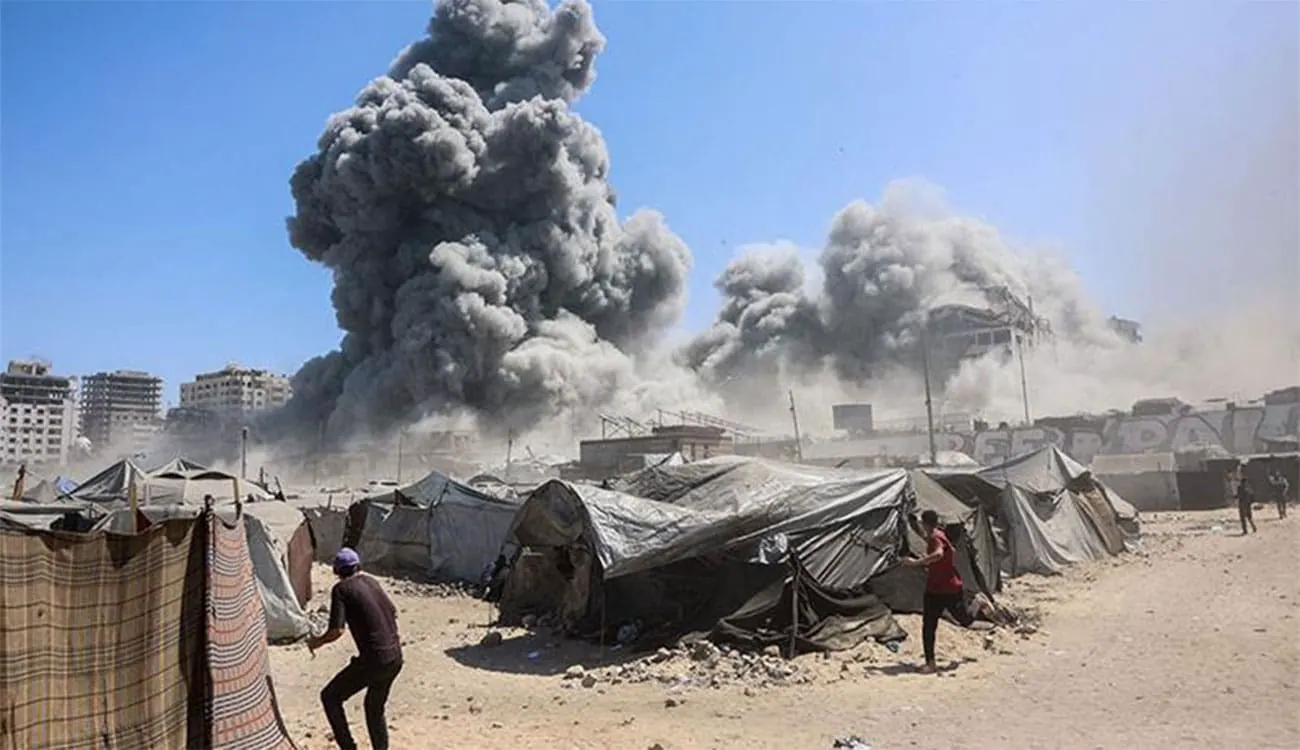
One year after a ceasefire agreement was reached on October 10, 2025, under the auspices of US President Donald Trump, the Gaza Strip continues to experience violence, a deepening humanitarian crisis, and a lack of reconstruction. The agreement has failed to bring lasting peace to the region, with over 1,400 Palestinians killed and 5,000 injured since its implementation. According to the Palestinian Health Ministry, the violence has resulted in a total of 74,250 deaths since October 2023.
The situation on the ground remains dire, with the Israeli military controlling around two-thirds of the territory, where over 2.2 million people are concentrated on approximately 130 square kilometers. The Israeli army has continued to launch daily attacks and raids on Gaza, resulting in further casualties and displacement. On October 9, 2026, a Palestinian was killed and several others injured by Israeli forces in the east of the village of al-Masdar, in the center of the Gaza Strip.
Humanitarian organizations have condemned the continued Israeli aggression, stating that the ceasefire exists only on paper. Over 120 organizations, including human rights groups and civil society organizations, have called for an end to the violence and the lifting of restrictions on humanitarian aid and reconstruction materials. The World Health Organization (WHO) and the Global Health Sector have reported that over 5,000 people have been injured, including 547 children, since the ceasefire.
The humanitarian crisis in Gaza is worsening, with around two million people in need of shelter, and none of the 36 hospitals functioning at full capacity. The destruction of infrastructure has left over 10,000 people trapped under the rubble, according to the UN High Commissioner for Human Rights. The crisis has also had a devastating impact on the education system, with over 90% of schools and universities destroyed.
The situation is particularly dire for children, with many living in tents or damaged homes, exposed to the elements and health risks. Inger Ashing, Director-General of Save the Children, has called on governments to use their influence to end the violence and ensure that children have access to food, healthcare, education, and shelter. Jan Egeland, Secretary-General of the Norwegian Refugee Council, has urged governments to take concrete action to allow the unhindered delivery of aid and reconstruction materials.
The economic situation in Gaza is also deteriorating, with widespread poverty and unemployment. According to Médecins du Monde, the insecurity of food supplies in Gaza is no longer episodic but structural. While products are available on markets, their prices are inaccessible to a population largely deprived of employment and resources.
As the winter approaches, hundreds of thousands of families are struggling to survive in tents or damaged homes, with many more in need of assistance. The international community has been urged to take action to address the crisis, with a need for sustained support to alleviate the suffering of the Palestinian people.
Key points
- Over 1,400 Palestinians have been killed since the ceasefire agreement.
- The humanitarian crisis in Gaza is worsening, with around two million people in need of shelter.
- The education system has been severely impacted, with over 90% of schools and universities destroyed.