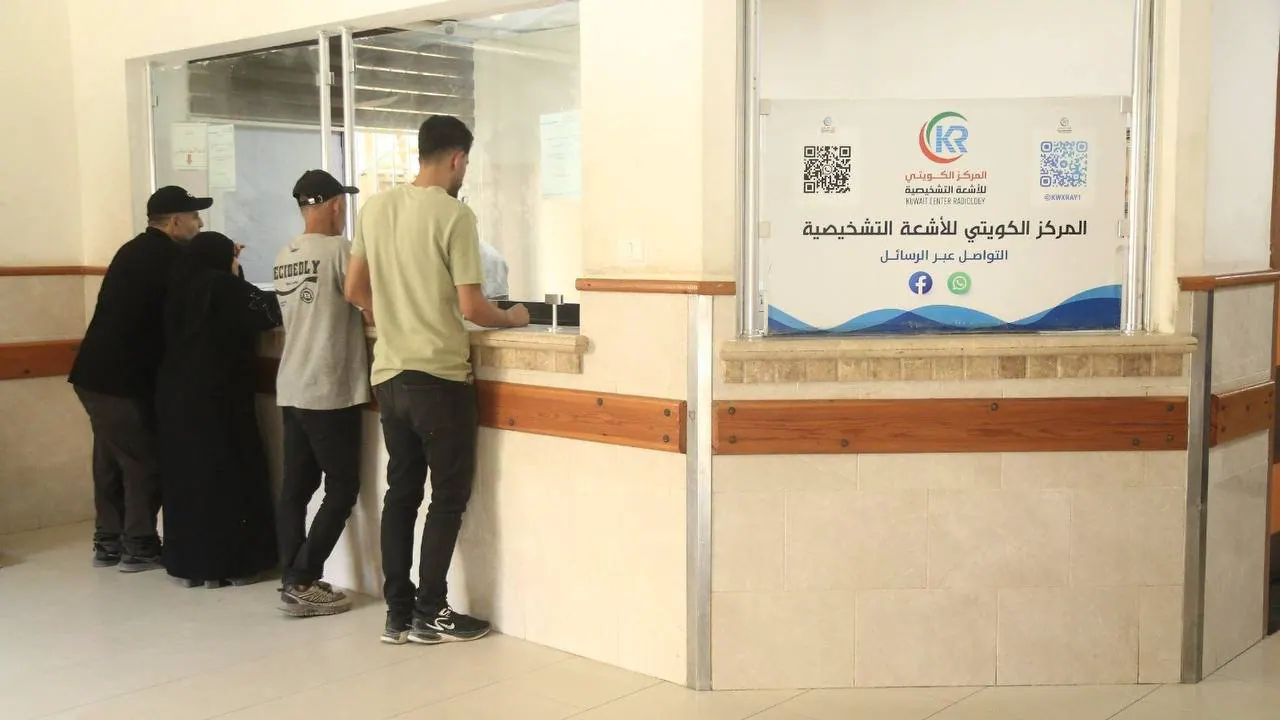
The Kuwaiti Diagnostic Radiology Center in Gaza has stopped functioning due to a lack of fuel, leaving patients without adequate diagnostic alternatives. The center's shutdown, which occurred on September 26, follows the World Health Organization's decision to halt fuel supplies on September 19. This development has resulted in the death of patients who could not receive accurate diagnoses. The center's manager, Abdel Rahman Ahmed Al-Naqla, stated that the lack of fuel has caused the center's equipment, including its only CT scanner in the central governorate, to shut down.
The shutdown of the Kuwaiti Diagnostic Radiology Center has significant implications for Gaza's healthcare system. The center was one of three operating CT scanners in Gaza, and its closure leaves only one functional scanner at Nasser Hospital. Prior to its shutdown, the center received approximately 150 patients daily for CT scans, with 20 of those cases being referred from the sole government hospital in the central governorate. Patients in Gaza now face limited diagnostic options, with many forced to undergo exploratory surgeries that could have been avoided with proper imaging.
Gaza's healthcare sector is experiencing a severe crisis due to the ongoing Israeli blockade and policies, which have been described as a "systematic and deliberate process of extermination." The sector faces critical shortages of fuel, oil, and spare parts for generators, with over 70% of main generators no longer operational. This has resulted in a substantial strain on the healthcare system, with many medical staff unable to reach work due to transportation disruptions.
The civil defense teams in Gaza are working under challenging conditions to retrieve bodies from under the rubble. With limited equipment, they have managed to recover the remains of 129 people from various sites in Gaza City over the past week. The teams rely on basic tools, such as manual and electric shears, and cranes, as heavy machinery is either damaged or unavailable due to the Israeli blockade.
As winter approaches, displaced persons in Gaza face a severe shelter crisis. A government survey revealed that 162,000 out of 270,000 tents are in disrepair, while the Ministry of Social Development estimates that 1.2 to 1.5 million people require 200,000 new tents and 300,000 resilient shelters. The situation has been described as a "catastrophic winter" by Ismail Al-Thawabita, director general of the Government Media Office.
The Israeli occupation forces and settlers have escalated attacks in the West Bank, coinciding with the olive harvest season. These attacks include theft of crops, uprooting of trees, and military orders to confiscate land used for olive cultivation. This has resulted in increased tensions and violence, with Israeli forces conducting arrest campaigns, raids, and closures of Palestinian towns.
The situation in Gaza remains dire, with the healthcare system struggling to cope with the ongoing crisis. The international community has been urged to provide assistance to address the critical shortages faced by the healthcare sector and to support the affected population. Key Points: - The Kuwaiti Diagnostic Radiology Center in Gaza has ceased operations due to fuel shortages. - The center's shutdown has resulted in the death of patients who could not receive accurate diagnoses. - Gaza's healthcare sector faces a severe crisis due to the ongoing Israeli blockade and policies.