The Israeli military occupation of over half of Gaza has significantly hampered the search for missing persons, according to Palestinians and aid workers. Mohammad Yousef Shalayel, whose family home was destroyed in an Israeli strike on November 1, 2024, has been unable to return to the site to search for his missing relatives. He described finding dismembered remains of children and women, and gathering pieces of flesh scattered around the area. Nearly two years later, Shalayel's family members remain unaccounted for.
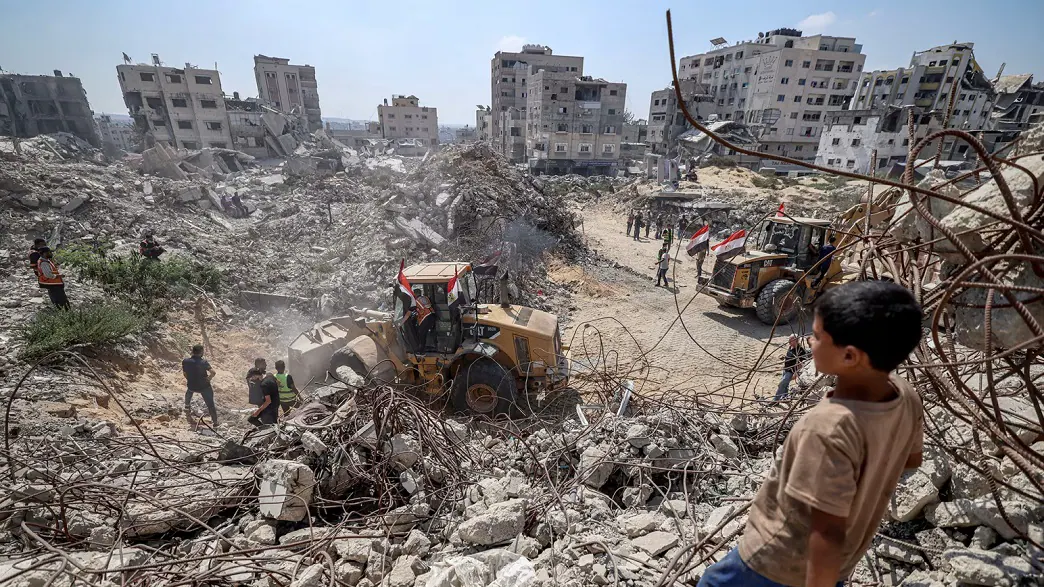
The conflict in Gaza has resulted in a significant number of casualties and missing persons. According to the Palestinian Ministry of Health, over 74,000 people have been killed in the coastal enclave during the Israeli offensive. Additionally, around 8,000 people are reported missing, with most likely buried beneath the estimated 61 million tonnes of rubble. The International Committee of the Red Cross has emphasized the importance of conducting search and recovery work for the remains of those killed, missing, or injured.
The Israeli military's occupation of areas in Gaza, demarcated by the "yellow line," has blocked Palestinians from accessing swathes of land where their loved ones could be buried under the rubble. Residents and aid workers have reported witnessing the Israeli military demolishing mosques, homes, and buildings or clearing rubble near the yellow line. This has raised concerns about the potential erasure of evidence of war crimes. The UN human rights chief, Volker Türk, has warned against the clearance of rubble in areas under Israeli military control.
The use of heavy machinery to clear rubble has been criticized by human rights groups, who warn that it could erase evidence of possible war crimes. Israeli forces have used bulldozers to clear rubble east of Jabalya, northern Gaza. The recovery of entire families from under the rubble in areas accessible to Palestinians highlights the need for evidence of possible war crimes to be preserved. The UN has called for international investigators to be given access to all of Gaza.
The Israeli government's restrictions on heavy machinery entering Gaza have prolonged recovery efforts in parts of the enclave where Israeli troops are not currently present. Palestinian officials have requested 10 excavators, 10 bulldozers, and 30 trucks to aid in recovery efforts, but Israeli authorities have withheld heavy machinery and reconstruction materials until Hamas disarms. The Israeli aid agency COGAT has stated that Israel has allowed in essential equipment, including engine oil, medical supplies, and tents.
Recovery efforts in Gaza are made more difficult by the presence of unexploded ordnance and the lack of resources. Many rescue workers are literally scraping away a few centimeters at a time. When buried Palestinians are found, some show signs of having been eaten by rodents or stray dogs. The slow eradication of Gaza's medical infrastructure has made medical workers reliant on elementary identification techniques.
The lack of freezer storage, fuel shortages, and frequent power cuts in Gaza's hospitals hasten the deterioration of unidentified bodies. Dr. Ahmad Dheir, one of only three remaining specialist forensic doctors in the enclave, has highlighted the challenges faced by medical workers. The conflict in Gaza continues, with no clear end in sight, and the search for missing persons remains a significant challenge.
Key points
- The Israeli military occupation of Gaza has hindered the search for missing persons.
- The use of heavy machinery to clear rubble has raised concerns about the potential erasure of evidence of war crimes.
- The lack of resources and infrastructure in Gaza has made recovery efforts more difficult.