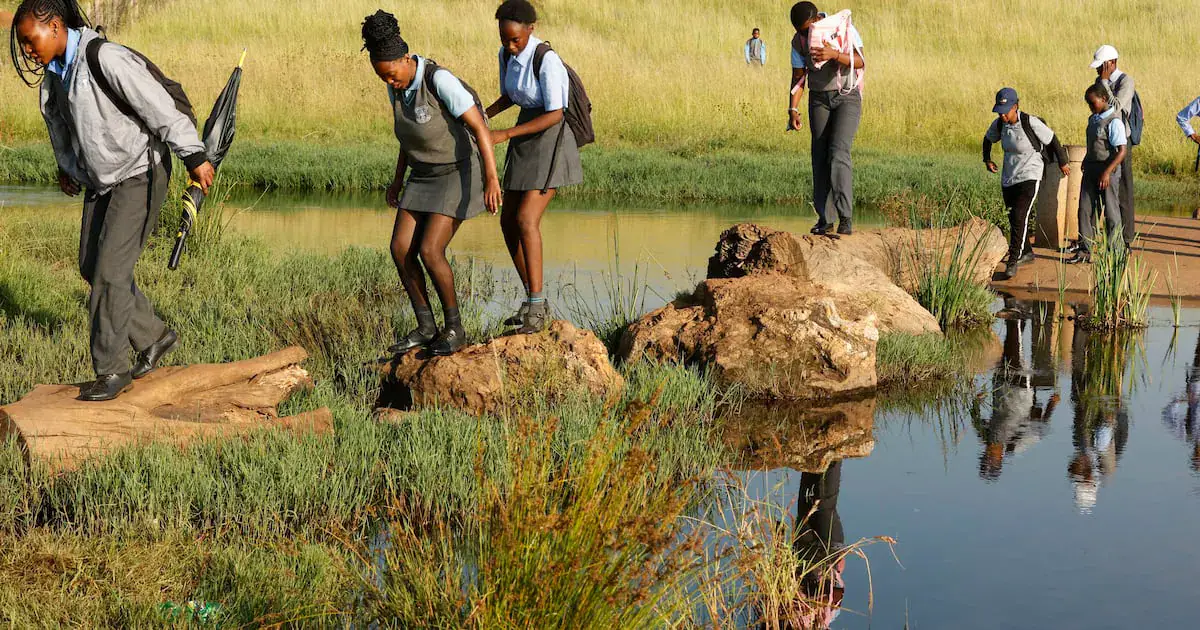
A crisis has unfolded in Gauteng, South Africa, as more than 2,000 scholar transport buses suspended operations on Monday, leaving over 100,000 pupils without transportation to schools. The suspension comes at a critical time, as pupils, including matriculants, were scheduled to write their final examinations. The Gauteng department of education's failure to pay an estimated R450m in outstanding invoices has led to the halt in services.
According to Jabulani Khumalo, chairperson of the Gauteng Small Bus Operators Council, the unpaid invoices date back 90 days, with the monthly invoice amounting to R150m. The non-payment has severely impacted the operators, making it difficult for them to meet their financial obligations, including paying employees, suppliers, and creditors. This situation has resulted in some operators facing asset repossession, while others are struggling with stress.
The crisis has been exacerbated by the recent surge in fuel prices, particularly diesel, which has almost doubled in price since February. Khumalo stated that the government has not provided any subsidies for fuel, and the operators have not received any price increases for their services since 2022. This has made it challenging for them to sustain their businesses, with suppliers now hesitant to provide credit.
This is not the first time pupils have been affected by the strained relationship between transport providers and the Gauteng department of education. In February, operations were halted for four days due to unpaid invoices, forcing some pupils to walk long distances to school. The current suspension has raised concerns about the impact on pupils' education, particularly those from disadvantaged communities who rely on the transport and school nutrition programs.
The Congress of South African Students (Cosas) has expressed concern about the suspension, stating that it places pupils at a serious disadvantage, especially those writing their examinations. The organization has called on the Gauteng department of education to urgently intervene, settle outstanding payments, and ensure that pupils' right to education is protected.
The suspension of scholar transport services has highlighted the critical role that transport providers play in ensuring that pupils from disadvantaged communities access education. Khumalo emphasized that the operators are committed to providing services to pupils, but their financial sustainability is crucial to the continuation of these services.
The Gauteng department of education's failure to pay outstanding invoices has had far-reaching consequences, affecting not only the transport providers but also the pupils who rely on their services. As the situation unfolds, it remains to be seen how the department will address the crisis and ensure that pupils' education is not compromised.
Key points
- The Gauteng department of education owes transport providers an estimated R450m in unpaid invoices.
- The suspension of scholar transport services has affected over 100,000 pupils in Gauteng.
- The crisis has been exacerbated by the recent surge in fuel prices and the government's failure to provide subsidies.