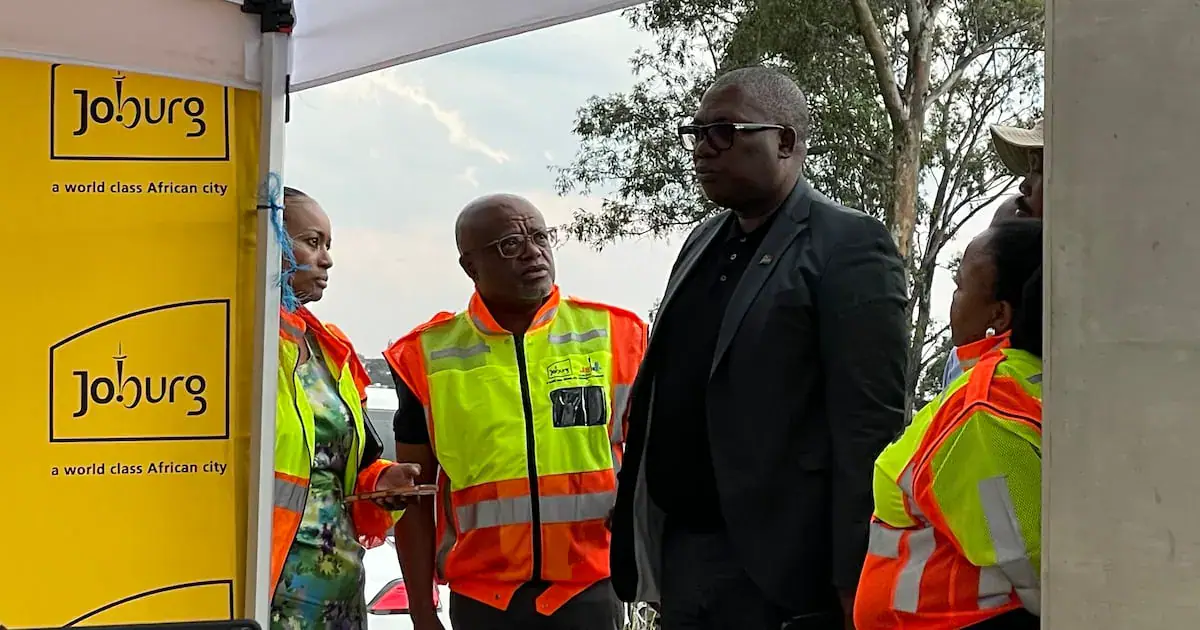
Gauteng premier Panyaza Lesufi has acknowledged that the province was caught off guard by the sudden decline in water levels in major reservoirs across Johannesburg and other municipalities. Lesufi made the statement during a media briefing on water supply in and around Johannesburg, where some areas have been without water for weeks. He attributed the crisis to unexpected water losses in Johannesburg, Ekurhuleni, and Tshwane, which he said were exacerbated by factors such as El Niño.
Lesufi revealed that new technology has been introduced as part of a plan developed during weekly meetings with the water and sanitation ministry. The technology, launched on Friday, will monitor water levels, chlorine levels, and other factors in reservoirs across Johannesburg, Lesedi, and Mogale City. This move aims to improve the management of the water supply system and prevent similar crises in the future. Lesufi also announced that the deployment of the water and sanitation deputy minister and technical teams from various water institutions has helped stabilize the system.
Johannesburg Water's overall storage across the city's water supply system has improved to 41% as of 2 pm, up from 37% the previous day. The utility expects the system to reach about 50% by the end of the week. In some areas, including Crown Gardens, Berea, and Kensington, improvements have been reported, with residents now receiving water. However, several systems remain under pressure, including Sandton, Bryanston, Illovo, and Morningside, which are under active management.
Lesufi apologized to residents affected by water disruptions and promised that accountability would be addressed once supply was restored. He stated that the issue of accountability, including whether heads will roll, is on the agenda and will be dealt with once the matter is finalized. Johannesburg mayor Dada Morero echoed Lesufi's sentiments, welcoming the improvement in some areas and assuring residents that teams are working 24 hours to supply water.
The South African Human Rights Commission has warned Gauteng municipalities to stop spending hundreds of millions of rand on water tankers instead of investing in fixing ageing water infrastructure. Commission chairperson Henk Boshoff expressed concern that municipal infrastructure is being sabotaged by service providers and municipal officials. The commission identified ageing infrastructure, poor finances for water, and leaks as some of the challenges at municipalities.
Morero announced that the city has deployed water tankers, which he stressed were not a long-term solution. The city has about 19 or 35 of its own tankers on the ground in areas where residents are not receiving water. The city is also building a municipally owned water tanker fleet to reduce reliance on contractors, with 20 tankers procured in 2025 and 16 more procured in the second phase.
The city welcomes the commission's findings and will engage Johannesburg Water on implementing its recommendations. Morero emphasized that the city's goal is to have water flowing in residents' taps, and teams are working tirelessly to achieve this. Despite the challenges, the city is making progress, with storage levels improving and water being restored in some areas.
Key points
- Gauteng premier Panyaza Lesufi admits province was caught off guard by sudden water shortages
- New technology introduced to monitor water levels and improve management of water supply system
- South African Human Rights Commission warns municipalities to invest in fixing ageing water infrastructure